




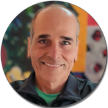
119. Dr. Pim van Lommel Transformed by Near-Death Experience Research
Cardiologist and NDE Researcher Dr. Pim van Lommel discuses how his research with near-death experiencers has changed his beliefs about life and consciousness.
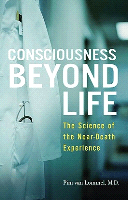 Join Skeptiko host Alex Tsakiris for an interview with cardiologist and author of Consciousness Beyond Life: The Science of the Near-Death Experience, Dr. Pim van Lommel. During the interview Dr. van Lommel explains how he began his research, and how what he learned from his patients led him to a personal transformation, “I started to ask my patients who survived cardiac arrest if they could remember something of the period of unconsciousness. To my big surprise, out of 50 patients asked, 12 of them told me about their NDEs. This was the start of my scientific curiosity, how could people have an enhanced consciousness when they are unconscious, when the heart doesn’t work, and there is no breathing, and their brain has stopped functioning?” Van Lommel continues, “When you have spoken to patients who have had a near-death experience, their emotions, their reluctance to share their experience with you… it’s so honest. You just believe them because they’re so honest. You get convinced that there is more than what we can see, what we can measure.”
Dr. van Lommel also discusses how his controversial findings have been accepted by the medical community, “The gap is not as big as you presume. It just looks that way because the Skeptics are very active. The Skeptics have their own truth and they don’t listen to somebody else who has a different opinion. So there’s a gap and there will always be a gap. There is no discussion possible with Skeptics because they have the truth. But a lot of physicians are a little bit more open, but they won’t write articles. They won’t write or tell about it in public. I know some physicians who have had a near-death experience. They said to me and wrote to me that, ‘what happened to me now I’ve always said this is impossible, and now it happened to me.'”
Play it:
Podcast: Play in new window | Download
Subscribe: RSS
Read it:
Alex Tsakiris: Welcome to Skeptiko where we explore controversial science with leading researchers, thinkers, and their critics. I’m your host, Alex Tsakiris.
Before we get started with today’s interview with Dr. Pim Van Lommel, I want to take a couple of minutes and talk about skepticism and a couple of things that have come up in the Skeptiko forums.
Before Skeptiko I don’t think I ever had more than a couple of forum posts in my whole life and since I’ve already passed the 1,000 mark in forum posts on Skeptiko, you can see that I’ve changed quite a bit. This dialogue that I’ve been able to have with Skeptiko listeners has been very informative for me. It’s also shaped a lot of the shows and a lot of the directions we’ve taken with many of our guests.
The other thing I feel like I’ve gotten from the Skeptiko forums is a deeper appreciation for the skeptical position, if you will. Not that I agree with all the skeptics I dialogue with there because in general I don’t, but it gives me an appreciation for what I’ve dubbed as the “two skeptical questions.” They both relate to this interview we have coming up with Pim Van Lommel, but they’re also broader in scope, as well.
So the first skeptical question that seems to always crop up is the rebuttal question-the “but” question, and it’s obvious. It’s what’s the other side have to say? And while all of us who are scientifically and reason/logic based ask those questions all the time, there’s something unique in the way that the question gets framed within this skeptic versus believer context. The difference is the depth of rebuttal.
Let me give you an example of how this has played out in the Skeptiko forum and then you’ll understand what I mean. Recently in the Skeptiko forum I posted an article by Chris Carter. Chris Carter is a fairly well-known author in these circles. His first book was titled Parapsychology and the Skeptics. I should mention he has a second book out as well on near-death experiences and we’re going to have Chris on shortly to talk about that.
But anyway, in this article that Chris authored, he gave a thorough and quite convincing response to Richard Wiseman’s article on “Heads I Win, Tails You Lose: A Critique of Parapsychology.” We’ve had Wiseman on with Rupert Sheldrake to debate that in the past, but Chris’s article goes one step further and lays out in a very detailed form some of the arguments against Wiseman’s claims.
Well, when I posted this on the Skeptiko forum I got quite a reaction. As a matter of fact, the reaction was so strong that one of the posters essentially dared me to repost some of the issues in the James Randi Educational Foundation, the JREF forum. So now, if you’re not familiar with the forum world and the skeptic versus believer world, the JREF forum is heavy-duty, hardcore skeptics. It certainly pulls no punches when it comes to flaming ideas or people who don’t fit into the way they see things.
Now in fairness to the folks over in the JREF forum, there are a lot of very smart people over there and there are a number of people who post there in the JREF forum as well as the Skeptiko forum, although a few less than there were before this last few weeks, which is another story. But back to this story, so I reposted this article by Chris Carter and his critique of Richard Wiseman. I posted that over in the James Randi Educational Foundation forum and the response that I got to that is what I really want to talk about, because it gave me an insight and appreciation for what skeptics have to deal with.
In the article, Chris laid out a lot of well-known issues that have been pretty well hashed out between parapsychology researchers and parapsychology critics. But when I looked at the number of posts and the quality of posts, which were really pretty good in the JREF forum, I got an appreciation for just how hard it would be for anyone to sort out this information.
One of the points that was raised was the whole issue of Wiseman and Sheldrake’s experiment with the psychic dog, the JT experiment, which if you don’t know about it, go back and look in the previous episodes of Skeptiko because we’ve only done about 10 hours of show on it. But that case is about as clear-cut an example as you can get of skeptical misdeeds, in this case on the part of Richard Wiseman whose–in the words of Rupert Sheldrake– “persistence in the deception is hard to fathom.”
And it really is. If you really understand the case and you really pull it apart there’s really no way to defend Richard Wiseman. Even a lot of the posters on the JREF forum were kind of carefully tip-toeing around like ‘okay, let’s not get too close to that one because we know it doesn’t have any solid ground.’ But you really couldn’t have gotten that out of the forum.
So my point is if you were a skeptic and you heard me say, “Hey, Sheldrake’s evidence of telepathy among dogs is pretty convincing,” and then you went over and looked at the other side, the “but” side, the rebuttal side, and you tried to sort out what they had to say, I’ve got to say I don’t know how you could do it. Not so much because it’s intellectually heavy-duty challenging; it’s not. But it takes a good deal of time and persistence to pull it all apart and most of us don’t have the time to deal with it. Especially on every little minor issue that comes up.
So what do we do? Well, we wind up putting our trust in people we believe have looked at it and have given it a fair evaluation. While that’s convenient and useful, it’s also part of the problem. I mean, if Skeptiko has shown me anything-and hopefully it’s shown you this same thing-you’ve got to do your own research. You’ve got to figure this stuff out on your own. If you’re trusting someone else for the answer to these kinds of questions, you’re always going to have that nagging doubt in your mind if they’re really telling you the truth.
So the first issue for skeptics is the “but” question, and it’s a hard one to overcome because there’s just too much information out there. A lot of the skeptical stuff sounds just as good at first glance as the believer stuff. So I don’t know that there’s an easy answer for that. I guess I have a little bit of a deeper appreciation of just how hard it is to sort through all this stuff.
I guess that challenge leads right into the second skeptical question, but it does so in a strange, very counter-intuitive way. The second skeptical question as I see it is the “if” question. The “if” question takes a couple of forms. The first “if” question has to do with authority. It goes something like: If this is true, if consciousness survives death, if ESP is true, if mediums really can talk to the dead, then why doesn’t everybody know it? Why hasn’t science embraced it? Why haven’t all these people I trust embraced this information if it’s so compelling? If the proof is that strong?
And of course, that’s a question we’ve talked quite a bit about on this show. It’s really harder to unravel than it might seem. It leads us into all sorts of other areas of social pressures and academic institutions and paradigm shifts, and all those other things that we’ll leave aside for a minute, but just to acknowledge that that first “if” question is there.
The second “if” question I think is really the one that winds up tripping up most people. That’s the “if” question that says: If this is true, then what else is true? If this is true, then what other beliefs do I have that have to start being re-examined? In this regard I think a lot of parapsychology or psi or consciousness researchers can do themselves a real dis-service if they undersell the importance of this “if” question.
I mean, if you’re researching telepathy and you say, “Telepathy is real and I have proven it in the lab,” and if you at the same time acknowledge that that changing paradigm that telepathy implies, changes everything in science fundamentally-every area of science you can imagine it touches on. If you don’t acknowledge that then I think you leave a lingering doubt in the minds of people who are skeptical.
Because you know what? That’s one thing the skeptics have figured out. They understand the slippery slope, if you will. They understand that if our mind isn’t a product 100% of our brain, if consciousness is separate from brain function, then survival of consciousness is not just on the table, but given the data we already have, it’s fait accompli. The data is just too strong for that.
And then if you jump onto that stone and you say, “Okay, consciousness is separate from brain function and therefore maybe consciousness does survive death,” then you’re right there knocking on the gates of Heaven, if you will. Because you have to bring into the conversation the content of those experiences that says there is a higher order, there is some universal feeling of love, of consciousness, the core of cultural issues that have been battled for hundreds of years. Hey, those are on the table.
So don’t do your telepathy experiment and pretend that you can still play in a little Atheistic sandbox over here because you can. Once you start going down these series of “if” questions, it gets really scary really quick. And at the end of the day, I think that’s what trips up a lot of people who are skeptical. At some level, maybe a level they’re not fully aware of, they’ve thought through the if/then implications of opening themselves up to this information. To changing their belief systems to accommodate some of this data. It’s scary because most of us are pretty comfortable with the way that our world is, or at least we’re comfortable enough that we don’t want to turn it upside down and shake it radically. Yet that’s what paradigm shifting is all about.
So on today’s show I have an interview with NDE researcher, Dr. Pim Van Lommel, who has an interesting perspective on these issues we’ve been talking about, for a couple of reasons. One is because he’s confronted them head-on as a traditionally trained and well respected cardiologist. His research has caused him to step outside of the belief system that was infused in his training and among his colleagues and find a different truth.
The other way I think it’s relevant is the personal transformation that this information took him through. We only touch on that a little bit in the interview but it really is, I think, my favorite part of this dialogue with Dr. Van Lommel. Hopefully most of us aren’t going to face a near-death experience, but the idea that maybe we can study, research, use logic, and come to some of the same conclusions that people who have had these fantastic experiences do, is hopeful for all of us.
Please stay with me for this very interesting interview with Dr. Pim Van Lommel.
Alex Tsakiris: Today’s guest is a world-class cardiologist and one of the leading medical experts on near-death experiences. His book titled, Consciousness Beyond Life: The Science of Near-Death Experience, covers his more than 25 years researching NDEs in the Netherlands and around the world. Dr. Pim Van Lommel, thanks so much for joining me today on Skeptiko.
Dr. Van Lommel: You’re welcome.
Alex Tsakiris: So Dr. Van Lommel, as your book details, you ‘ve been studying near-death experience for quite some time. Why this book right now?
Dr. Van Lommel: We started a study in 1988 in the Netherlands, a prospective study, in a total of 344 patients who survived cardiac arrest. We studied if we could understand how it is possible that patients can experience an enhanced consciousness during cardiac arrest because according to our current medical concepts it’s not possible to experience consciousness during cardiac arrest when circulation and breathing have ceased.
So we studied this for quite a long time and then we also did a study with groups after two and eight years. This total study took 10 years and it was published in The Lancet in 2001. Following this publication there were so many questions and I was lecturing so many times around the world. A lot of people asked me about the book and then I just started to write it in the Netherlands. It was published a few years ago and it was translated into German and now into English.
Alex Tsakiris: Right. The book’s been very successful in Europe. I understand it’s sold well over 100,000 copies around the world. We’re a little bit slower here in the States to get it published here, but as you just mentioned, it has been out for a little while, huh?
Dr. Van Lommel: Yes, in Holland it was a best seller. It was sold 100,000 copies within one year and it was even nominated for the Best Book of the Year, 2008. This was quite exciting because the subject of the book is not that easy.
Alex Tsakiris: Right, right. Well, that’s certainly encouraging. I want to get into that in a minute about what is really the state of our culture versus our medical establishment, vis-a-vie this research. But the first thing I want to jump into is one thing I found interesting in the book, which is your account of the personal transformation that you went through being exposed to this information.
And coming from maybe a little bit about your background, which was very traditional in terms of what we would expect for a scientist, a physician, and also being very much of a materialist and believing that this is it, when you die you die. Do you want to talk a little bit about that?
Dr. Van Lommel: I was raised and also in the study of medicine years and years ago, I accepted everything, that there is one kind of science and it was materialistic science. I just accepted the fact that everybody thought that consciousness was a product of a functioning brain. It was because in ’86, after reading the book by George Ritchie, The Return From Tomorrow, about a near-death experience he experienced as a medical student in 1943, I was so curious. I had only heard of it once before in ’69.
I started to ask my patients who survived cardiac arrest if they could remember something of the period of unconsciousness. To my big surprise, within two years out of 50 patients asked, 12 of them told me about their NDEs. And it was for me the start because it was my scientific curiosity, how it could be explained that people can have an enhanced consciousness when they are unconscious, when the heart doesn’t work and there is no breathing and their brain stops functioning.
That’s the reason we started the study and that’s also when I had so many patients telling me about an enhanced consciousness also with the possibility of perception out and above the body that I had to change all my concepts.
Alex Tsakiris: What was it like for you, that personal transformation? As a physician and you break it down, “Hey, I can understand that.” You’re curious. People are telling you this. But from a personal level, what did that do? Those are really shaking up some fundamental beliefs for you.
Dr. Van Lommel: I think when you have spoken to patients who have had a near-death experience, their emotions, their reluctance to share their experience with you, and it’s so honest. And they’re so overwhelmed by this experience, as well. You just believe them because they’re so honest. And then you talk to one or two but I’ve talked to hundreds of those patients. You get convinced that there is more than what we can see, what we can measure.
And really the problem with materialistic science, you can measure just the material aspects of the brain. You cannot measure consciousness. You cannot measure the content of consciousness. You cannot measure what you feel, what you think. So that was a challenge for me, as well.
Alex Tsakiris: I want to push you a little bit further because what I’m getting at is and what this show, Skeptiko, has been about is that I think the knowledge, the information itself without having the experience can be deeply transformational. I mean, if you begin to come to grips with the fact that science is revealing that maybe what the great wisdom traditions throughout time have taught us that we’re more than our bodies; that we may be something called spirit. That has to give you pause for most people who grow up in our modern society, Atheistic as it is. Have you seen it in yourself that the information itself, beyond the experience, is personally transforming to people?
Dr. Van Lommel: Oh yes. Also for me it was transforming because you realize that it’s kind of resonating within your hidden knowledge, your knowing that what they tell is the truth. And there’s no-death is just the physical end of the person but not the end of the essence of who you are. And there’s continuity of consciousness. That’s really mind-blowing as well that you can accept it and especially I was so amazed when I started reading about it in all world religions, all times and all cultures. It has been said and written down.
Alex Tsakiris: Which makes it all the more interesting, going back to what you just described as a natural medical curiosity. The question that pops into mind is why don’t more doctors have that kind of curiosity? Or maybe the courage to explore that curiosity?
One of the stories you related in the book that I think relates to this is a cardiologist who-you can tell the story better than I can-who was at a conference and stood up and said, “Hey, this is all bunk. I’ve been a cardiologist for 20 years. My patients have never told me any stories like this.” Right?
Dr. Van Lommel: Yeah, that’s a wonderful story. There was a conference about near-death experience at a university hospital with more than 300 people in attendance. There were some lectures about NDEs. There were some people talking about NDEs. Then a cardiologist stood up and said, “I’m a cardiologist for more than 25 years. I’ve never heard such absolute stories. This is total nonsense. I don’t believe one word of it.” And then another person stood up in the audience and said, “Well, I’m one of your patients and I’ve had a near-death experience and you would be the last one I would ever tell.”
And this is how it works because they feel that it is impossible to share the experience with those physicians who are not open for it.
Alex Tsakiris: And maybe that’s a lot to expect. Maybe it’s too much to expect. One of the things I want to chat with you about is I sent you a clip from a recent interview I did with Dr. Sam Parnia, who of course works in the UK in the AWARE Project, which is investigating near-death experience. Here’s a guy who studied NDEs for 10 years and is still torn. You can tell he’s torn. But he’s still clinging to this ‘these are probably just an illusion; these are probably just a quirk of the brain.’ Can I play this clip for you again and then see if we can talk about it a little bit?
Dr. Van Lommel: Yes, yes of course you can.
“…and so if we get say 500 people who all supposedly die and come back and all that sort of stuff. And they all claim they saw Dr. Smith and have all these incredible stories and they can describe what was happening, then supposedly if they really are out-of-body they should see that picture. If, on the other hand, it’s just an illusion, it’s a trick of the mind, which it may well be and I suspect it will turn out to be, then we would expect no one to be able to see those pictures.”
Alex Tsakiris: Okay, so I’m not going to go into the details of the experiment, which is kind of interesting to me, the way that it’s framed up. But here’s a guy who says, ‘Hey, I suspect my hunch is this is all an illusion.’ What are your thoughts?
Dr. Van Lommel: It’s not an illusion at all. When you go to the definition of an illusion it is a misapprehension or misleading image. An out-of-body experience where they have veridical perception, what’s happening to their body during resuscitation or during the operation and these aspects can be corroborated by doctors and nurses and family members.
It’s important because it can not only tell us what they perceived but also the moment that it happened can be corroborated. And that what they perceived from a position out of the body really happened at a time that they were unconscious and there was no cardiac function; there was no brain function at all. Because we also know that electrical activity in the brain stops in an average of about 15 seconds. So they have an enhanced consciousness with the possibility of perception out of the body during the period of a non-functioning brain.
It’s also interesting to mention that recently there was a study done by Jan Holden in the book, The Handbook of Near-Death Experiences where she had to review 93 corroborated reports with out-of-body experience. She found that 92% was completely accurate and 6-10% contained some error and only 1-2% was completely erroneous. So they proved that NDE cannot be an illusion nor can it be a hallucination, which is really an experience in perception that has no basis in reality like in psychosis. Neither is it an illusion, which is an incorrect assessment of a correct perception. So what they perceived really happened so there can by definition be no illusion at all.
Alex Tsakiris: So what do you think is going on for a guy like Dr. Parnia, because in his presentation he gives these mixed messages. I mean, he’s very respectful of these accounts and he tells these personal accounts that he’s had from patients. He tells us about this three-year-old boy who saw his body above his ambulance and says, “Hey, there’s no way this kid was making this up or there’s no way that there was a cultural influence.” And yet it seems-and I don’t want to stretch too far because I interviewed the guy but I can’t reach into his mind-how strong is the pressure to not believe? To not even consider that consciousness might exist outside the brain?
Dr. Van Lommel: Well, I think I would like to call it willful ignorance if people don’t want to study it. Sam Parnia is studying it because he’s open but the challenge is for him is will there be one patient who will perceive the hidden sign? Now I’m afraid there will be no patient at all because when we perceive also now during our life, it’s all depending on our intention and attention. So when you walk a whole day in nature with two persons and they’re asked to write down what happened to them, you find two total different stories. When you drive a car you don’t really perceive what’s going on outside you.
So you need intention and attention. When you are out of your body during cardiac arrest, you just see your body or you think of your family and you will be there. You will not start looking around to see if there will be some hidden sign. It’s what you call in science inattentional blindness. If you’re not attentive you won’t see things.
Alex Tsakiris: But what does all that say for the future of this research in that it seems like we’re really at a crossroads. To break through that medical establishment, the scientific establishment that is really, really determined to resist any notion of this survival of consciousness. Is there really any chance that we can break through that? Or are we going to wind up with stuff like the AWARE study, which I have to tell you later on in the interview I think he kind of admits that this really doesn’t have much of a chance of really achieving a positive result that would convince anybody.
Dr. Van Lommel: That positive result is when you are trying to find patients who will see the hidden sign is perhaps what you can find when you have patients with a critical perception in your out-of-body experience experiment you have to corroborate these veridical perceptions. You need doctors and nurses and family members. When you hear such a story you have to try to find out if what they tell is true.
The skeptics always say, “Well, this is just an anecdote.” But there have been so many, many anecdotes; so many patients talk about details of the situation it is totally impossible to know. Also the study of Sabom in from years ago found that patients who had an out-of-body experience who talk about details of resuscitation which was impossible to know.
And it’s also interesting to know that one patient of Penny Sartori who is English and is also performing research on NDE, she had one patient who had an out-of-body experience and who could tell exactly a lot of details about the resuscitation. But she did not see the hidden sign. She had put signs in the room. So they have no intention to look around. So I think that if critical perception can be corroborated the better. The more the better. And that’s the way we have to study it.
Alex Tsakiris: Right. But here’s what I’m getting at. I guess it relates back to your book and the success of your book. How do we bridge the gap between the public interest which is enormous and the public acceptance? Because this is one of those things where you just lay out the case for the people and you lay out the case histories, and people go, “Wow, I guess I have to accept that.” And a lot of people are probably already predisposed to think that this might be possible.
Yet we jump over into this other world which is the medical establishment world and there’s this complete denial and this misreporting. I mean, you can personally attest to this. When your study came out and Michael Shermer famously writes up an interpretation of your research which is exactly the opposite of what you said, and yet there’s never any retraction. There’s never any full do-over. There seems to be this huge gap between the public and the medical establishment and are we ever going to bridge that gap?
Dr. Van Lommel: I think the gap is not that large or as big as you presume because the Skeptics are very active. The Skeptics have their own truth and they don’t listen to somebody else who has a different opinion. So there’s a gap and there will always be a gap. There is no discussion possible with Skeptics because they have the truth.
But a lot of physicians are a little bit more open but they won’t write articles. They won’t ever write or tell about it in public. I know some physicians who have had a near-death experience. They said to me and wrote to me that ‘what happened to me now I’ve always said this is impossible and now it happened to me.’
There are 9 million people in the U.S. who had a near-death experience and there are even more people had a post mortal experience or after death communication. And all those people had an experience in the consciousness. It doesn’t fit in their current material science but it’s true for them. They are so happy to read papers or books where it is for them supporting the experience they had.
Most physicians don’t believe or are open for it but I think it’s changing. I’m positive. Now if I give lectures at universities for physicians, for hospitals, in the Netherlands it’s changing. But it is a slow change. Especially scientists who are not religious or don’t believe in what they call an afterlife. ‘I’m not open to this kind of discussion.’ But yet in public physicians are more open to it than let’s say, the 200 scientists of the leading scientists in the United States. They are authors of journals there in universities and people in high positions. So they are a category of scientists in the United States that only 7% of people are religious. In the general population it’s about 90%.
Alex Tsakiris: Well, I think one of the challenges is to decouple near-death experience science from any particular religious interpretation or even any religious interpretation at all. It seems like the first step is just jumping across this chasm of consciousness. Maybe tell us about how this research into near-death experience has further informed and driven your general interest in consciousness research.
Dr. Van Lommel: It’s a special interest in the relationship between consciousness and the function of the brain because as I have learned always and accepted the hypothesis. They haven’t proven the hypothesis that consciousness is a product of the brain. This topic should be discussed again because people experience an enhanced consciousness, the paradoxical occurrence of an enhanced consciousness during the period of a nonfunctioning brain.
So I’ve been seeing also in the literature about what we know about what happens in the brain when the heart stops. We know also the chemical features of such a patient. He loses consciousness within seconds all of his body reflexes are gone which is a product of the cortex of the brain. But also the brain stem reflexes are gone, the gag reflex, the corneal reflex or the wide pupils are clinical findings in those patients. And also the breathing stops. So the breathing center close to the brain stem stops functioning.
The clinical findings are there is no function of the brain anymore and the electrical activity where you measure it in the EEG is. In an average of 15 seconds there’s a flat-line. And the average period you need in a coronary care unit to resuscitate the patient is at least one to two minutes or more. So there are all those patients who have a cardiac arrest in the hospital and out of hospital arrests that flat-line on an EEG and they have about 20% of having a near-death experience, which is an enhanced consciousness in combination with emotions and memories from early childhood. Also sometimes with future events, with the meeting of deceased relatives, and also at the end of the experience is the consciousness returning to the body.
So all these aspects of consciousness that the people tell you, and there are so many who have told me or written me. It’s not possible that the current medical concepts that the brain product makes the consciousness, that consciousness is a product of the brain, that is impossible. So the brain function for me, it’s not producing consciousness but it is facilitating. That means it makes it more possible to experience your waking consciousness and doesn’t produce it.
Alex Tsakiris: One of the terms you kept using over and over again that I think is key is this idea of an enhanced consciousness. For me that’s one of the things I really don’t understand from the folks who are familiar with the research and yet they gloss over this. I mean, we’re not talking about even the same level of consciousness. We’re talking about almost uniformly people reporting an enhanced-a hyper, a super-consciousness at a time when at the very least the brain is severely compromised if not completely off-line. And I just don’t understand how there can be a complete denial of this basic fact.
Dr. Van Lommel: Because it doesn’t fit in their concepts. They have to change their own paradigm if they accept it so they close the door. This enhanced consciousness which I also call the non-local consciousness, there is no time and no distance. Everything is there at the same time and you have a life review during cardiac arrest for two minutes. You can talk for days about what happened to you but everything is there at the same time.
And the past and the future is there as well, so your consciousness is in a dimension where there’s no time and no space, which is totally different from the consciousness we have here. They are united in this physical world. You are the subject and the object. But in the other dimension there is only subject. You’re one with everything.
Alex Tsakiris: So Dr. Van Lommel, what’s next for you?
Dr. Van Lommel: What’s next for me? Next for me is publishing the book and it will be translated also in the French language and also other languages. I hope that a lot of people read it and talk about it with their physicians or their psychologists. What happened here in Holland is that patients come with my book to the physicians and say, “This is what happened to me.” Now already I have had letters and email from patients that said, “My doctor said that you have to read the book of Van Lommel.”
So it’s helpful for people for supporting people who had these kinds of experiences. It’s so hard to accept it yourself because it’s beyond imagination, what happens to you, and you cannot let’s say, accept it in this materialistic and capitalistic world. It’s a totally different approach to life and death.
Alex Tsakiris: Well, it’s wonderful to think that that book is making that kind of impact and having that kind of effect not only on the public but also on the medical community. It’s neat to see that the doctors are actually then circling back around and saying, “I’ve found this to be helpful for my other patients, so even if I’m not totally onboard with it, I’m going to recommend it to some other patients.”
Dr. Van Lommel: I’ve got now a lecture at Yale University. Well that’s wonderful. I love to lecture at universities in Holland. I’ve done it also in Germany. And I think it’s good to start to talk about it and people hear really what it’s all about. They have to start thinking about it. You cannot deny it anymore.
Alex Tsakiris: It’s certainly been great sharing this time with you today and thanks so much for the book and for your thoughts this morning. Thank you.
Dr. Van Lommel: You’re welcome. And I hear you’re open for it and have the interest in it. You have been reading a lot about it and I like it. So thank you very much for your attention, as well.
Alex Tsakiris: Thanks again to Dr. Van Lommel for joining me today on Skeptiko. If you’d like more information on the show, please visit the Skeptiko website at skeptiko.com. You’ll find links to all of our previous shows and an email/Facebook link to me, a link to the forums I was talking about where you can engage with other Skeptiko listeners.
As a final note, thanks to all of you who had some very nice emails and comments regarding the last couple episodes of Skeptiko. I really appreciate that. So please stay with me. Tell your friends about Skeptiko.
I have several interesting interviews coming up in the near future, including the interview I mentioned with Chris Carter and several others. So that’s going to do it for today. Until next time, bye for now.