





98. Near-Death Experience Skeptic, Dr. G.M. Woerlee Takes Aim at Dr. Jeffrey Long’s, Evidence of the Afterlife
Anesthesiologist Dr. G.M. Woerlee believes NDEs are in our body and our brain – not in the afterlife.
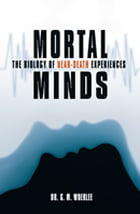 As a practicing anesthesiologist in the Netherlands G.M. Woerlee M.D. has seen many approach death’s door. For those returning with stories of an afterlife he advises a closer look at the medical evidence.
Join Skeptiko host Alex Tsakiris for a vigorous discussion with near-death experience skeptic, anesthesiologist G.M. Woerlee. During the 90-minute episode Woerlee sets out to refute the research Dr. Jeffrey Long published in, Evidence of the Afterlife.
According to Woerlee, there are a number of conventional medical explanations for the phenomena reported during NDEs, “ultimately, when you look at the total body of evidence explaining the physiological or biological basis of the near-death experience, the out-of-body experience, and the other experiences as reported by those undergoing near-death experiences, you come to the conclusion that most of them — in fact all of them — can be explained by body function and the changes in body function induced by the various – I call them stressors – or causes of the near-death experience. Hypoxia, drugs, anxiety and on and on.”
The discussion includes a point-by-point examination of the nine lines of evidence for the existence of an afterlife as outlined in Dr. Jeffrey Long’s book. Dr. Long has agreed to issues a response during a future episode of Skeptiko.
Read Dr. Woerlee’s critique Evidence of the Afterlife
Read a detailed response from Kieth Wood, a Skepitko listener
Read/Listen to Dr. Long’s response
Get a free download of Dr. Woerlee’s book: The Unholy Legacy of Abraham
Play it:
[audio: http://media.blubrry.com/skeptiko/content.blubrry.com/skeptiko/skeptiko-98-woerlee.mp3]Read it:
Alex Tsakiris: We’re joined today by someone well qualified to enter into a discussion on the evidence of survival of consciousness and the near-death experience. Dr. G.M. Woerlee is a well-respected anesthesiologist in the Netherlands, a frequent lecturer in his field, and an author of three books including, Mortal Minds: The Biology of Near-Death Experiences.
Dr. Woerlee, welcome to Skeptiko.
Dr. G.M. Woerlee: Thank you very much. I’m glad to be here. I would like to make one other point and that is that I’ve also written another book and that is called, The Unholy Legacy of Abraham, which uses a biology of near-death experiences and explains it rather more fully.
Alex Tsakiris: We might also point out that that second book that you mentioned is available as a free download to anyone. I think that’s correct, right?
Dr. G.M. Woerlee: That’s correct.
Alex Tsakiris: We’ll have a link to that in the Skeptiko show notes as well as a link to the article that we’re going to talk mostly about today. That’s this critique that you offered to Dr. Jeffrey Long’s book, Evidence of an Afterlife. That’s what we’re going to focus the main part of our discussion about today and you’ve really written quite an extensive critique of that. I thought it would be a great opportunity to have you on and get your perspective. We have a lot of information I’d like to try and cover today between Dr. Long’s book and your critique. There’s quite a lot to sort through.
Let me start by attempting to give a little bit of a big picture summary and you can see if you think this is accurate or not.
Both you and Dr. Long have looked at the near-death experience phenomena in some depth and Dr. Long thinks that his research and the research of other folks in the field is highly suggestive that consciousness somehow, in some way, survives death. In other words, he finds reason to believe these near-death experiencers who think they’ve experienced what we all call an afterlife.
Then you, on the other hand, believe that there’s a more physiological explanation for what’s going on and you mainly focus on the hypothesis that near-death experiencers are, in fact, conscious in a normal way through the faculties of their brain when they’re having these experiences. Is that more or less correct?
Dr. G.M. Woerlee: Yes, that’s more or less correct. In fact, I’ve read the book of Jeffrey Long extensively and also I’m very familiar with all other, well, most other near-death experience research. Those are indeed my conclusions that the persons undergoing a near-death experience are indeed undergoing a real experience; it’s a profound experience; it even has sometimes a life-changing effect; and it’s a real, human experience.
But I do not agree that the explanation is a supernatural or paranormal one. I believe these people are indeed conscious. But that brings us into another subject of what is a near-death experience?
Alex Tsakiris: Yes, and before we even sort that out, let me lay the groundwork for how we’re going to proceed, because what you did in your critique which I thought was really good and helpful in terms of analyzing someone’s claims, in this case Dr. Long’s claims, is you followed the format that he did. He lays out in his book nine lines of evidence that he believes are highly suggestive of the near-death experience suggesting an afterlife. You go point-by-point. So that’s how I thought we’d proceed here.
Before we jump into those nine lines, the first thing I guess I’d do is touch on something that you touched on real briefly in your introduction. That is the research that Dr. Long has done, because when I talk to some folks who are skeptical and maybe unfamiliar with the importance and the use of surveys in medical research, they may not be aware of how to look at this.
Is survey really a valid way of looking at medical information? Then they have questions about this particular survey. Is looking at 600 cases, Dr. Long’s research population, is that enough? He had this questionnaire, it’s 150 questions, pretty extensive. But is that enough?
What folks are telling me is that this kind of survey research with that kind of database, properly reviewed, properly constructed, and is a reasonable way to collect these accounts. Would you care to weigh in on that at all?
Dr. G.M. Woerlee: I would indeed. The thing is that surveys are very powerful instruments, but they should be used very carefully. What you actually have in the case of Dr. Long, is a good survey. He had a questionnaire, an extensive one; I’ve looked at it. The problem is that the people who respond to is are the ones with the story to tell. So often, the people with a story to tell will respond to these stories and people with less of a story or with no experience whatsoever, they will not respond at all to the survey. So what you actually have is a bias of the respondents.
In other words, it’s like you send out a survey to 1,000 people; you get 400 completed surveys back. You base your story on the 400 that were returned. But the other 600, you’ve heard nothing from them. So it depends on what sort of survey are you doing and what is the purpose of the survey? If you are just orienting yourself as to what is possibly going on, then a survey such as Dr. Long’s is quite good in the sense that it will show you, “Ah, these points are the ones we’ve got to look for, look at, and examine.” But it will not tell you any more than that.
Alex Tsakiris: Okay, that’s interesting. I’m not sure how that will play itself out in the content that we’re going to talk about, but I think that’s a point that we’ll leave out there on the table for further discussion.
The other point that I want to bring up is something that you mentioned in the introduction to your critique, and that’s this idea that Dr. Long is essentially arguing this “God of the gaps” argument. In your article you suggest that he’s confronting scientific uncertainty, areas where we don’t know what’s going on, and he’s maybe interjecting that with the presumption that if there’s a gap there, then God must be there.
Dr. G.M. Woerlee: Well, I’m not actually saying that it is God in this case, but the God of the gaps argument is a well known theological argument commonly used by intelligent design people and creationists of all types. But it’s also commonly used in science. But in this particular case, I call it the God of the gaps argument because this is an argument familiar to most people. In the case of Jeffrey Long, what he does in his book is he has nine lines of evidence as he calls them, and he tries in some of them to provide a scientific explanation.
Then he cannot provide an explanation so he says, “Yes, this is inexplicable, therefore, the cause must be supernatural or the cause must be that there really is an afterlife.” That’s a system of argument consistently used throughout the book. In every one of the examinations of every one of these nine lines.
Alex Tsakiris: That will be another point we’ll just leave on the side and let listeners decide, because you make a point there. I would come back and say I didn’t really read it that way. I read it as someone who was approaching a topic where there are admittedly a lot of gaps. When we get into the whole area of consciousness in general, let alone survival of consciousness, clinical death, and all the definitions we can go through that. We all realize there’s a lot of gaps so I think what he’s trying to do is fill in those gaps the best he can with the best science that’s available.
I think you could make the argument that the ‘other side’, whatever that side is, materialistic neuroscience or whatever, can be just as guilty of trying to fill in those gaps, as well by saying, “We don’t know what’s going on, but we’ll figure it all out and it’ll all map to neurocorrelates.” That’s also filling in the gaps, so I’m willing to leave the gaps be gaps and just say, “What’s the best evidence we have?” Maybe that’s all you’re calling for, too.
Dr. G.M. Woerlee: No, not quite the same way. The thing is that when I see a gap I say, “This is unknown. Okay, let’s leave it at that at the moment and see if we can’t approach the problem in a different way and also find a solution,” instead of saying, “Oh, there’s a gap. Therefore, the explanation must be something quite different.” There are many fields of physiology, chemistry, and in medicine where basically this type of gap does exist. People don’t go on basically empirical explanations.
That is the difference between Jeffrey Long and my approach. I try and find an explanation. I keep puzzling and puzzling until – and that is what most skeptics or scientists will do – and not call it a gap which needs a different type of explanation altogether until you’ve actually exhausted all other possibilities. I do not find that Dr. Long does this.
Alex Tsakiris: I would have to take a point with that. I do think you fill in those gaps when you say, “We don’t have any knowledge of this at this point but we’re going to discover it someday.” These are these promissory notes that get issued that say someday we’re going to fill in this gap.
So what I think he’s doing is saying, “Here’s from the empirical evidence that I have, here’s the possible explanation.” It’s sending us in a different direction in terms of theories that have to be played out, but he’s looking at the evidence, too. I don’t know. I can leave that alone for now, but if you have anything else to say about that, please go ahead.
Dr. G.M. Woerlee: I think that basically, he has done some serious research; he has a large database; all the near-death experience reports are very good ones, I assume, because it’s more than 1,300 or 1,600 or whatever number of cases. It’s large. Certainly he has a large database, but the problem is that in his book he seems to accept these explanations at face value.
The problem is that he does two things. 1) He views the near-death experience as a unitary phenomenon. That means regardless of the cause, the near-death experience is the same all the way around for all people. But when you look at near-death experience causes, you see they arise during cardiac arrest, they arise during anesthesia, when there’s absolutely no question of brain oxygen-starvation. They’re under the effects of drugs.
In cardiac arrest you have drugs and brain oxygen-starvation that also arise during people who jump from the Golden Gate Bridge. And these people are certainly not oxygen-starved and they are not under the effect of drugs. There have been interviews with survivors of these jumpers.
2) There are also people with near-death experiences basically due to fear. Fear of execution, fear of other things, or anxiety attacks. So the cause is very different. The final common pathway as we call it within medicine and biochemistry is the experience. This is a profound experience with several characteristics and these are what Dr. Long also refers to. So the near-death experience is not entirely the same thing.
You’ve also got to look at the cause and Dr. Long, he has a large database, and he fails to actually look at the cause except in one particular case where he mentions that he studied near-death experiences during anesthesia and compared them to other near-death experiences. He found that these people reported more darkness and tunnel experiences. Okay. And that was the only difference.
I find this rather absurd, actually, because Dr. Moody in 1973 was the first publication of his book, Life After Life. He did a similar study on admittedly far fewer patients, and came up with the same characteristics. So I found myself very disappointed in that regard.
Alex Tsakiris: I actually see that as more evidence to support his conclusions. As you say, he has a large database. He’s looked at many different cases with many different causes of the NDE. I’m not sure all the causes that you mentioned would really qualify as true NDEs, but leaving that aside for a minute, if we look at most of the ones you mentioned, I’m sure there would be agreement there.
But then the real question is if we have all of these different causes, why would we expect to have such similarity in the experiences? Let’s use that point as a jumping off point to jump into these nine points, because I think it will help structure what we’re talking about.
The first point that you address is Dr. Long’s contention that these patients experience a lucid death, and that it’s medically inexplicable to have a highly organized, lucid experience while unconscious or clinically dead. So why don’t you tell us your response to that?
Dr. G.M. Woerlee: I’ll begin by first talking about clinical death. Many people, when they talk about near-death experiences or write about them, talk about the phenomenon of clinical death.
What do they actually mean? It is often, in many of these more simple books, defined as basically the absence of breathing and in particular, the absence of heartbeat. In fact, when you look at many of these things, the evidence that most people consider the hardest is the evidence of near-death experiences occurring during cardiac arrest. In that case, people have demonstrated cardiac arrest. That means the heart has stopped beating or is beating so abnormally that it no longer pumps blood.
Several good studies have been done of the speed at which consciousness is lost and the electrical activity of the brain ceases. Usually, the first good study was done in 1943 in an American prison by Lieutenant Colonel Rosson and a certain cadet and was published in the Journal of Mental Science at the time. A good study.
And then several more recent ones like Aminoff in the 80s with turning off pacemakers. Also Vissa in 2001. They all came to the same conclusion. Within 4 to 30 seconds, all electrical activity, measurable in an electroencephalogram, ceases. Dr. Pin van Lommel, who performed one of the better prospective studies of near-death experiences in the Netherlands, with a big number of patients — I can’t remember the exact figure – he also stated the same in his article in The Lancet.
What he then further forgot to say was that the people who are interviewed after a cardiac arrest have all survived. In other words, they are alive to tell the tale. Why are they alive? Because they received heart massage. Heart massage means that someone energetically presses on the chest to generate a sort of pumping action of the heart. Without heart massage, a person with a cardiac arrest simply is dead. Very dead. And they do not come back to tell their story.
So what you actually have is cardiac massage generates a flow of blood. This flow of blood actually has been measured in a number of studies. Not many studies and you have to look very carefully in all the scientific literature to find some studies where this actually was measured. Usually, in around 20 percent of cases to about 40 percent of cases, enough blood flow is generated by cardiac massage to sustain consciousness. I say, potentially, to sustain consciousness. That doesn’t mean it automatically does.
Then we come to the matter of what people describe during their near-death experiences during cardiac massages. They saw the people working upon them or they heard people rushing to them. In that case they were in the coronary care unit and had suddenly stopped pumping. They got 30 seconds to see and hear people running toward them because they are conscious for these 30 seconds, and they can hear even though they have no heartbeat.
It’s a commonly heard complaint from coronary care units, for example, where the heartbeat of some people suddenly stops. They complain bitterly when they’re jumped upon by a whole pile of doctors and nurses and defibrillated. They complain bitterly about the pain of the cardiac massage and also the pain of the defibrillation.
Now, in fact a lot of experiments in America and even medical practice in the United States with artificial hearts clearly demonstrates that heartbeat or actual heartbeat is not really needed for consciousness. For example, in the Jewish Hospital in Louisville, Kentucky, as well as in LDS’s Hospital in Arizona, and several other large medical institutions where they do heart transplantations, some people are so sick, their hearts are so diseased, they cannot survive the period of waiting until a donor heart becomes available.
So what is done in some cases is take out the old heart, put in a mechanical heart; it’s just a machine to pump blood around, and you connect that to a battery-driven pneumatic unit, and the people can go home and live for a few months until a donor heart becomes available. This is standard practice in some places in the U.S. where enough money and facilities are available to provide this highly technical and medical service.
So in other words, what you’re actually doing with cardiac massage is something very similar. The heart is not beating but you induce heart massage, a pumping action which pumps blood around. Now most people getting heart massage during a cardiac arrest are never attached to an electroencephalograph. That’s very rare.
In fact, most people fall down in the street or they suddenly have a heart attack in a ward or another place in the hospital. An electroencephalograph is never attached for the very simple reason that it’s very difficult to do that at the same time as someone is receiving heart massage.
In fact, the presumption that all these people were flat-lined at the time is only a presumption. And in fact, no one actually of these people in the research of Dr. Pin van Lommel or Sam Parnia and other people ever had an electroencephalograph machine attached to their heads.
So the presumption of flat-lining is purely an assumption because they remember electroencephalographic activity ceases after 4 to 30 seconds. In that case, they’re flat-lined. They forget the action of the cardiac massage, which is to pump blood around the body.
Alex Tsakiris: A couple of points there: I think it’s good that you remind us, which we often forget when we’re talking about death, death, near-death, that we’re talking about the folks who come back to life. I think that’s a valid point.
But I still have a couple of pretty big problems with your argument. 1) The first is the people who die, particularly those who have a heart attack because it’s easier to study because we know the physiology – they’re not supposed to have the kind of experiences that Dr. Long found. One point that you just mentioned was pain. In particular, these people complain about pain from the defibrillator, pain from people pounding on their chest, and yet Dr. Long’s survey finds that there isn’t this pain. That appears hardly at all in the surveys.
2) The other thing I would interject while we’re talking about heart massage and that; I don’t know this, but one of my listeners contacted me and his sister is an emergency care nurse and said that the most common procedure when someone is in hospital and has cardiac arrest is the defibrillator. Pounding on the chest is secondary. The first thing you do is go over and zap them with the paddles. A lot of times, the heart massage is the last resort many minutes later.
All that leads back to what you’re alluding to, and we really have to break it down. There’s three parts to this process, particularly when we look at cardiac arrest. There’s that 10 to 15 seconds between when the heart stops and the brain stops. Our best medical knowledge says that the brain is under a lot of stress and it shouldn’t be lucid and coherent during that time.
The second part we have is when the brain is flat-lined or dead or we can assume nothing is happening. There hasn’t been any attempt to resuscitate this person, and during that time we definitely don’t have any explanation for why they were having a conscious experience.
The third part you are alluding to, and you mentioned quite rightly that now we’re getting blood flow back to the brain so there is a chance for some conscious experience, but again, I’m going to rely on you here, but doesn’t our best medical knowledge tell us that during that process of resuscitation, the brain coming back online after it’s been dead, we wouldn’t expect it to be lucid and coherent. Isn’t just the opposite the normal expectation of how that brain is working during that time?
Dr. G.M. Woerlee: They’re all interesting problems and in fact, they can be answered. To begin with, a person who has a cardiac arrest has a short period of consciousness when they can hear people rushing to the bed if they’re in a coronary care unit. As you quite correctly said, in a coronary care unit the first thing they do is defibrillate people. Out on the street or elsewhere in the hospital they don’t have this luxury, so they first do cardiac massage. That is what most people undergo.
Then we come to the point of cardiac massage as I explained does restore a flow of blood to the brain. But does this restore any electrical activity to the brain? That’s an interesting question. In fact, there are several studies which do show and also case reports which do show that this is the case.
What you actually have during a cardiac arrest is blood flow to the brain stops. This means within seconds the brain becomes oxygen-starved. No one denies this. This is certain because the brain has no reserve store of oxygen. The brain becomes oxygen-starved and then when you have cardiac massage, a flow of blood is restored, sometimes sufficient to sustain consciousness.
One study which was done on a patient who actually had an EEG or electroencephalograph – I’ll use the longer term because the Americans use ECG instead of electroencephalograph, while in Europe we use EEG so it’s a bit confusing for many people. Anyway, they had an electroencephalograph but that’s to the head of this person. He had a cardiac arrest. The electroencephalographic activity fell away as expected. Heart massage was applied, or cardiac massage, whatever you like to call it, and within 20 seconds after cardiac massage was instituted, electrical brain activity was restored.
Similarly, other studies have been done with bispectral analysis, an apparatus that’s a method and sort of integrated electroencephalograph used to monitor awareness during anesthesia. Some people have had this apparatus attached to their head during anesthesia and during the pre-period they developed a cardiac arrest. During cardiac massage, bispectral activity reappeared. In other words, electroencephalo-graphic activity reappeared. So in fact, cardiac massage can restore electroencephalographic activity if applied efficiently.
It will not occur in all people because not everyone is expert at applying cardiac massage and not everyone has a chest which makes cardiac massage easy. Not everyone has enough broken ribs to make cardiac massage very effective.
Alex Tsakiris: That last part of what you were just saying there brings me to the larger point, which you’ve cited some cases there which you think are pretty good evidence that heart massage might regenerate conscious experience inside the brain. But don’t we have to deal with the entirety of the data? We say we’ve got a pretty good database here of near-death experiences. We have to try and explain as much of that as possible.
So if you’re right for 50 percent of the cases, and I don’t think it’s anywhere near that much because I think we have other problems to overcome, like the symptoms of hypoxia should be present and they’re not present. The symptoms of when the brain is coming back online, there’s normally a lot of confusion, maybe even amnesia. There are a lot of studies that suggest these are the normal symptoms. We don’t see those.
But let’s take all that aside and even say you’re right and your explanation accounts for 50 percent of the cases. We still have a medical miracle here, even if you have only 50 percent of Dr. Long’s 600 cases being unexplained. It seems to me like there’s a lot of wiggle room in his data, and there isn’t a lot of wiggle room in your explanations. In your explanations you have to account for all the cases.
Dr. G.M. Woerlee: Actually, it does, because what you have is a difference between the observer and the experiencer. Now the thing is that in Dr. Long’s cases and in all other studies of near-death experiences during cardiac arrest, no one has actually any electroencephalographic data. They go on presumption. Therefore, you cannot say. We do know from the cases where people did have an electroencephalograph attached that electrical activity in the brain is restored with efficient cardiac massage. That is a fact.
But then we come to the matter of the hypoxia or the oxygen-starvation of the brain, as I would rather express it because that’s a more easily understood term. There have been many studies of oxygen-starvation and in fact, there are very good books written by Van Liere and Stickney from Chicago University in 1963 and also the similar studies have confirmed the same phenomenon. And that is 1) if you observe a person who is oxygen starved, they look confused, dazed, they don’t walk properly. It’s like these dazed mountaineers above 5,000 meters without oxygen.
But the person undergoing this, they have two ways of experiencing it. Many people who undergo – and I refer to a colleague of mine, Professor Derham in the local University of Leiden, who does experiments with hypoxia and oxygen drive and respiratory drive. He administers oxygen-starved mixtures regularly to people and he says, “They look like rubbish, but they feel like heaven.”
They feel fantastic. They feel more awake, aware, and everything like that. In fact, precisely what people describe during near-death experiences due to hypoxia. But hypoxia, as I say, is not the only explanation for near-death experiences as it certainly is with cardiac arrest. But not during anesthesia. Not during jumping from the Golden Gate Bridge or fear experiences.
Alex Tsakiris: Let’s get into anesthesia in just a minute. Before we read this lucid experience part, and maybe we’ll come back and touch on it later.
Dr. G.M. Woerlee: I’ll add one thing to this lucid experience. It’s very curious, but during extreme hypoxia or oxygen-starvation of the brain, two senses are preserved. One is hearing that remains preserved until you’re unconscious. So even though people are extremely oxygen-starved, they can hear. Second, although the sense of body position, while this is abnormal, it is to a degree preserved. These are the two things.
But the sensation of pain or the sensation that pain is painful and unpleasant is lost. That can be explained also with the physiology of oxygen-starvation of the brain.
Anyway, you shouldn’t eliminate hypoxia or oxygen-starvation of the brain as an explanation because people do –many of them do — feel fantastic during oxygen-starvation of the brain. They feel their senses are more acute. Their hearing is better, and their perceptions are better, and their thoughts are more accurate and better and faster. So that explains a great deal.
Alex Tsakiris: We still have two big problems in that time sequence, right? We have the problem after the 15 seconds when the brain does go flat. You said we don’t have these people hooked up to an EEG so we don’t know, but we can be pretty confident when they’re having a cardiac arrest that within 20 seconds their brain is flat, whether we have them hooked up to an EEG or not. And I’d go back and say I’m not entirely sure that in every one of the cases we don’t have any EEG data. I just don’t know that and it sounds like you’re pretty confident that we don’t, so I’ll just leave that as an aside.
So we have these two other timeframes that we have to worry about. One is when we know the brain or we can reasonably assume that the brain is flat, and if there’s any lucid experience during that time we don’t have any way of accounting for it.
The third part is when the brain is coming back online and as you just mentioned, we do have these other problems of confusion and pain and these other symptoms that are normally reported that aren’t present at all in the data that we’re working with in terms of Dr. Long. So we do need some kind of explanation to jibe those two together, don’t we?
Dr. G.M. Woerlee: Not really. The thing is that 1) with this business of cardiac arrest, there are near-death experiences where people describe themselves boom! Cardiac arrest and they hear people around them saying, “Oh, he’s fallen down. Oh, cardiac arrest.” And they hear people running towards them. Then what most people describe is they describe themselves as looking down upon their bodies as their doctors are working upon them. In other words, they’re actually undergoing cardiac massage at the time.
Alex Tsakiris: Okay, but let me just interject. So what if their experience includes a period of looking down at their body before they have cardiac massage? Before they have defibrillation? Before that. What about when they have that experience?
Dr. G.M. Woerlee: I have seldom come across – I have never come across, actually, a person or a near-death experience of a person who had a documented cardiac arrest and in between before feeling themselves fading away that they have an out-of-body experience or another experience where they saw nothing happening but just their body lying there.
Alex Tsakiris: Oh, no, there are plenty of those in Dr. Long’s database. All the accounts are there online. Anyone can read it. There’s plenty of folks who said they experienced cardiac arrest and then they just saw their body flat or they saw the line go flat on the EKG machine for an extended period of time and then they saw them scrambling. They’ll say the whole thing. They saw everyone scrambling around in the thing and they didn’t know what to do and there was some confusion. They wheeled in one cart and then they wheeled that out and then they had to wheel in another one. So they’d go through the whole thing.
Dr. G.M. Woerlee: No doubt about that. The thing is that what he is describing is time dilation, which is something that can actually happen.
2) The fact that a person does not move during oxygen-starvation does not automatically mean that they are unconscious. In fact, several studies have shown that during extreme – and case reports during extreme hypoxia – just before a person loses consciousness due to oxygen-starvation, they are paralyzed due to oxygen-starvation. It’s a phenomenon very similar to the locked-in syndrome. I think the mechanism is more or less the same. They are paralyzed but conscious. In that case, you don’t need many seconds to have an experience…
Alex Tsakiris: Let’s be clear. Just so we’re talking about the same thing, your explanation has to fit in every case, and if we limit it to just talking about cardiac arrest because it’s easier, then your explanation has to fit every cardiac arrest incident when we know that there’s no medical explanation for them having any conscious experience beyond 15 seconds, right? Isn’t there a problem that all the cases have to match up to your explanation?
Dr. G.M. Woerlee: I don’t see any problem at all. In fact, I’m sure a good analysis will show this very point. The second thing is that not every one of these people that has a cardiac arrest has no cardiac output at the time. I have seen people during ventricular tachycardia – which is an abnormal heart rhythm – who have a reasonable blood pressure and everything else.
Also, there are the anecdotes that you have, or these stories, that do not entirely convince. In fact, they don’t convince at all because some people may well have had a low cardiac output and they see people rushing to them and they see something on the monitor, but when did they see this? So I think my explanation accounts for most of it.
Alex Tsakiris: Okay, let’s move on because we have a lot of ground to cover and it’s already very, very fascinating. I like the way you come at these topics. It’s very straightforward and with very solid medical understanding of it. I think that really helps contribute to this whole discussion, this dialogue, so that folks can figure this stuff out.
With that, let’s go on to point two, which is the out-of-body experience and the near-death experiencers see and hear the out-of-body state and what they perceive is nearly always real. That’s Dr. Long’s assertion. Why don’t you go ahead and tell us your response to that.
Dr. G.M. Woerlee: It’s a nice question, actually. And it’s a fascinating experience. It’s also a real experience. There’s no doubt about it. People really do feel themselves disassociated from their bodies and they do really perceived themselves as looking down upon their bodies, etc. So there’s no doubt about it. It’s a real experience.
What is very curious is when you look at it and study many of these reports about out-of-body experiences during cardiac arrest or other medical emergencies or whatever, they usually describe themselves as either floating above or standing at the same level as their body and usually separated by a distance of around two or three meters, something like that. In other words, 6 to 10 feet, something like that. This is precisely what you would expect from most people with otoscopic experiences as described by a layman.
What is very curious – and that’s my big problem with this – is that many people describing their out-of-body experiences describe what they hear and what they see. This is amazing because when you’re talking about out-of-body experience or a possible separated consciousness, a consciousness separate from the body and distant from the body, you’re talking about something which is immaterial.
In other words, this separated consciousness can pass through doors, can pass through walls, and can even move out of the body without any sort of interaction with the material matter of the body. Yet, this separated consciousness can somehow hear sound waves. Sound waves are basically pressure waves in air, which is very material. Yet the same separated consciousness did not interact with any solid material like the body as it left, or operating theatre drapes, as in the case of Pam Reynolds and other people who have had out-of-body experiences during surgery.
It can also see things. And it doesn’t just see things, it sees things with light. And light is just basically another form of electromagnetic radiation and it’s the same sort of forces that bind molecules together, etc. Yet moving out of the body, no interaction with these electromagnetic forces.
Yet it sees colors with light, and sees colors of clothing, it sees people, and the combination of these sounds and this sight make up the verifiable out-of-body experience reports. They hear people who are present at the time. They report also, yes, these things were said at the time. These things were seen at the time. These people wore these types of clothing. Yes, these people were there.
Alex Tsakiris: So what’s your explanation, then? I hear what you’re saying. So your explanation for the out-of-body experience, collecting this data, is…?
Dr. G.M. Woerlee: What you have are these people who observe, they see with light and they hear with sound. Otherwise it wouldn’t be verifiable. So in other words, what you actually have is these people who have undergone out-of-body experiences, their separated consciousness is actually somehow interacting with light and sound, whereas before, it did not at all.
Alex Tsakiris: But Dr. Woerlee, isn’t there a certain degree of circular reasoning there? If we start with the assumption that you can’t hear and you can’t see without your brain and without interacting with the material world, and then we say, “Okay, so then we can assume that any account that describes hearing or seeing without the brain being present, we should dismiss that account.” How would we ever get out of that loop if we start with the presupposing that there isn’t any possible way that the out-of-body experiencer can really be seeing and hearing?
Dr. G.M. Woerlee: There is one very simple way, and that is that the out-of-body experiencer is actually seeing and hearing with their body. They are hearing with their ears and that means they can hear the sound. And they see with their eyes in some cases because their eyes are open so they can see people around them. When you close your eyes, you can actually visualize in your mind’s eye as it were, quite a lot of what is happening around you.
Alex Tsakiris: But again, to me that doesn’t fit the data. It’s an explanation out there but when we try to match it up with the data it doesn’t fit. What I think the out-of-body experiencers would immediately point out is that the biggest way it doesn’t fit the data is that they’re often bringing in data that they couldn’t possibly see right inside the immediate vicinity of down the hall of the hospital or on a different floor or miles away.
Dr. G.M. Woerlee: You are confusing two types of out-of-body experiences. One type of out-of-body experience is in the vicinity of the person, and the second is separated by a long distance from a person. To begin with, in the region of the person themselves, in the immediate vicinity, physical hearing and physical seeing as well as building up an image in the mind’s eye will explain most of it.
In fact, there is a very good out-of-body experience report by Dr. Pin van Lommel in his article in The Lancet, in which he describes a man who fell down in a field east of Holland, and was collected by the ambulance, brought back to the hospital, resuscitated, and during his resuscitation he heard these people speaking and saying, “Shall we continue or not?” He tried telling them, “I’m alive, I’m alive.” No one heard him, of course.
What he described was he saw himself lying there. He saw these people resuscitating him. He could describe a number of women and men and what he also described was hearing, seeing, and also the pain of the resuscitation. He was placed underneath an apparatus that’s called a Thumper. It’s made by Michigan Instruments. What that does is it’s sort of a pneumatic ram which does heart massage without any people being needed. It just a piston which bangs up and down, doing heart massage. He described the pain from this.
In other words, what this fellow was describing and was actually hearing with his ears because he could feel the pain of the heart massage continuing at the same time. It’s one of the unusual reports. For people in the immediate vicinity of a person undergoing heart massage for cardiac arrest or an out-of-body experience due to anything else, they’re hearing and seeing and building up an image in the mind’s eye, and the person will describe this.
As to distant out-of-body experiences where they make observations at a distance, there are anecdotal stories of these reports actually describing the reality at the time and what was seen and what was heard. However, when you examine these very carefully and look at the evidence piece by piece, you find that there are many inaccuracies and it does not always correspond all that well.
It’s a bit like people in the book of Jeffrey Long where they meet deceased relatives and they haven’t recognized them, they don’t know who these relatives are, so they arouse from the near-death experience. They go to old family photo albums and they look through and they say, “Hey, that’s Aunt Tilly. Or that’s Uncle Bob. I remember seeing him there.” It’s a bit like that.
Alex Tsakiris: Let’s get into that later because I think the family reunion, if we have time for it, is an interesting topic to bring up.
I want to push back on a couple of points there about the OBE experience. One is your distinction between the near vicinity OBEs and the distant OBEs. It’s a distinction that you’re making. I don’t know that Dr. Long makes that or that his research suggests any distinction. As a matter of fact, I think just the opposite. He doesn’t see any difference in the accuracy of the data that comes back between the data that’s from the vicinity and the data that’s far away. Again, that’s suggestive, I think, of his point.
Also, even the data that’s collected within the vicinity of the person who is dead at the time or unconscious at the time includes information that wouldn’t normally be perceived by the senses. So again, I think what we really have to do – it demands that we match the data that’s been collected in this database that we both think is pretty strong and we match the data statistically with what we would expect to find if your case is really true. I don’t think it is.
I’ll make one other point that I guess highlights that and that’s the whole process of CPR. If you look at folks who have had a near-death experience and remember something about the resuscitation process, and we’ll leave aside whether that’s because of increased blood flow to the brain or whatever. You had an NDE and you remember your resuscitation. The perspective that they remember it from is being out of their body.
Now if you go and ask people who are resuscitated, remember the resuscitation, didn’t have an NDE, their perspective is not from an out-of-body experience. So we wouldn’t expect that. We wouldn’t expect that there’s this huge difference between people that experience this out-of-body experience and it’s directly related to whether they had an NDE.
Dr. G.M. Woerlee: Actually, it’s a good question and it is a very good point. What you are saying is that the out-of-body experience or near-death experience during a cardiac resuscitation is something unusual. And in fact, that is true. It only occurs in around 10 percent or even less of people, as defined by the criteria of Ring or Greyson, who have a real near-death experience as defined by them. That’s an unusual thing.
And you’ve always got to consider with this type of thing that any medical disorder, be it infectious or circulatory or such as that, you have a standard set of manifestations, symptoms, experiences, and then you have a more unusual subset. There’s an old medical dictum or adage which says, “Uncommon manifestations of common disorders occur far more frequently and are far more likely than common manifestations of uncommon disorders.”
What you are describing here is something very similar to that. What you have is an unusual subset, but one which is also due to the same phenomenon of the cardiac arrest or other disorders. And in fact, this is what you have with near-death experiences during cardiac arrest.
The business of the out-of-body experience during cardiac arrests is a problem of perception because at the same time you have abnormal function of the parietal lobe, abnormal function of whole areas of the brain which induce all the symptoms of the person who describes a cardiac arrest.
Alex Tsakiris: That’s an interesting point and you brought it up in your critique that’s online that we’ve linked to from the website. But I think there’s something missing there. Don’t we have to show that there’s some correlation there?
If we take the whole population of people who have cardiac arrests and then we say 10 to 15 percent of them have a near-death experience and then we say, “Hey, you know what? Ten to fifteen percent of them also have this increased blood flow to the brain.” Those don’t necessarily overlap 100 percent. We would have to somehow do some kind of study to show that there’s some correlation just because the numbers are the same.
Don’t we have the same problem here? To assume that everyone who’s being resuscitated is because they had the out-of-body experience must mean that they have some other set of physiological symptoms going on. We don’t have any evidence for that, do we?
Dr. G.M. Woerlee: No, the problem is that there are surprisingly few studies made of the flow of blood within the brain of a person undergoing cardiac massage for a cardiac arrest. For obvious reasons, this is not done experimentally, inducing a cardiac arrest just to investigate this. It’s not done experimentally. So in fact, most people when they have a cardiac arrest do that in all sorts of places where it is inconvenient to attach monitoring. This is a big problem. A few have situations where people have cardiac arrest and where monitoring was applied. They’re not that common. So that’s a big thing.
Now when you look at the studies of people undergoing cardiac arrest, for instance – I refer again to a really good study of Pin van Lommel. He finds that you look at these studies you find that only 24 percent, one-quarter of the people who underwent near-death experience, as defined as a near-death experience, during a cardiac arrest actually had an out-of-body experience. The other three-quarters did not.
Alex Tsakiris: Right. But that doesn’t necessarily mean anything. We can’t really conclude much from that, can we?
Dr. G.M. Woerlee: No, but this is very simply what you have is that with a cardiac arrest and a near-death experience, the near-death experiences of these people undergoing cardiac arrest are not identical. Most will have a feeling of awareness of being dead or ecstasy or serenity, etc. But only a quarter will actually have an out-of-body experience. Only a quarter will experience a tunnel. A quarter will experience a life experience. They don’t always all overlap. So it is not a unitary experience.
Alex Tsakiris: I think that’s what the study that Dr. Long has fleshes out in a really significant way. We can tear that data apart a million different ways and he has. The tunnel part he excludes because they’ve just found over time that that isn’t really a meaningful measure, but there’s a bunch of other ones.
I’ll tell you what, I’m going to run out of your time here and I want to use it as wisely as I can, so I’m going to push on to these other topics and I particularly want to get into anesthesia, which is your specialty. We’ll talk about that in a minute.
Before we get there, let’s touch on mind sight, because it’s obviously something very dramatic in that when we hear it in the media it seems like a very profound, unexplainable medical kind of thing. Let’s hear your explanation for it. So mind sight, NDEs take place among those who are blind and these NDEs often include visual experiences. Your response to that.
Dr. G.M. Woerlee: That’s also a fascinating phenomenon. I’ve read the book, Mindsight, very carefully. It’s a fascinating book written by Kenneth Ring, a well-known near-death researcher, together with another female researcher, Sharon Cooper. It’s an interesting book. Fascinating, even. It reveals there are people who are blind and supposedly blind from birth as well, who can actually have clear and what appear to be visual near-death experiences.
Now I’ve looked through the book carefully. What he actually shows is something very fascinating. If you look carefully at the stories of these people – I’ve cited a number of them on the critique of the book of Jeffrey Long – you find that many of them were not totally blind. They can see light. And some of them became blind. And even those who were blind from birth, they could distinguish between light and dark.
Then we come to the matter of the experiences themselves. These are very clear experiences where they make good descriptions. What he doesn’t actually prove is that this is true sight. Many blind people make extremely good mental maps of their surroundings. This has been shown time and again in many psychological studies of blind people. What is even more surprising is blind people can even make very good drawings as if they were sighted, some of them. Some of them can even make good sculptures. Very visual things.
Thirdly, they can navigate through buildings quite accurately, even unknown places. In fact, they’re very good at building mental maps and imagery. Not quite the same as sight, but in the way they see things. So what they may be describing, and that doesn’t really come out in that book of Ring and Cooper, is the way they see things rather than you or I see things.
Another point is that they are inundated with visual imagery. Many of these things that they see or visualize in their mind’s eye, as it were, are actually described in terms of color because that’s what they’re used to. They hear it on the television, the radio, from other people. You don’t need to postulate that they actually see things in the same way.
Another point with this book is a case where they describe a man who’d been blind for 40 years and he described the tie of someone else. The thing is that this could not be verified at the time because the person who was present at the time of the incident did not remember anything about it. So it’s a book which raises questions but does not answer any of them.
Alex Tsakiris: This is a fascinating topic and I think you’re right to point out that we need to break this into two groups: 1) people who were sighted at some point in their life and then became blind, and 2) people who are blind from birth.
But I have to take issue with a couple of your points. Even if we accept at face value what you’re saying, that some folks who are blind are better than sighted people at being able to form an image of a room or a mental map of things without using their sight, that still doesn’t explain why they would present accounts that are just as accurate as sighted people. It just doesn’t. We wouldn’t expect, even with their attuned faculties of hearing and touch, to be able to describe a room the same way a sighted person would.
The second point you made that I really would take issue with is I’m not aware of – and maybe you can point me to any study that suggests that the imagery and the language that a blind person would use in describing a room would be rich with color and visual descriptions. I don’t think that would be the case at all.
So that really deals with the folks who were sighted at some point in their lives, but we have a much bigger problem to overcome when we talk about people who have never seen and have never experienced vision at any point in their life because as we know in the studies that have been done of these folks, they don’t even have a vocabulary or a means of talking about red or blue or yellow. It’s not within their experience at all. I don’t know. I think there’s a huge burden to overcome in terms of explaining these many cases of folks who are blind and yet have visual experiences during an NDE.
Dr. G.M. Woerlee: That’s a good point that you make, but there are actually several problems with that. 1) These people are inundated with talk of color and often when in a room, they hear people describing the colors of the walls, the furniture, the clothing, etc., so you cannot actually exclude from these reports of people who are making these near-death experience reports of contamination of their imagery with what they heard beforehand or during the experience themselves.
2) The book of Ring and Cooper is the only one I know of which actually describes near-death experiences among people who are blind at birth and who were subsequently blinded.
3) Another matter with this book is there are some things which are very disputable or debatable in that book. For instance, there is an interesting insert just before the last chapter where they say the person who reported these experiences was later found to have fabricated the whole story. But that’s in a later edition of the book, the one I got when I ordered it from Amazon.
So I consider it a fascinating book and he does raise some very interesting points, but he proves nothing.
Alex Tsakiris: Let’s move on to the next point, your area of expertise, Impossibly Conscious. This is Dr. Long. “NDEs occur during general anesthesia when no form of consciousness should be taking place.”
Dr. G.M. Woerlee: Unfortunately, his opinion on this matter is very different to that of all anesthesiology societies throughout the world. Even the American Society of Anesthesiology recognizes that around 1 in 1,000 to 1 in 2,000 people in the modern anesthetic techniques can be conscious and are conscious. In fact, that’s a big problem which has been recognized since the 60s by members of all societies of anesthesia.
How do you tell whether a person is unconscious or not? There are several signs, increased pulse rate, increased blood pressure, sweating, and pupil dilation. These days you’ve got electrical monitoring apparatus’ such as the BS, bispectral apparatus from Advent Systems in France, which is a sort of integrated EEG. You can do brain stem evoked responses like clicking in the ears as was done with the Pam Reynolds case. A primitive version at that time. And EEG monitoring, electroencephalographic monitoring, which tells you nothing, and such like.
In fact, these are very good monitors most of the time, but they are not 100 percent accurate. The American Society of Anesthesiology, along with many others, have provided a practice advisory for the use of electrical monitoring apparatus which states, don’t trust them 100 percent.
Use your common sense and also other clinical signs together with these monitors because sometimes they may indicate that a person is asleep even when they are not. In fact, I’ve had this experience several times in my career where, for example, a muscle-paralysis monitor told me a person was paralyzed and they stood up. Now that’s embarrassing.
Alex Tsakiris: One point I have to interject here is I don’t see a huge gap between what you’re saying here and what Dr. Long is saying. You’re both saying that anesthesia-awareness is very rare. He acknowledges that it happens and I think he quotes the exact same stats that you do: 1 in 10,000 to 1 in 1,000 people are experiencing it. So the question would be why would we assume that it’s any more common than that among near-death experiencers?
Dr. G.M. Woerlee: No, it’s not any more common than that. In fact, near-death experience during anesthesia or an out-of-body experience during anesthesia, both of these are extremely rare occurrences. Several have been reported in 1975 in a study of the effects of muscle paralysis. Others have been reported since that time. They are unusual experiences.
Some people during anesthesia are very aware and very awake even though they appear unconscious. I’ve had this happen a number of times. Luckily, they didn’t feel any pain, but it is very upsetting when you hear that. But these people, during apparent unconsciousness during anesthesia, where they don’t look like they’re conscious or don’t give any manifestations yet are conscious, what you do notice is the fact that they are affected by the drugs used during anesthesia.
A classic case, as an aside, is Pam Reynolds’ case, where before she was actually connected to any sort of bypass, she heard the cardiothoracic surgeon talking about that the fact that the arteries in her right groin were too small for the cardiac bypass tubing. Now this was a conversation heard by other people in the room, therefore it was verifiable.
Second, at the time she felt no pain. That’s the effect of the sentinel or morphine-like drugs they use to kill pain at the time. Thirdly, she felt calm and a bit unconcerned about all this. That’s also an effect of opiates. Fourthly, she thought she knew beforehand she should have told the cardiothoracic surgeon about the size of her artery in her right groin being too small for the tubing. Strange. I don’t know the size of my arteries, either. Anyway, aside from that, what you see…
Alex Tsakiris: Let’s point out here that this Pam Reynolds case isn’t a part of Dr. Long’s research, right?
Dr. G.M. Woerlee: Oh, I know, but what he does report is that many people have a clear consciousness.
Alex Tsakiris: But again, I just want to bring you back to this one point and then I want you to go on and please finish. I think he has 23 cases of people under general anesthesia that have an NDE. The odds are 1 in 1,000 or 1 in 10,000, that someone would have anesthesia-awareness, then of those 23 cases chances are less than one of them was experiencing anesthesia-awareness. Why would we assume that a large percentage of those folks are aware under general anesthesia?
Dr. G.M. Woerlee: A large proportion of people are not aware during anesthesia. In fact, what happens is that even if people are aware during anesthesia, they often forget it at the end.
Alex Tsakiris: I’m sorry, but it seems like that’s the assumption you’re making. You’re assuming that the 23 people reported in Dr. Long’s study who were under general anesthesia were all somehow aware. We’re this problem that anesthesiologists have of anesthesia-awareness. Again, the odds are 1 in 10,000, but let’s say in this case by some fluke that we don’t understand, 50 percent of them were aware. Then we still have 50 percent of them, a dozen people, that we don’t have that explanation for.
Dr. G.M. Woerlee: The thing is I don’t agree with you on that point. The thing is what you describe are experiences, unusual near-death experiences of people who are under general anesthesia at the time. In other words, these people — and it’s a very rare experience, I quite agree – had an experience and during this experience they either had an out-of-body experience or they felt that their mental activity was clearer and more rapid than normal, or they felt ecstatic, etc.
These experiences or these effects can also be described by the effects of the drugs used during anesthesia, so I see no real problem with people having near-death experiences during anesthesia.
Alex Tsakiris: I’m just going to interject here, and I want to get your response to this. The tiny bit of knowledge that I have on this from a cursory examination says that the symptoms of anesthesia-awareness are not present in Dr. Long’s accounts. The confusion, even the euphoria in the hallucination, what he found is that the accounts are very, very accurate and are not hallucinations in the way that we normally think about them. So don’t we have to factor in the normal symptoms of anesthesia-awareness?
Dr. G.M. Woerlee: Anesthesia-awareness takes a number of forms. There are many people who are aware during anesthesia who actually have clear consciousness and even what they would describe as improved consciousness. There is no problem there at all, in fact, these near-death experiences are actually expressing some of the effects of the anesthetic drugs, in particular the opiates, etc., and also the low doses perhaps of benzodiazepine. There’s no problem there at all.
In fact, not everyone during an awareness during anesthesia has a befuddled consciousness. They don’t. I’ve had several people who were very aware during consciousness under anesthesia administered by me. One person even had an out-of-body experience during which he clearly could describe the situation in the operating theater. As he stood at the end of the operating table viewing everything as it happened during his own operation, it seems he had clear consciousness and an out-of-body experience.
Another patient also described an out-of-body experience to me at the beginning of a gynecological operation. She was so-called asleep. She was standing next to the table, had her legs in the holders, and the gynecologist asked the anesthesiologist, “Can I begin?” He said, “Yep.” And she said, “No, no, I’m not asleep,” as she stood there next to herself.
So in fact, these are effects of anesthetic drugs, and when you look at the effects of anesthetic drugs by several people, and I’ve administered anesthesia to many thousands of people, you can distinguish two types of people. 1) Those who find the effects of these drugs very pleasant. They go, “Yeah, wow, this is cool.” 2) And others who say, “Ewww, I don’t feel so good.” So you’ve got a spectrum of reactions to these drugs.
So some people have ecstatic experiences. They feel that their mental activity is faster than normal or just as good as normal. This does not surprise me one bit. I’ve seen these happen among people who are aware without any near-death experiences or out-of-body experiences. I’ve heard it from the people themselves. So it’s not a big problem. In fact, that explains many of the mental states experienced by Dr. Long’s patients.
What he does describe in his book is with these 23 patients, he compared them to the other 600 and whatever and did a chaos grade analysis as he proudly describes and found the only difference between their experiences and that of the other people was that they experienced more darkness. Well, I can explain that, too. That’s a fact of the physiology of the eye and a few other things. So there’s no problem there.
As I said, this brings us back to the point I made in the beginning. You have one experience; it’s often compared to a headache. You’ve got pain in your head. That can happen because you’ve got a cancer in your head eating it out, or you’ve got an abscess, a big sac filled with pus in your head and it’s all inflamed and you’ve got a headache. Or you’ve got a big hole in your head because someone hit you with a rock. Or you’ve got a migraine.
Whatever the cause is, you have one thing. Pain in your head. But cause is different. So in other words, it’s a bit like a near-death experience. Your experience is due to anesthesia. Due to drugs. Due to cardiac arrest. Due to any one of a number of things. The final result is this experience.
Alex Tsakiris: See, that’s interesting because I think what Dr. Long was attempting to do by comparing the 23 cases that were under general anesthesia with the rest of the population was to say not that here are the minor differences, but to say that there aren’t many differences. So I think his point would be we would expect that someone under general anesthesia, whether there’s this awareness or not, they’re heavily sedated, all these chemicals are coursing through their veins. We’d expect a different kind of conscious experience. We’d expect a reduced conscious experience, and we don’t see it.
Dr. G.M. Woerlee: That’s what he expects. The thing is that he is not an anesthesiologist and the experience of many in these statistics is that some people under anesthesia, if they have an awareness, is that they are fully aware and well able to describe everything and to have a clear consciousness.
I heard it once from a fellow who underwent a terrible extraction of all his teeth. Then he was undergoing heart surgery because he had rotten teeth so they had to get rid of the source of the bacteria which would infect his new heart valve before he underwent the operation. He underwent the operation, was perfectly normal during anesthesia, no problems. At the end of the operation when he woke up, he described, “Yeah, I was awake during the operation, heard everything clearly, felt good, didn’t feel any pain, and felt wonderful.”
Alex Tsakiris: Okay, we’ll leave that alone just in the interest of time, especially since you’re the expert on anesthesia. But I want to hit on a topic that we touched on earlier just very briefly. That’s this idea of the family reunion.
Dr. Long’s point is that virtually all beings encountered during NDEs are deceased at the time of the NDE and most are deceased relatives. Your response to that was, quoting from your paper, “again, these meetings are either memories of the deceased or hallucinations. In any case, no one expects to meet living relatives after death, which is why they’re absent in these stories.”
I’m going to try to make this go a little bit quicker by bringing you to the point. I think there’s a bunch of assumptions wrapped in there and I don’t think the assumptions match up with the data. His data is that 95 percent of the folks that people encounter during a near-death experience are deceased friends or relatives. Why would we expect a hallucination to conform so closely to these kinds of criteria? I fail to see how we could offer up some kind of physiological explanation for that.
Dr. G.M. Woerlee: No, you don’t need to offer a physiological explanation because people have these visions of deceased relatives. Sometimes they do not know them and later see them in these family photos. Leave that to the side for the moment.
There’s a very interesting paper published by Greyson in 1985 in which he compared expected near-death experiences with unexpected. What he found was the expected near-death experiences, about a half of these people had what we would call transcendental experiences. In other words, they meet deceased relatives, etc.
Now what they do is meet these deceased relatives. Very well. And they only meet deceased ones because in the Land of the Dead, they don’t expect to see any living person. This is a cultural thing and purely common sense. These people expect to meet their relatives in an afterlife. So of course they do.
And the form they see their relatives in is usually a much improved form to what they were like when they had passed away. You wouldn’t want to imagine that you went to Heaven and with both legs amputated and roll around in a wheelchair. So they see their relatives improved and they look good and these relatives come to guide them.
In fact, cross-cultural studies reveal that Americans tend to see relatives. People in other countries don’t always see relatives.
Alex Tsakiris: Okay, then that brings up another point we can move on to. Again, because I think it’s the same point I’m going to bring up when we talk about the cultural differences and the age differences. Let me hit the high points. I don’t think we can really expect, as you’re suggesting, that these hallucinatory experiences would conform so closely to each other.
You just mentioned the cultural differences. He doesn’t find cultural differences. The 95 percent of deceased friends and relatives that he finds crosses all cultures. It also crosses all age barriers. Even children as young as three, who haven’t been indoctrinated with this whole scenario of what’s going to happen after you die. They’re included in the data and they still see the same hallucination.
Isn’t it kind of like you’re suggesting that since we all have a similar brain; we all have similar brain physiology and we all dream; therefore, we all dream the same dream. And we know we don’t dream the same dream.
Dr. G.M. Woerlee: That’s quite correct. We don’t. But the thing is that when you are talking about children of three and five, etc., no one has actually seen the visions that they saw during their near-death experiences. These children also do undergo near-death experiences, as well. There is no doubt about that. Melvin Morse has done a whole pile of studies on this matter and has proven it beyond any doubt. Children do undergo these things.
But the thing is as with the adults, the observers, or the people who hear these reports, do not see these visions. And if a child reports seeing a person, they give a description of it which is vague, and then expectation comes in through the ears as well, so you actually cannot prove that they see the same relatives or the same types of relatives as an adult. An adult can express themselves better. But then there comes also a matter of expectation, as well. And a bit of joining up the dots, as it were, in the case of the relatives they didn’t recognize during their near-death experiences.
In fact, children do see deceased persons or persons they do assume are deceased during these experiences, even children of three and five. But it does not automatically follow that the persons they say they saw are the ones they actually saw. I disagree with that.
Alex Tsakiris: Well then let’s hit the last point of our nine points and then hopefully we can wrap this up and leave a little bit of room to talk at the end. The final point in Dr. Long’s book is this changed lives. “Near-death experiencers are transformed in many ways by their experiences, and they’re often transformed for life.”
Dr. G.M. Woerlee: I think it’s an interesting point, as well. In fact, you can explain it very mechanistically, as well as psychologically, in a number of ways.
1) Extreme hypoxia or oxygen-starvation does cause lasting changes in brain structure and function. For example, the parietal cells in the cerebellum, large cells in the CA1 sector of the hippocampus, the large cells in the dorsal medial and the nucleus of the thalamus, these are very sensitive to the effects of hypoxia or oxygen-starvation.
In fact, during oxygen-starvation you notice in the EEG or the electroencephalograph of the frontal lobes suddenly develops delta activity, which is an indication that the thalamic and the brain circuits between a part of the brain called the thalamus, and the frontal lobes no longer function. There are many indications like this.
And studies of people subjected to hypoxia, like mountaineers who climb above 5,000 meters without supplemental oxygen. They have brain function changes and mental changes and personality changes which last for three months to a year and even more. That’s one aspect of the question.
And 90 percent of all people undergoing an experience where they are nearly dead, academeological studies done by the World Health Organization show that 90 percent of them suffer oxygen-starvation as a cause of their near-death experience. That’s one explanation.
2) These experiences are so profound and so emotionally loaded for the people who undergo them, and even some people say spiritual. I’m actually a devout Humanist rather than a person who is a believer. These people have such profound experiences that they do have an effect upon their lives. These people have almost died. They know this. And they’ve undergone an amazing, a wonderful experience, even supernatural according to how they like to view this. A profound experience like this does not depart and does have an effect upon people.
For instance, major injuries, etc., or major life events, they do cause what is called a Post-Traumatic Stress syndrome. I’m not saying these people have Post-Traumatic Stress syndrome, but they do affect a significant proportion of these people. They make them reflect upon their lives. They make them think about how they have acted.
So they do cause changes, but these are either psychological changes due to reflection and thinking about what has happened to them, or a sort of Post-Traumatic Stress disorder. I’m not saying they have Post-Traumatic Stress disorder. That’s something quite different than what these people experience, but they have a psychological change due to this.
Secondly, there is a matter of the physiological effects of the episode that caused the near-death experience. These are also possibly present. So it does not surprise me at all that many of these people do undergo a sort of life change or a changed personality, changed attitude toward life, etc. Not at all surprising.
Alex Tsakiris: I hear you on that. I disagree and I think it’s interesting because it circles us back to one of your earlier points that we talked about and that’s this God of the gaps or materialism of the gaps. It’s like here’s a case where we’re trying to fill in a couple of huge gaps. I think the dots that you’re connecting are a little bit far apart.
Moreover, I think there’s a real easy way to get at the answer here. People suffer cardiac arrest or a brush with death and then studies are done of them in terms of whether their lives are transformed. Then we can add in the variable of whether or not they had a near-death experience and see if their change is more dramatic and long-lasting if they had a near-death experience or if they didn’t. So we don’t really need to speculate here. We can just look at those studies. I think those studies have been done.
Dr. G.M. Woerlee: Yes, indeed. But Pin van Lommel and Greyson, they more or less support this as well. The near-death experience is life-changing, but you don’t need a supernatural explanation for it. It is a profound experience and profound experiences do change people.
Alex Tsakiris: We’ll look up those studies because I think they’re a reference if I remember correctly. I think they’re referenced in Dr. Long’s book. I think the results of those studies are that the brush with death doesn’t significantly correlate with the change in life if it doesn’t have the NDE and the NDE is the deciding factor there.
Anyway, that’s a case where we have a gap and I think we can fill it with the best research that we have at the time rather than speculation about what might be the psychological causes for people doing or not doing things.
Dr. G.M. Woerlee: I agree. But all the same, the near-death experience is such a profound experience that when you throw that on top of the cardiac arrest or another acute and very severe and possibly even life-threatening illness, you do have an effect upon the person. I agree with that entirely. I think that is reasonable and to be expected.
Alex Tsakiris: Dr. Woerlee, you’ve done a terrific job for us of addressing every one of these points. How would you sum up your case for a biological explanation for near-death experience?
Dr. G.M. Woerlee: My opinion on the book of Dr. Long is that I’m rather disappointed in it because it does not advance the near-death experience research any further than it was 30 years ago, which is a shame. There’s been a lot of research done on it. It doesn’t advance it.
I and several others have tried to find and formulate physiological explanations for all this, and there has been a lot of research done to explain various aspects of the near-death experience itself. Ultimately, when you look at the total body of evidence explaining the physiological or biological basis of the near-death experience, the out-of-body experience, and the other experiences as reported by those undergoing near-death experiences, you come to the conclusion that most of them — in fact all of them — can be explained by body function and the changes in body function induced by the various – I call them stressors – or causes of the near-death experience. Hypoxia, drugs, anxiety and on and on.
As I say, the near-death experience is not a unitary experience, or the cause is not unitary. In my opinion, these experiences have been explained to be biological in basis. I do not think that Dr. Long’s explanation or those of others who think that there is a more supernatural explanation that they actually correspond with the facts. Why look for a supernatural explanation when a provable, biological explanation is available?
There are many things which can be done to demonstrate this. Unfortunately, many people that are performing near-death experience studies do not actually perform adequate statistical analyses to differentiate between the causes. I would like to see more of that. Anyway, as I say, the cause, in my opinion, is biological rather than supernatural.
Alex Tsakiris: Okay, very good. Thank you very much for joining me. More importantly, I hope that we can count on you to continue to engage in this dialogue, because what I’ve found is that it really takes a couple of rounds of going back and forth.
One thing I’d like to do is go back and share with Dr. Long some of the details of your critique and hear his response. Then either by email or if you have the time, we’ll try and connect with you again and see if we can generate a full give-and-take on this topic.
Dr. G.M. Woerlee: I’d very much like to do that. That sounds fascinating. In fact, I’m sure that with a good deal of discussion and also exchange of information, more light can be shared upon this fascinating human experience.
Alex Tsakiris: Fantastic. Thanks again.
Dr. G.M. Woerlee: Thank you. I’m glad to have been here.
Podcast: Play in new window | Download
Subscribe: RSS