





103. Near-Death Experience Research — Do Science Journalists Get it Wrong?
Interview with science journalist Jeff Wise examines the accuracy of news reports on near-death experience research.
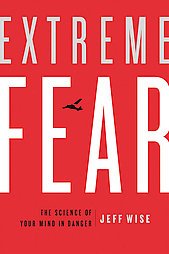
Recent headlines on ABCnews.com, NationalGeographic.com, and RichardDawkins.net trumpeted a recent scientific study suggesting near-death experiences are caused by carbon dioxide in the blood. This stands in contrast to the opinion of near-death experience experts, and even the study’s authors, but they news reports persist.
Join Skeptiko host Alex Tsakiris for an interview with science journalist and author of ‘Extreme Fear’, Jeff Wise. During the 30-minute interview Mr. Wise explains why and how he and other science journalists reported on this recent near-death experience study. And whether science journalism, according to Skeptiko host Alex Tsakiris, “is driven by a code… an invisible hand that drives them away from anything that might be labeled ‘spiritual’, and simultaneously lowers their guard against weak research that confirms their pre-existing beliefs.”
Mr Wise replied, “That’s not what it feels like from my perspective… we’re interested in things that make sense in the context of everything else that we know, but that’s novel. So things that are boring, that we see every day we’re not interested in. Things that completely don’t make any sense or we have to completely deconstruct our entire worldview in order to incorporate them, those things also aren’t interesting… I think that’s really the problem. If you’re trying to propose a theory or a view of a phenomenon that is radically at odds with how, let’s say mainstream science views the operation of the world…”
Dr. Joni Johnston — The Human Equation
Dr. Bruce Greyson’s email regarding CO2/NDE study
Play it:
[audio: http://media.blubrry.com/skeptiko/content.blubrry.com/skeptiko/skeptiko-103-jeff-wise.mp3]Read it:
Alex Tsakiris: We’re joined today by Jeff Wise, a journalist, science writer for such publications as Popular Mechanics, the New York Times Magazine, Popular Science, and many others. He’s also the author of Extreme Fear: The Science of Your Mind in Danger.
Jeff, thank you for joining me today on Skeptiko.
Jeff Wise: My pleasure.
Alex Tsakiris: Your book sounds fascinating, and I hope we have a chance to chat about it a little bit. I’m sure we will. But as you know, the main reason I wanted to have you on today is to discuss a recent blog post of yours on the Psychology Today website, where I have to mention my wife blogs, Joanie Johnston, so I was cruising through there and ran across it.
Anyway, your post of April 16th was on some near-death experience research that has received a remarkable amount of press coverage, and it has to do with this group of Slovenian doctors who found a correlation between the levels of Co2 in the blood of certain near-death experiencers and the likelihood that they would report a near-death experience. So I thought we’d talk a little bit about that, and in particular the how and why you reported on this story, and how the media deals with near-death experience.
Here’s where I thought we’d start. Why don’t I start with a quote from your blog post? Again, this is on April 16th. You write:
“To those of a certain mindset, near-death experiences are supernatural phenomena, an early glimpse of the afterlife. To those of a more materialistic persuasion, these sensations must be generated by some common brain architecture that gets activated under intense stress. As it happens, this lay review has just received some intriguing scientific backing in the form of a paper in the latest issue of The Journal of Critical Care. The key component of NDES, it appears, is carbon dioxide in the blood. Yes, the same thing that makes Cokes fizzy also makes your life flash in front of your eyes.”
I love the little twist at the end, there. Tell us a little bit about how you approached this story and how you found this research.
Jeff Wise: I can’t remember exactly how I came across it. I read a lot of science stuff on the Internet. It definitely caught my eye. In writing the book, I was sort of gathering string for a long time about all different kinds of ways that we respond to intense danger. The interesting question for me was, what makes up this experience when our life is at risk?
I’ve done a lot of adventure travel and extreme sports kinds of things, and I’d noticed that when you stand on the edge of the bungee bridge or if you’re in a plane that’s doing aerobatics, your mind seems to get taken over by what almost feels like an external force. You can rationally tell yourself, “Well, I’m not in any actual danger of dying or getting injured,” and yet I can’t help it. My heart is pounding; my palms are sweating. Nothing I can rationally do will change that.
I was particularly interested in how people who are in mortal danger can think creatively, because one of the symptoms of being incredibly afraid is that the part of your brain that executes rational decision-making and creativity tends to get shut down.
Alex Tsakiris: That’s fascinating, and that kind of ties into what I want to talk about in this research. You’re right on target. I thought it was so interesting because this NDE research was widely reported and I’m glad that you reported on it and in particular with your background and with the book, Extreme Fear. There’s an interesting tie-in.
But here’s the real problem I have with it. All those things you’re talking about are great and wonderful. They just don’t relate to near-death experience. I mean, there are several problems with this research. First of all, it’s relatively small; it’s a small little study.
Jeff Wise: Granted.
Alex Tsakiris: The correlation isn’t that strong. It contradicts earlier research that looked at Co2 in the blood. But here’s the real kicker, and it’s what relates to the work that you’ve done both in your personal experience in adventure travel and about your book. That’s that the media has this perception that the near-death experience is about hallucination. It’s about all these symptoms that are associated with lack of oxygen in the blood, which is what this research is really about.
The elevated Co2 levels are really a by-product of not getting enough oxygen in the blood, as you point out quite correctly in your book. If you look at near-death experience research, which is well established now for 20 years, what we find is exactly the opposite. People who have a near-death experience have an increased level of lucidity; an increased level of awareness.
The most recent research that we reported on here where they interviewed extensively 1,000 near-death experiences, 76% of them said that their experience during the near-death experience was more conscious than their everyday life. And the data that they report is not hallucinatory at all – 98% of the data that they report is realistic and real. So if you have a dream and you see you’re in a car and then suddenly the car turns into a lion, these are hallucinations. These things don’t occur in the near-death experience.
Jeff Wise: I sense that there’s an issue here that’s bothering you, which is that my report and many of the reports in the media, took an essentially materialistic view…
Alex Tsakiris: All the reports.
Jeff Wise: All the reports.
Alex Tsakiris: All the reports in the media. And it wasn’t that hard to find. The first step of good reporting is what do the experts in the field say? The near-death experience research experts, the people like Bruce Greyson at the University of Virginia or Dr. Jeffrey Long at the Near-Death Experience Research Foundation; they were quick to deal with it. And they did it in a nice way, but they said there’s nothing here.
Jeff Wise: Okay.
Alex Tsakiris: It contradicts earlier studies. It’s very small. The main point is we’ve already looked at cerebral hypoxia, which is what this is all about, and there isn’t anything there. This thing just explodes in the media because it taps into what I think what a lot of folks want to believe, which is that our consciousness is totally tied to our brain and it’s totally tied to fear. This is the other thing this is tapping into. It’s a fear of death thing. That’s totally been debunked and refuted, but that persists.
Jeff Wise: I see that your trouble with this, and with my reporting, really has to do with the interface between two kind of conflicting world views. On the one hand – stop me if I’m completely off-base here – but on the one hand you’ve got the view of the human spirit as a kind of essential thing that is not rooted in an underlying physical mechanism that can be explained strictly in material terms.
On the other hand you have this kind of – I don’t want to say post-enlightenment – well why not? Let’s call it post-enlightenment, this idea that the world can be understood as a system of interacting particles and forces. So psychology, particularly in the last 20 or 30 years, since the downfall of Freud, essentially has been an attempt to find mechanical corollaries to every aspect of human consciousness.
And so I will plead guilty. Essentially you and I are coming at this issue from different camps, I think. I perceive that you are maybe someone who believes the human soul is an immortal essence?
Alex Tsakiris: I’d like to take all that stuff out of it because I think that the philosophical implications and the lack of a theoretical basis for how consciousness could survive bodily death is wide open. It opens up a million questions. But I think the starting point has to be with how do we do good science? And how do we do good science reporting?
I’m not trying to call you out here, because you write a blog every day for Psychology Today. This obviously tapped into a lot of the topics that you’re interested in and you handled it better than most of the people I’ve read about. But there’s this huge disconnect here between the science media, and to a certain extent, the general population in terms of just the published data.
Forget any beliefs that I have or anything like that. Just the published data, like I just told you, says that near-death experiences are non-hallucinatory and they’re always perceived as being hallucinatory. And there’s this link that’s made. It is so pronounced that I just have to wonder if there isn’t something more going on, just in terms of the need for our society to reinforce and prop up this hard-line materialism, even when the data doesn’t support it.
Jeff Wise: I don’t know. Is our society hard-line materialistic?
Alex Tsakiris: Our science is, right? Because that’s the disconnect right there. The general population hears about near-death experiences on Oprah or wherever and they’re like, “Wow, that’s really cool. That really relates. I know my uncle did that.” But when they turn to science, what they get is just the opposite. “No, no, no. Right around the corner. Oh, here it is. This’ll probably explain it. Just let it play itself out. Here it is.” And it’s just not true.
Jeff Wise: This idea that a scientific theory is something that tries to increase our understanding by making a prediction, by saying “Okay, we’re going to say that the earth orbits around the sun, therefore we would expect to see this motion of the planets,” or something like that. I think the thing that’s often overlooked is that the theory requires a mechanism. And I think this is why Freud ultimately I think was cast aside, because Freud had a lot of interesting ideas and suppositions about how the brain works, but he never offered any mechanisms.
I think what you’re saying is true. More and more you’re seeing a materialistic, mechanistic view of human psychology coming to the fore, which is very much out of synch with the popular culture.
Alex Tsakiris: But it’s out of synch with popular physics. Quantum physics, which is what runs your TV and your GPS system and all that. They don’t even have any kind of sense of materialism. And it’s so long gone from that that it doesn’t. But that’s a whole other topic, as is Freud.
I would have to interject because it’s a hot button for me. I think we moved away from Freud because he was just completely discredited as a fraud. He published fraudulent research for patients that he never really saw and if that work was done today, we wouldn’t even be so delicate and parsing why and how his theories might not hold up. We’d just say he’s a fraud. We shouldn’t take seriously anything he says.
Jeff Wise: I recently ran across a statement by somebody who was writing about science and said that we need to keep politics out of science. That struck me as funny because to me, science in a way is politics. An idea doesn’t become accepted on its own merits. It becomes accepted because people form a consensus about it. I think what you’re talking about here with regard to near-death experiences is that you feel that on a scientific forum, your view of it is in the minority and that you’re not getting a fair shake. You feel like your research is not given its due. In a way, it’s just like…
Alex Tsakiris: Let me fine-tune that there. I appreciate you playing this out for me because I realize this is not exactly where you’re coming from or where you’ve gone at it.
A couple of episodes back, I interviewed Dr. Jeff Long, the guy who published the most comprehensive near-death experience research to date. His book shot to the New York Times Bestseller’s List within 8 days of publication. So we can’t say that there’s this massive conspiracy to hold back this information. No, it’s out there.
What I notice and what I was trying to just dialogue with you a little bit about is that when we turn to science and we turn to science journalism, there’s a different code. And the code is applied with this invisible hand. And that is that you’re going to stick to this line, and you’re not going to venture out and say these other things that do point to all those spiritual aspects and all that. You’re not even going to go there because you’re going to be viewed as being unscientific. It’s such a contradiction because as I pointed out, in this case the science really points in the other direction.
Jeff Wise: That’s not what it feels like from my perspective. To me it feels like near-death experience is something that I’m interested in. As I started to say earlier, I’ve been gathering string on various phenomena related to mortal danger. It’s one I put in my blog, like I’ve never experienced my life flashing in front of me, and I’m not even sure what it’s like. Is it like watching a movie? Is it like watching a slide show?
But at any rate, it’s interesting to me, but I’ve only touched on it so basically you’re talking to a guy who ran across this study, tried to tie it into what he already knew about carbon dioxide levels in the blood and panic and so forth.
So I don’t know this other research that you’re talking about. When you mention these guys who claim that they’ve found evidence that near-death experiences cannot be explained through materialistic explanations and so forth, it’s not that I’m afraid to look into it. But it doesn’t really fit into my schema for how I basically have come to conclude the world works. It’s not fear so much as it doesn’t really mesh into how I believe the world fundamentally works.
And so I think that’s really the problem. If you’re trying to propose a theory or a view of a phenomenon that is radically at odds with how let’s say mainstream science views the operation of the world – not to say it’s impossible. That’s how real, profound revolutions take place.
Alex Tsakiris: Hold on, Jeff, because I think you’re going in one direction where I completely agree with you, and that is when we propose things in science that go against our observed world, our five senses, I think it makes us uncomfortable. And I think that’s what you’re alluding to.
At the same time, that’s the challenge of the times we live in and the challenge of the science reporter is virtually all science at this point goes beyond what we experience in the world. Everything since Einstein contradicts our experiential existence, right? So I still don’t understand how time can be nonlinear, you know what I mean? Time to me is linear. It was yesterday, today, and it is tomorrow. But I have to accept that theoretically, time is not linear and that time and space have this relationship that I don’t understand.
The same is true with consciousness. The data’s in. It’s clear. It’s unambiguous. In some way that we don’t understand, because we don’t really even understand consciousness – we don’t understand it at all – in some way we don’t understand consciousness survives death. I can say I don’t understand that; I don’t know that, but I can look at the data scientifically and say, “Yep. That’s what the data says.”
Jeff Wise: I think that’s perhaps where I would part ways with you.
Alex Tsakiris: That the data doesn’t say that?
Jeff Wise: I mean I know that your listeners are probably very well acquainted with the data, so I don’t want to go on and discuss whether the data is legitimate or not, but to explain from my point of view. And I think you wanted to talk to me to talk to somebody who is on the other side of this debate and kind of get a sense of why.
Alex Tsakiris: I do that all the time. I talk to all the researchers who are on the other side of it. I appreciate everything you’ve said already. What I really want to tap into is, as a science reporter, how you deal with it. And you’ve done a fair job of that. I hear you. You’re saying it doesn’t fit with your worldview and therefore the data would be a huge leap. You can’t dig into every topic that you come across, so you basically have to stick with what’s the commonly accepted view of things.
Jeff Wise: Alex, I’m only accepting what’s accepted by me. When we approach the world, it’s a very interesting question to me, why we find something interesting. Of all the things that we could look at, turn our attention to, listen to, and think about, we selectively narrow it down to a very small subset.
I think the answer to that question is that we’re interested in things that make sense in the context of everything else that we know, but that’s novel. It’s new. So things that are boring that we see every day we’re not interested in. Things that completely don’t make any sense or we have to completely deconstruct our entire worldview in order to incorporate them, those things also aren’t interesting.
Alex Tsakiris: Yeah, I think you’re right.
Jeff Wise: If it turned out that the earth was hollow, that would be mind-blowing and incredible and would be great. When I saw the lakes of methane on Titan, that to me is mind-blowing. Why is it mind-blowing? I don’t know. There’d never been a pool of liquid I’ve seen on another celestial body. To see the pictures of Titan, that to me is the coolest thing in the world. So I love the idea of having your world incredible enriched by having knowledge unveiled to you.
Alex Tsakiris: What I hear you saying, though, is – and I think you’re right – big steps are a lot more difficult. And if they conflict with our worldview, we’re less likely to be interested in making that leap and making that step unless we personally encounter it. So people who have a near-death experience, obviously, or have friends or relatives who do, then they might go there. Otherwise, people are like “My world works fine just the way it is. I’d rather not hear your data.”
Jeff Wise: You know, there’s that old saying in science, “Extraordinary claims require extraordinary evidence.” But I think you’re probably frustrated because I think you’re probably talking to a lot of people who are saying, “I don’t even want to hear about it.” You’re telling them that consciousness survives death? That’s a huge thing for a lot of people to accept, because that would mean – well, you know what it means. It means…
Alex Tsakiris: Right. For science it’s a whole game-changer. And that’s why I think science and science journalists are resistant to go there. It’s not in their zone and…
Jeff Wise: But at the same time, you’re sort of on the edge, I feel, of the most interesting field in science. And probably in the next century, the ultimate, most fascinating and rich area of scientific inquiry, which is what they call in artificial intelligence circles, the hard problem. How do you reconcile our subjective experience of the world, this consciousness, and we all feel that we have a soul.
I feel like I have a soul. When I’m scared, I feel very much like I have a soul that’s at risk and I want to keep it alive. And how do I reconcile that with a strictly mechanistic worldview? I talk about it with my family. Like on Titan, that to me is a question which will blow everyone’s mind if and when it ever gets figured out. It’s sort of an Einstein-level way. Or maybe it’s more.
But there have been a lot of thinkers who have said this problem will never get solved. It’s fundamentally impossible to reconcile a materialistic approach to the universe with our own subjective experience. My subjective experience will always remain entirely a singular experience that no one else can ever have an insight into. That’s not entirely dissimilar from your interest in the soul that survives death.
Alex Tsakiris: It’s funny in a way. That loops back to the post. The post and the research. If you really deconstruct it in normal ways that we can look at and analyze that we could probably both agree with, this is a clunky bit of research. It didn’t deserve the attention it got. And now you Google the amount of news agencies that picked it up and reported it, it’s extraordinary. It’s way over the top. So that’s where I was really getting at.
Jeff Wise: A lot of the research falls guilty to that. I completely agree with you. You get an awful lot of research that has totally small sample sizes, very weak correlations, it could be completely wrong. A lot of stuff comes over the transom that will not stand the test of time.
Alex Tsakiris: Yeah. It’s a big gap to bridge there. I understand the problem.
Jeff Wise: But you’re also trying to bridge a gap. The more sophisticated science becomes, the more advanced it becomes, as you mentioned with Einstein, that was 1905 – how far we’ve come since then. The more progress science makes, the further it becomes removed from the common man’s idea of how the world works. So nobody on the street knows how quantum mechanics works. I don’t.
You look at some of these mathematical concepts that are being used to explain the universe is potentially a 2D hologram that generated the four-dimensional space time. It’s mind-boggling where these sort of benighted intermediaries between these incredibly far-off in outer space thinkers, and the common man who hasn’t really come any further since 1800 AD. So it’s a very difficult job.
It’s important. It really matters, I think, whether people believe that the soul is an epiphenomenon of materialistic brain function or whether it comes from God. It’s not something that’s ever going to be resolved in a scientific forum. It’s a cultural, it’s a political…
Alex Tsakiris: Ohhh, see I’m with you at the first part of that but I don’t think we can throw up our arms and say it’s nonscientific or we can’t address it. In the same way that we look at this research and we can say whether it’s good or bad, and I’m not asking you to agree with whether it’s good or bad. But the same tools that we use to analyze it, the scientific method, are the same tools that we can apply to that other question.
Jeff Wise: But you’re assuming that the science issue will be resolved and that that will then trickle down to the public, who will then accept it.
Alex Tsakiris: The public has already accepted it.
Jeff Wise: Oh, you just said that most people don’t think of it in the way that the scientists do. That most people take that sort of Oprah Winfrey view of the soul as surviving death.
Alex Tsakiris: Here’s the disconnect. The best scientists in the near-death experience field are congruent with the Oprah crowd. The disconnect is the other part of the scientific community that has bought into this idea that materialism has to underpin science, and it doesn’t, of course.
What has to underpin science is the scientific method. That’s all that matters. Science is a method, it’s not a position. It’s not political. You were saying the way science is constituted and works in our society is very political. But the whole idea of science is to be able to avoid the biases that we naturally have. Of course, that’s impossible. That was the goal.
Jeff Wise: Do you consider yourself a Creationist?
Alex Tsakiris: No. Not by any means.
Jeff Wise: Okay.
Alex Tsakiris: And I don’t even think that comes – that’s irrelevant. What’s most central to this issue is why can’t we get to the data? Even with the last part of what you said, why do we get to some point and say, “You know what? Science can’t penetrate that question.”
Of course science can penetrate the question. This fellow in Slovenia, what he did was translate the survey that Dr. Bruce Greyson at the University of Virginia has used for a long time to look at near-death experience and he gave that survey to these people who came in that had a cardiac arrest. He analyzed it in the same way that Greyson did. Well, great. Let’s go look at Greyson’s work, then. Let’s go look at Jeffrey Long’s work, which used the same survey.
And let’s correlate the data across all three of those studies. I mean, that’s solid science. When you do that, the picture that emerges is what I said. The characteristics that you see are not what are being reported. It isn’t really that hard to penetrate these questions scientifically. What’s hard is to move the whole mechanism of the institution of science and to tilt it a little bit is a turning the Titanic kind of thing.
Jeff Wise: It’s an endlessly fascinating question. It’s really interesting for me to talk about it and to think about it.
Alex Tsakiris: It’s very interesting. I appreciate you digging into this. You are the perfect guy, Jeff; the extreme fear guy is the perfect guy to report on this. I’m really glad you…
Jeff Wise: If any of your listeners want to check out the blog, or I have another blog that’s called JeffWise.WordPress.com, that I put up for the book. I am very interested to hear what the experience of these things is like. I’ve already had some people writing in and talking about what they saw. The descriptions that I’ve gotten so far are definitely up your alley, where it seemed to be something that was not mechanistically explainable. I don’t begin to understand what’s really happening here, but I’m very interested in what it feels like.
Alex Tsakiris: Thanks for posting that blog entry, and thanks for appearing on Skeptiko today.
Jeff Wise: My pleasure. Thanks very much.
Podcast: Play in new window | Download
Subscribe: RSS