





99. Dr. Jeffrey Long Takes On Critics of, Evidence of the Afterlife
Near-Death experience researcher Dr. Long offers a point-by-point response to skeptics of his New York Time best seller, Evidence of the Afterlife.
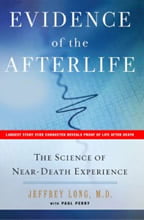
When near-death experience researcher Dr. Jeffery Long decided to publish his 10-year study of NDEs he knew there would be controversy, and critics. His conclusion, that consciousness survives bodily death and moves to an afterlife, is unsettling to many within a medical community built on death being absolute and final. But rather than shy away from critics, Dr. Long has engaged them.
Join Skeptiko host Alex Tsakiris for an in-depth interview with near-death experience researcher, Dr, Jeffrey Long. During the 45-minute interview Dr. Long offers a point-by-point response to skeptics of his New York Time best seller, Evidence of the Afterlife.
In response to the criticisms of former Skeptiko guest Dr. G.M. Woerlee, Dr. Long said, “I think one of the biggest defenses from people that don’t believe in an afterlife, and this was brought out in your interview with Dr. Woerlee, is this barrier where they won’t hear it. They won’t respond to it. It’s just not something they care to address, which is somewhat surprising. I think all scholarly discussion of really any topic requires an open-minded dialogue about the evidence. It really starts with evidence.”
Regarding speculation that NDEs result from regaining consciousness during CPR chest compressions, Dr. Long said, “When you talk to the patients who have actually survived CPR one thing that is very, very obvious is that the substantial majority of them are confused or amnesic when they’re recovered. If you read even a few near-death experiences, you immediately realize essentially none of them talk about episodes of confusion when they just don’t understand what’s going on. You really don’t see that at all. In fact, our research found that 76% of people having a near-death experience said their level of consciousness and alertness during the NDE was actually greater than their earthly, everyday life. So, you have to come away with the conclusion that even if there’s blood flow to the brain induced by CPR, it’s not correlated with the level of consciousness and alertness reported during near-death experiences.”
Dr. Long continues, “But also, in addition, the substantial majority of people that have a near-death experience associated with cardiac arrest are actually seeing their physical body well prior to the time that CPR is initiated. Once CPR is initiated, you don’t see any alteration in the flow of the near-death experience, suggesting that blood flow to the brain isn’t affecting the content in any way.”
Dr. Long also discusses the nature of NDE skepticism, “The other issue I’ve seen with skeptics is they often have their pet theory. Their theory of how the world works, how things work, and it’s very, very difficult to dislodge them from their pet theory, even with overwhelming evidence.”
In the end Dr. Jeffery Long believes in his evidence, “I have confidence in the substantial majority of people. When they hear evidence, and it’s presented in a straightforward way, they’re smart enough to understand what’s real evidence and what’s evasiveness.”
Jeffrey Long, M.D., is a near death experience researcher and physician (radiation oncology). His book, ‘Evidence of the Afterlife’ (HarperCollins), was published in 2009.
From Dr. Long’s website: Does Near-Death Experience (NDE) Evidence Prove an Afterlife?
Consider the Evidence, and Determine YOUR Answer!
Play it:
[audio: http://media.blubrry.com/skeptiko/content.blubrry.com/skeptiko/skeptiko-99-jeffrey-long-responds.mp3]Read it:
Alex Tsakiris: We’re joined today by Dr. Jeffrey Long, a practicing physician, he’s a radiation oncologist, and a near-death experience researcher. His book, Evidence of the Afterlife, is the most comprehensive study of NDEs ever published and it’s been a huge success.
Dr. Long, welcome back to Skeptiko.
Dr. Jeffrey Long: Alex, it’s a pleasure to be back here with Skeptiko. We’ve certainly got plenty to talk about today.
Alex Tsakiris: Yes, we do. As many of the listeners know, you appeared on Skeptiko – I think it was last month. Then we invited Dr. G.M. Woerlee, an anesthesiologist from the Netherlands and he came on to discuss his criticisms of your research conclusions and to explain why he thinks NDEs are not proof of an afterlife.
I’m very grateful that you’re able to come back on and have some time to respond to Dr. Woerlee’s comments.
Dr. Jeffrey Long: It’s certainly my pleasure to do so.
Alex Tsakiris: Here’s what I thought we’d do. Let’s jump right into this. Here’s where I’d like to start. That is with the research because it’s a point that seems to create some confusion. I was watching the interview you did with Bill O’Reilly on Fox and I thought that was a great example of where a guy, Bill O’Reilly in this case, becomes completely sidetracked with this anecdote thing. These are just anecdotes and we can’t really trust them because they’re anecdotes.
So I thought you should talk a little bit about survey work in medical research and that how when you ask one person about their NDE, you may have an anecdote, but when you compile a 150 question survey of 600 people, you have something much more than that.
Dr. Jeffrey Long: You almost just answered it right there. No doubt about it. When you have an anecdote, it simply means one or a few case studies. You have to be very hesitant to draw conclusions about small numbers. It would be like testing a new drug on three patients and trying to find sweeping conclusions about its effectiveness. You really can’t. You need much more data than that.
That’s why the NDERF study that I presented in the book is certainly vastly beyond anecdotal evidence. We actually studied 1,300 near-death experiences. It’s certainly not just a limited number of case reports. And you’re right, our modern questionnaire is over 150 questions, so no doubt we have the depth of analysis, as well. And most of the research that’s published in the book was based on surveying over 600 near-death experiencers that filled out the most recent version of the questionnaire.
Let me start out with sort of a basic scientific overview, and that is what’s real is consistently observed. So we’ve observed evidence of the afterlife and near-death experience is not only in the vast number of near-death experiences studied in tremendous depth in my own study, but all my major findings are corroborated by scores of prior scholarly studies. We’re way beyond what could reasonably be called anecdotal. We’re really in very hard-core evidence based on my work and the work of many others.
Alex Tsakiris: One other point that came up, and this was in the interview that I had with Dr. Woerlee, in that first of all he acknowledged that your research is solid; that your database is solid, which is good to hear. But then he had one point about the survey methodology that I’d like to talk about. He suggested that perhaps your survey is biased in favor of people who have a certain kind of NDE.
Now he may have articulated it a little bit differently, but can you talk about any concerns that someone might have that your survey is biased or that you’re just pulling accounts of a certain kind?
Dr. Jeffrey Long: His actual quote, as I recall, was referencing the fact that if people had basically non-near-death experiences or very brief experiences, that they wouldn’t necessarily be in the research. That’s not true at all. What we did with our NDERF study is we studied every single person who had a near-death experience. In other words, they nearly died and they had an experience.
In addition to that, we used the most validated research tool in near-death experience research, and that’s called the NDE scale. So we analyzed every single person that had such an account. In fact, we post every single near-death experience on the website for the people who give us permission, which is over 95%. So we not only have a very valid, comprehensive look at near-death experience because of the numbers, but in addition to that we share that with the world, so everybody else can see the data set that we’re seeing, too.
Alex Tsakiris: I think I even recall you saying that you don’t necessarily include all the accounts because some accounts don’t qualify under the criteria that you would use for a near-death experience.
Dr. Jeffrey Long: And that’s a good point. We post all near-death experiences but good gosh, we have people who have life-threatening events but no experience whatsoever, and we simply don’t have the resources to post every single one of those. And I don’t think that really advances our knowledge of near-death experience or anything else.
Other experiences that are shared are clearly dreams, after-death communications, spontaneous out-of-body experiences, meditation experiences. So all of those are, most of the time, not posted. Occasionally we do and we label them by their proper label. But our study set and what’s important for the focus of study is near-death experience and we have all of our near-death experiences analyzed in our data set.
Alex Tsakiris: So it’s important to acknowledge one more time that there are these criteria that have been well established by the research that’s been going on for over 20 years in near-death experience.
Dr. Jeffrey Long: That’s a good point. What is and is not a near-death experience has been pretty well established over the years. My criteria for near-death experience are pretty much what everybody else is using, especially with the use of the NDE scale. We’re using the best research methodologies to determine what is and isn’t a near-death experience. In fact, in the over a decade that I’ve been doing this, I haven’t heard from a single near-death experience researcher that had concerns about the methodology we were using for what we call a near-death experience and not a near-death experience.
Alex Tsakiris: Next, let’s talk about the nine lines of evidence that you present in your book, Evidence of the Afterlife and that Dr. Woerlee tried to refute when he was on. I want to get to as many as we have time for, but before we dig into each one, I thought I might ask you about the overall gist of Dr. Woerlee’s argument, because it kept coming up time and time again. That’s this rare counter example thing.
If you say, as you do, that you studied 26 cases of near-death experiences under general anesthesia, then he comes back and says yeah, but every once in a while – I think it’s like 1 in 10,000 – people have regained some consciousness during anesthesia. Then you say that’s not only extremely likely, but if it did happen, then the symptoms would make it unlikely that they would have this lucid experience.
Then he comes back and says yeah, but there are some cases where people did have a lucid experience. So it just goes on and on like this.
Then you step back and say what are really the odds of this 1 out of 10,000 thing happening in every single case? And on top of that, that this even rarer occurrence of them not experiencing the normal symptoms and on top of that, that their experiences would match up with all the people that had a different set of medical conditions? As you would normally look at this in science, at some point don’t the odds become enormously outrageous to where you wouldn’t even go there?
Dr. Jeffrey Long: That’s a really good point. I agree with everything you said, Alex, and there’s even more. In fact, if you look at the book, Evidence of the Afterlife, on pages 103 to 104, I talk directly about this so-called anesthetic-awareness that Dr. Woerlee discusses.
As an overview, let me say that these anesthetic-awareness experiences are so very, very rare that I hope this never dissuades anybody from having medically appropriate general anesthesia. Please don’t let any of the discussion here be an issue in preventing appropriate medical care.
As I say in the book, and this is a direct quote, “Rather than the type of coherent NDEs you read here, anesthetic-awareness results in a totally different experience.” And I provide a number of references on that, by the way, for interested listeners.
I go on to say, “Those who experience anesthetic-awareness often report very unpleasant, painful and frightening experiences. Unlike NDEs which are predominately visual experiences, this partial awakening during anesthesia more often involves brief and fragmented experiences that may involve hearing but usually not vision.” Again, I emphasize that anesthetic-awareness is very rare under anesthesia.
By the way, I’m not aware of any near-death experiences that occurred under general anesthesia on the NDERF website that described the typical content of anesthetic-awareness experiences. Dr. Woerlee brings up a few anecdotal discussions about anesthetic-awareness but I have a number of references. These are the scholarly people that have actually studied a number of anesthetic-awareness experiences and published them in peer-reviewed journals in the past. That’s my source of that.
As all of your listeners can easily see, you just don’t have near-death experiences that are predominately hearing but no vision. You don’t essentially ever have near-death experiences that involve brief, fragmented experiences that are painful or frightening. In fact, none of the general anesthesia near-death experiences that I reviewed had any of those components of them. Really, there’s no doubt about that.
These are completely different experiences. That being anesthetic-awareness and near-death experiences. I don’t think Dr. Woerlee quite got that point how clear that was; how crystal clear the distinction between those two types of experiences is.
Alex Tsakiris: And I guess that gets to the larger question there that I’d ask, and that’s how do you counter these arguments? How do you counter these arguments that don’t really make sense but because they come from people who should know better, and because they’re said with such conviction over and over again, it doesn’t match the data.
Even though Dr. Woerlee was picking out anecdotes that he thought were appropriate, they still didn’t even match the data. As you’re saying, that they didn’t give us the results we would expect to find. And yet we were never able to really get there in my discussion with him. How do you engage? How do you carry out a scholarly or an intellectual discussion along those lines?
Dr. Jeffrey Long: First of all, I have a lot more confidence in your listeners. I think they have a lot more of a scholarly open-mindedness than your discussion with Dr. Woerlee was. I have confidence in the substantial majority of people. That being when they hear evidence and it’s presented very straightforward, that they’re smart enough to understand what’s real evidence and what supports the evidence, and what’s basically evasiveness in trying to deal with a particular line of evidence.
So I guess part of it is I have confidence in your listeners; I have confidence in the great majority of people who understand the issues; and I have confidence in humanity. I admit, it’s a little bit frustrating when people don’t directly respond to the evidence. It’s very carefully documented, referenced, and even corroborated with scores of prior studies. I think the best we can do, and you’ve been doing this for a long time, Alex, is just simply calmly bring forward the facts, discuss exactly what the issues are, respond to any reasonable arguments that anybody brings up against the lines of evidence, and just go forward.
Alex Tsakiris: Let’s touch on statistics for a minute because this is another rat’s nest that I encounter sometimes with folks who have one position or another. Sometimes people want to grab onto statistics but other times, like in this case, they seem to want to run from them. In your normal medical research, at what point do you reach a level where you say, “Gee, it’s overwhelmingly suggestive that this is what’s happening.” How do you ferret all of that out?
Dr. Jeffrey Long: I think a lot of depend on the number of patients studied and how strong the statistical evidence is. At other times it’s just simply obvious by inspection. For example, when we talked about near-death experiences under general anesthesia, out of 33 elements of near-death experience, we compared between NDEs under general anesthesia and all types of causes of near-death experience, and in 32 out of 33 elements studied there was no statistical difference between the two groups.
Now, virtually anybody in the science or medical field would say, “Well, that pretty much nails it down that these two experiences are basically the same, with at most, minor differences between the two of them.” So it just becomes a matter of a judgment call.
But in fairly extreme situations where we have such strong evidence like presented in the book, Evidence of the Afterlife, I think that you have to rely on the good judgment and intelligence of your listeners and the world as a whole. Certainly from the feedback I’ve gotten from the book, the good news is that virtually everybody gets the statistics in the book as exactly the evidence that they are.
Alex Tsakiris: I agree. I think you have to work really, really hard to take the other position on some of those things like we were just talking about, like anesthesia. We’ll get to some of these other cases. Let’s move on and touch on as many of the nine points as we have a chance to.
Of course, the first point is this lucid death. It’s medically inexplicable to have a highly organized, lucid experience while unconscious or clinically dead. Dr. Woerlee’s main point on this was blood flow to the brain, mainly caused by CPR and that being the factor that you haven’t looked at that explains why people are having these lucid experiences.
Dr. Jeffrey Long: There’s a huge difference between simply blood flow to the brain and consciousness. I think that’s where Dr. Woerlee’s argument falls apart. Clinically, it’s known medically that there’s no substitute for talking to patients. When you talk to the patients who have actually survived CPR, one thing that is very, very obvious is that the substantial majority of them are confused or amnesic, even when they’re successfully recovered. They may be amnesic for the period of time following their successful resuscitation or even for events prior to the time of their cardiac arrest.
Alex Tsakiris: Can I interject something there? I want to stop you there on a minor point that you just breezed over. It’s really important, and that’s back to statistics. So we’re saying that a vast majority of those people – so statistically the group is supposed to have this and then we compare that to whether or not that the group that you studied had that same thing, and they don’t match, right?
Dr. Jeffrey Long: Absolutely. If you read even a few near-death experiences, you immediately realize that there’s essentially none of them that talk about episodes of confusion or altered mental status when they just don’t understand what’s going on. You really don’t see that at all.
Again, for near-death experiences, they’re highly lucid, organized events. In fact, in the survey we did, we found 76% of people having a near-death experience said their level of consciousness and alertness during the NDE was actually greater than their earthly, everyday life. So again, getting back to statistics, that’s 3/4 and a substantial majority of the remaining 24% still had at least a level of consciousness and alertness equal to their earthly, everyday life.
So for that to be the statistics that you consistently see during near-death experiences and balance that with a substantial majority of people being confused around the time of their successful resuscitation from CPR, you really have to come away with the conclusion that even if there’s blood flow to the brain induced by CPR, it’s a life-saving maneuver. By no means is that correlated with clear consciousness and certainly nowhere near the level of consciousness and alertness with near-death experiences. You just don’t see that.
But also, in addition to that, note that the substantial majority of people that have a near-death experience and have an out-of-body experience associated with cardiac arrest, are actually seeing their physical body well prior to the time that CPR is initiated. Once CPR is initiated, you don’t see any alteration in the flow of the near-death experience, suggesting that whatever blood flow might be going back to the brain is affecting the content, modifying it at all, in any way.
Alex Tsakiris: That’s a great point that I want to draw a little bit further because if we were to break down this process that someone’s going through, there’s three stages, right? One where the brain is going dead. They’ve had a cardiac arrest which we always talk about because we understand the physiology better than in other cases.
We know that within 10 to 15 seconds after their heart stops, their brain stops. So there’s that period. Then there’s some period that we have to assume that the brain is dead. Then there’s some period where the brain is coming back online.
And what you just said, I think is really, really important and gets glossed over. That’s that you seem to be getting information, content from these near-death experiences. It seems to be consistent during the dead time and the coming back online time, right?
Dr. Jeffrey Long: Absolutely. There’s no doubt about that. When there’s a cardiac arrest, the out-of-body observations that are often described during these near-death experiences certainly correlates to a time prior to CPR being initiated, and prior to a time there should be no possibility of a conscious, lucid, organized experience. And yet that’s exactly what happens.
I’ll tell you another thing, too, is if you were doing CPR and that were accounting for memory, I would tell you that you would hear a lot more from near-death experiencers. They would talk about their remembrance of the pain of the chest compressions.
Alex, that’s a fairly painful procedure. It often breaks ribs and hurts. And yet, even when you have a patient who had a cardiac arrest and had a near-death experience, essentially never do you hear them describing as part of their near-death experience the pain of chest compressions. Again, the evidence just simply does not support Dr. Woerlee’s speculations.
Alex Tsakiris: That’s a great point on the pain factor. And that rolls right into the second point of your nine lines of evidence in Evidence of the Afterlife, and that’s out-of-body and the eyes see and the ears hear in the out-of-body state. What they perceive is nearly always real.
Now the way that kind of rolls right into it is that Dr. Woerlee’s speculation on the last episode of Skeptiko was that maybe these folks are just seeing and hearing things with their normal senses and their normal bodies. One of the points he makes is that they’re not experiencing pain. That seems to be more consistent with this idea that their consciousness truly is outside of their body.
Dr. Jeffrey Long: And if their consciousness was really returning during CPR, wouldn’t near-death experiencers not have out-of-body perceptions but describe their perceptions from within their physical body? And yet you don’t see that with near-death experiences.
So in other words, if you started CPR and they had a near-death experience and suddenly they started to have some consciousness, you’d expect that instead of having the out-of-body experience where their consciousness is apart from their body, their consciousness would be within their body. You just don’t see that.
Alex Tsakiris: So again, you have to go back to the accounts. What about the point he makes about the two types of out-of-body experiences? I think that’s his delineation there of the out-of-body experience for someone that’s relatively close to their body and the ones where there is this distant gathering of information down the hallway or miles away. Any thoughts on that?
Dr. Jeffrey Long: That’s an interesting point. If you want to arbitrarily divide out-of-body experiences, that’s one way you could do it. Most out-of-body observations during NDEs are of events going on around their physical body.
Yet there are dozens of these out-of-body perceptions during near-death experiences where they can hear and see events far, far removed from their physical body, often in completely different rooms, geographically far away, where any possible physical sensory awareness should be absolutely impossible.
And yet when they make these very remote out-of-body experience observations, their accuracy is absolutely the same – about 96% — as the observations of events going on around their physical body. So no doubt about that. That’s the evidence. Dr. Woerlee never really came up with a good explanation for that at all.
Alex Tsakiris: You mentioned that that distinction would be arbitrary. You’re saying from the data you’ve seen, you don’t see any reason to separate out, based on the accounts, based on the information you’re getting back, there’s no substantial difference between people who are describing events close to them and people who are describing events further away from them.
Dr. Jeffrey Long: They’re both highly accurate. I mean, how far of a geographic distance would you want to part from the body before you’re going to call it a distant OOB observation? No one’s really made that distinction in the NDE literature. So really, the bottom line is it’s just another strong line of evidence for the reality of OOB observations. They’re equally accurate, even if these observations are far, far away from their physical bodies.
Alex Tsakiris: Okay. He seems to be suggesting they’re of a different quality, that they’re not describing things in a different way or more hallucinatory. It’s pretty much the same across the board.
Dr. Jeffrey Long: In fact, it’s often the case that they’ll make out-of-body observations of events right around their physical body during the NDE, and then as part of the same experience, make out-of-body observations far removed from their physical body. Absolutely no difference in what they’re describing.
Alex Tsakiris: Let’s talk about blind sight. This is another interesting point. In your research you observed that NDEs take place among some folks who are blind, even folks who are blind from birth. Now Dr. Woerlee’s counter-argument to that was 1) maybe these folks are getting visual information from the people around them who are describing things, but then 2) he also seems to suggest that many blind people are extremely good at creating these mental maps of their surroundings.
I found that a little bit of a stretch. Do we really expect that folks who are visually impaired or completely blind from birth would be able to describe visual information as well as sighted people?
Dr. Jeffrey Long: That was puzzling to me, too, to have that line of thinking. By the way, all of a sudden for people blind from birth, the first time they have vision is while they’re unconscious or clinically dead? I mean, it really doesn’t add up.
But certainly the people who are blind may get some visual information from people around them, but when you talk to people who have been blind from birth that have a visual near-death experience, as they typically do, the near-death experiencers themselves are very clear that this vision is a unique perception to them. No matter what they’ve done in the past as far as mental maps or gathering visual information, whatever that means, the actual ability to see during their near-death experience is a new experience to them. It’s clearly different from anything else going on in their life.
Alex Tsakiris: Let’s talk about a couple of other points that came up that we didn’t spend as much time on but I think are really fascinating. 1) Is the family reunion. Your data suggests that people consistently meet loved ones in the afterlife and that 2) I think your statistics were unbelievably high – like 98% of the folks they encounter are deceased. I didn’t really hear a good explanation from Dr. Woerlee on that.
Dr. Jeffrey Long: Let me back up and define what we’re talking about. When people have a near-death experience, they may have their out-of-body observations and see ongoing earthly events. That’s not what really counts in this type of study. You have to be in an unearthly realm and you have to be seeing people that you knew during your earthly life that are not going about their daily earthly events, like in an out-of-body experience observation. So these are purely observations in unearthly realms.
You’re right. The percentage of time that people encounter deceased relatives is extremely high. It was actually 96% in the NDERF study and only 4% of near-death experiencers met beings who were alive at the time of the near-death experience. That’s actually corroborated by another major scholarly study which found it was 95% of the time that they encountered beings they knew from their earthly life that were deceased.
The important thing is that any other experience of altered consciousness that we experience on earth, dreams, hallucinations, drug experiences, you name it; all of these other types of experiences of altered consciousness, a vastly higher percentage of people are going to be alive at the time of their experience.
You’re going to remember the banker that you did business with that day or your family member you said hi to as you were walking into the house. This is what’s in the forefront of consciousness. So for people to so consistently encounter deceased relatives is very, very strong evidence that they are, indeed, in an unearthly realm and it certainly points to evidence of an afterlife.
Alex Tsakiris: Any thought on the striking similarity of content among very young people who have experienced a near-death experience, or the remarkable consistency of near-death experiences around the world?
Dr. Jeffrey Long: We’ll start with children. A really interesting part of the study that I did was looking at children age 5 and under. In fact, their average age was 3-1/2 years old. These are children so young that to them, death is an abstraction. They don’t understand it. They can’t conceptualize it. They’ve almost never heard about near-death experiences; have no preconceived notions about that. They certainly have far less cultural influence, both in terms of religion or anything else that could even potentially modify the near-death experience at that tender young age.
And yet looking at these same 33 elements of near-death experience that I did in other parts of this study, I found absolutely no statistical difference in their percentage of occurrence in very young children as compared to older children and adults. So no question about that.
That almost single-handedly shoots down the skeptical argument that near-death experiences are due to pre-existing beliefs or cultural influences. We’re not seeing a shred of evidence that corroborates that at all. In fact, that finding is actually corroborated with another major scholarly researcher who actually reviewed over 30 years of near-death experience research and came up with the same conclusion.
Children, including very young children, appear to have identical near-death experiences as adults. So no question about that. That seems to be a fact. And that’s not explainable by any medical, psychological, or expectation theory that can be advanced.
Alex Tsakiris: Let’s spend a minute talking about point nine on your nine lines of evidence, and that’s changed lives. Near-death experiencers are transformed in many ways by their experience, often for life. I think Dr. Woerlee suggested that a brush with death could change anyone’s life and also that just the NDE experience might change someone’s life.
Dr. Jeffrey Long: There have actually been two good prospective studies in which there were cardiac arrest survivors. Most, of course, did not have a near-death experience but a number did. And these researchers followed the two groups longitudinally over a period of many, many years.
In both studies, they found that there may be some life changes in people that had a cardiac arrest. In other words, survived a life-threatening event. But there were far more life changes typical of near-death experiencers described in other research among those that actually had a near-death experience.
So it certainly looks like it’s the near-death experience and not just the life-threatening event that accounts for the preponderance of the changes seen after a near-death experience. I think that’s pretty well established. I’m glad that Dr. Woerlee agrees that the near-death experience itself can have such profound changes.
Once again, I have confidence in people that they’re not going to make huge, substantial life changes unless they’re comfortable and clear that they’re making changes in response to a real event. That’s what near-death experiencers almost consistently believe. I’m certain that’s a major factor as to why they have such profound, positive life changes.
Alex Tsakiris: There did seem to be a certain degree of circular logic in his argument in saying that maybe it’s the NDE, even though it’s hallucinatory, that’s causing this life change. I don’t know how you get out of that circle there.
Dr. Jeffrey Long: People in general, all other hallucinatory events, dreams, all other temporary, transient, even pathological alterations of consciousness are essentially never going to result in that high a percentage of people experiencing them going on and have those types of profound life changes that we see in near-death experiencers.
And moreover, what you see in the life changes of near-death experiencers is markedly consistent. In other words, it’s not just that they have life changes; it’s the consistency of those life changes. The substantial majority, if not overwhelming majority of near-death experiencers believe that there’s an afterlife. They believe that there’s a God. They no longer fear death. They’re less materialistic. They value loving relationships more. The list goes on and on. I consistently observed, not only in the NDERF study but from scores of prior scholarly studies of this phenomenon over 30 years.
Alex Tsakiris: Here’s the last point that I want to talk about because it’s the capstone on this whole thing. We were chatting a little bit about it before the interview began. And that’s how do you come to terms with the evidence?
The way I was always think of it is jump over that chasm, because you’re a non-believer and you have this kind of materialistic world and things work out the way you like them to. But at some point some of us – I’ve gone through this process and I can’t tell you how many folks I’ve spoken with who have said, “I was very skeptical. I was there. And at some point, I just became convinced by the evidence.” It’s like jumping over this chasm and nothing ever looks the same.
This is really what Skeptiko’s all about. For me, that transformation came about through the cumulative effect of just looking at the data. I didn’t have any big experience. I just kept looking at the data.
And I think in the prior interview I had with you, you mentioned that your path wasn’t too dissimilar from that. It was really the data that convinced you. You didn’t have a NDE and no one close to you had a NDE, so do you want to speak to that process of change that you’ve seen people go through?
Dr. Jeffrey Long: As a physician that fights cancer, I’m very evidence-based. In fact, I require strong evidence before I’m going to make any therapeutic decisions in my professional life. Therefore my understanding of near-death experience, I had exactly the same standards. I’m a real show-it-to-me kind of person, anyway. So I really had to see evidence and had to see overwhelmingly strong evidence before I was going to be convinced.
With the evidence that I’ve presented in the book, Evidence of the Afterlife, to me and to vast numbers of other people — I’ve received hundreds of correspondences, and that certainly seems to be a very strong consensus among people who have read the book –the evidence is compelling for the reality of near-death experience and its consistent message of an afterlife. For me, I am absolutely clear, absolutely certain that there’s a wonderful afterlife for all of us.
Alex Tsakiris: What do you think about folks who you run into who can’t seem to get there. They can’t seem to really get there with regard to the evidence? Any thoughts on that? Because I know you’ve encountered plenty of them.
Dr. Jeffrey Long: That was brought out with your interview with Dr. Woerlee where you would consistently bring up evidence that Dr. Woerlee simply would not address. I think one of the biggest defenses that people have that don’t believe in an afterlife and don’t believe this kind of evidence is there’s this sort of barrier where they won’t hear it. They won’t respond to it. It’s just not something they care to address, which is somewhat surprising. I think all scholarly discussion of really any topic requires an open-minded dialogue about the evidence. It really starts with evidence. I think that’s where part of it is.
I think the other issue I’ve seen with other skeptics, and again talking in general about skeptics in general’s variety of paranormal experiences is they often have their pet theory. Their theory is how the world works, how things work, and it’s very, very difficult to dislodge them from whatever their pet theory might be, even in the face of overwhelming evidence.
Alex, that’s why there are over 20 different skeptical so-called explanations of near-death experience. The reason there are so many so-called explanations is that no one or several of these alternative explanations makes sense, even to the skeptics.
You actually have a great case report on that right on Skeptiko. Note when we interviewed Kevin Nelson, who had his theory for near-death experience, that being REM intrusion, notice that not once did he mention how chest compressions might cause consciousness that leads to near-death experience resulting. He just talked about REM intrusion.
But notice that Dr. Woerlee never once mentioned anything about REM intrusion. He simply had his pet theory about chest compressions. So this is kind of an interesting thing. I think skeptics can fairly easily see the logical flaws and the inadequacy of other skeptics’ theories in explaining the evidence, but they seem to cling rigorously to their own theory. It’s a very interesting phenomenon. I’ve seen this over and over.
Alex Tsakiris: That is a very interesting point and you could even go one step further. When we interviewed Dr. Michael Persinger and his pet theory, if you will, was that EEG didn’t actually measure brain activity. That was easily refuted and then no one else would even go there because it doesn’t make a lot of sense.
You talked there for a minute about skeptics. What is particularly fascinating to me about the NDE experience and the NDE research is that it generates an equally unexplainable ability to look past the data from people we normally associate with as being believers.
That’s what I saw with your interview with Bill O’Reilly. Here’s a guy who wants to come out right up front and says, “I’m a Catholic. I know your data can’t be right because it doesn’t fit with my belief system over there.”
I’ve interviewed some Christian folks, very likeable folks, and you get to the NDE data and they get half-way there. Only to the part that supports what they already believe. They say, “Yeah, I believe the NDE shows that there’s heaven and God and Jesus is there. Please don’t show me any data that would suggest there’s anything different than that.”
Dr. Jeffrey Long: I’ve got to jump in on that. First of all, with regards to Bill O’Reilly, he is just a brilliant, tough interview person. Bill O’Reilly actually loved the interview. He told me that he’d read Evidence of the Afterlife and I believe it.
What’s interesting is that after the Bill O’Reilly Show, he posted my interview on his website as the first video out of 20. Everybody accessing his website automatically started my interview with him playing. The heading that was put by presumably with Bill O’Reilly’s permission, there was somebody in charge of the website. It was words to the effect of “A new book provides strong evidence of an afterlife.”
Sometimes you have to overlook the actual interview and realize that that obviously made a very great impression. Certainly Bill O’Reilly was a lot more affected by the book than the interview might have represented.
The other thing that’s interesting is that here in Houma, which is a religious conservative area of the country, very, very deep South, the people that are aware of my book and have read it are absolutely fascinated. Almost uniformly, people who read the book and understand the evidence are getting that this is an important contribution to understanding the afterlife question.
There’s been a shift in that over the last few years. In fact, I was recently talking with Dr. Raymond Moody, who first coined the term ‘near-death experience’ in 1975 in his ground-breaking book, Life After Life, and he agrees. Both of us are seeing just over the last few years, a real shift, a real openness, where people of all religious backgrounds to be a lot more open to the evidence of near-death experience than ever before. Now atheists are still going to have a huge problem with it, but virtually everybody else seems to be very, very open.
Alex Tsakiris: I think that’s probably true, but there is a lot of shading of the experience where they want to take in as much only that part that doesn’t conflict with where they’re coming from. I don’t know if you’ve encountered that. I certainly have.
Not too long ago I interviewed Dr. Gary Habermass, who is a really, really nice guy, delightful guy, author of more than 30 books and has appeared on numerous movies and TV shows. He has done a substantial amount of research of near-death experience, but again, a guy who will go so far as to say, “Yeah, I’m okay with the afterlife part. Just don’t tell me that it might conflict with my book, my doctrine, my very narrowly-held belief.”
Dr. Jeffrey Long: I think with anybody, again speaking in general, if you’ve got a belief system that you absolutely know is correct, then any evidence to the contrary is certainly very difficult to hear, very difficult to accept, no matter how profound the evidence is. I think we see that over and over. It just creates a barrier to communication.
Again, I think as time goes on, there are less and less people who are rigidly holding on to belief systems. I think more and more people are inquiring. They’re searchers. I think they’re open to saying, “What evidence is there in the world, both for and against an afterlife?” It’s people like that who have questions like that, inquiring minds, openness, reasonable openness, that want to know about evidence, that’s where my book, Evidence of the Afterlife comes in.
Alex Tsakiris: Dr. Long, what’s coming up for you in the near future?
Dr. Jeffrey Long: I’m going to think about doing a second book, given the tremendous response to my first book and the fact it became a New York Times Bestseller. I’m really starting to look into near-death experiences deeper and I’m starting to look at the experiences that are related to near-death experiences. I’ve got a mammoth amount of data and I think the time over the next several years is where I’m going to want to start writing that down. That will be another very interesting, very exciting book, as well.
Alex Tsakiris: Thank you so much for coming back on and dealing with this topic in such depth. For those of us who really like to look at the science and tear things apart logically, it’s been a great help.
Dr. Jeffrey Long: I appreciate the kind words and I certainly enjoyed talking with you. I certainly have a great deal of respect for the work you’re doing. I think that all of us working together, over time, we’re going to help have these important truths and important understandings brought to the world.
to Skeptiko, where we explore controversial science with leading researchers, thinkers, and their critics. I’m your host, Alex Tsakiris, and on today’s show I have an interview with Dr. Jeff Long, author of, Evidence of the Afterlife. As you’ll hear, Dr. Long is probably one of the most qualified near-death experience researchers. He’s just compiled a huge body of that research into this book. This guy delivers the goods. I had a chance to interview him a few months ago for the documentary film that I’ve told some of you about that we’re putting together. He’s on top of his game. A medical doctor, well qualified in the field of medicine; also a very accomplished researcher.
Podcast: Play in new window | Download
Subscribe: RSS