Skeptiko - Science at the Tipping Point

Skeptiko

This podcast is a leading source for intelligent, hard-nosed skeptic vs. believer debate on science and spirituality. Each episode features lively discussion with leading researchers, thinkers, and their critics.

If you like what we're doing, subscribe (it's free): return iTunes, RSS


109. Is Dr. Sam Parnia’s AWARE Study of Near Death Experience Doomed to Fail?

July 20th, 2010 alex

Cornell University Professor and NDE researcher seeks to verify out of body experience after clinical death.

parnia-bookWhat will you see when you die? According to near death experience researcher Dr. Sam Parnia you may see a carefully hidden image placed several inches below the ceiling of your hospital room.

Join Skeptiko host Alex Tsakiris for the opening round of a dialog with well known near death experience researcher Dr. Sam Parnia. Dr. Parnia has made worldwide headlines with his novel approach to proving whether out of body experiences of cardiac arrest patients demonstrate proof of an afterlife, or whether such reports are merely a, “trick of the mind”. Dr. Parnia’s group is using visual targets placed near the ceiling of the patient’s hospital room in an attempt to objectively establish whether near death experiencers can see what others can’t.

According to Skeptiko host Alex Tsakiris the study is unlikely to produce positive results, “I’ve spoken with a lot of near death experience researchers. They’re telling me Parnia’s methods go against what we’ve learned about NDEs”. Tsakiris continued, “near death experiencers have been know to bring back some remarkable, verifiable information about what happens after clinical death, but there’s little to suggest they will see and remember Dr. Parnia targets.”

Tsakiris also questions whether Dr. Parnia’s skepticism about near death experiences has led him to create an experiment that’s designed to fail, “it’s a subtle thing, Dr. Parnia public statements about his skepticism of the near death experience doesn’t mean he’s intentionally trying to debunk the survival of consciousness hypothesis… but it does make you wonder.”

Watch Dr. Parnia’s video lecture

Play it:

Audio clip: Adobe Flash Player (version 9 or above) is required to play this audio clip. Download the latest version here. You also need to have JavaScript enabled in your browser.

Download MP3 (17:00 min.)

Read it:

Alex Tsakiris: Welcome to Skeptiko, where we explore controversial science with leading researchers, thinkers, and their critics. I’m your host, Alex Tsakiris, and on this episode of Skeptiko, I’m going to be opening up a dialogue with Dr. Sam Parnia. Now, the unusual thing about that is that Dr. Parnia isn’t here and he isn’t going to be joining me for an interview. In fact, what I’m doing is preparing some questions that I’m going to transcribe and then send to Dr. Parnia in hopes of getting a response from him.

Read the rest of this entry »

 
icon for podpress  Standard Podcast [19:04m]: Play Now | Play in Popup | Download
  • Share/Bookmark

SAY SOMETHING! Comments


108. Christian Theologian Claims Near Death Experience Not Communication With Divine

July 7th, 2010 alex

Oxford Professor of Medicine, and theologian, Michael Marsh finds much he doesn’t like about near-death experience claims of spirit communication.

marsh-bookMany within the mainstream medical community have reservations about near death expereincers who claim to experience an afterlife, but many are surprised to hear the same doubts from Christian theologians.

Join Skeptiko host Alex Tsakiris for an interview with Professor Michael Marsh, a former Professor of Medicine, at Oxford who returned to Oxford to complete PhD in Theology.  Dr. Marsh, who recently authored, Out-Of-Body Experience and Near-Death Experiences: Brain-State Phenomena or Glimpses of Immortality?, rejects claims made by near-death experiencers. When asked if those who claim to encounter Jesus during their near-death experience are communicating with Christ Dr. Marsh responded with and emphatic, “no!”

Marsh also offers his opinion on how near death experiences compare to biblical accounts of an afterlife, “I don’t think there’s much that compares with our ideas of resurrection or theology. We talked a little bit about spirituality, and I don’t think that the sort of disclosures that we have… the inconsistencies of the pictures of so-called heaven, and the pictures of so-called Jesus and all the rest of it are consistent. You might expect them to be consistent if people really had been to heaven and seen Jesus or been in the presence of God.”

Read Dr. Marsh’s book

Play it:

Audio clip: Adobe Flash Player (version 9 or above) is required to play this audio clip. Download the latest version here. You also need to have JavaScript enabled in your browser.

Download MP3 (37:00 min.)

Read it:

Alex Tsakiris: We’re joined today by Professor Michael Marsh, a highly regarded academic biomedical researcher and physician who was formerly a Professor of Medicine at Oxford, and then later in his career returned to Oxford to complete a PhD in theology. Now, his doctoral thesis was on near-death experience and out-of-body experience, and that’s also the subject of his recently published book titled, Out-Of-Body Experience and Near-Death Experiences: Brain-State Phenomena or Glimpses of Immortality?

Read the rest of this entry »

 
icon for podpress  Standard Podcast [37:03m]: Play Now | Play in Popup | Download
  • Share/Bookmark

SAY SOMETHING! Comments


105. Near-Death Experience Research Debate With Dr. Steven Novella

May 26th, 2010 alex

Yale University Neurologist skeptical of near-death experience research claims.

Join Skeptiko host Alex Tsakiris for the second in a two-part series with Yale University Neurologist, Dr. Steven Novella. During the hour-long interview Dr. Novella had this to say about the near-death experience research, “It’s descriptively very broad and it may have as many different causes as there are types of experiences that people describe, that are being lumped into this sort of broad category of experiences we’re calling near-death experiences.”

But, this view was immediately challenged by Skeptiko host Alex Tsakiris, “I don’t see where in the literature… particularly among near-death experience researchers, where there is this broad collection of different symptoms that are being lumped together, or experiences that are being lumped together. If anything, it seems like they’re honing in more and more…”

Novella and Tsakiris also discuss anesthesia awareness as a possible explanation for near-death experience accounts, ” Any anesthesiologist will tell you… that patients can wake up during anesthesia… that is a perfectly plausible explanation for those cases.”, Novella stated.

Tsakiris replied, “It doesn’t hold up… first of all its rare… the other thing is it has all sort of symptoms associated with it that don’t show up in any of these cases.

Read Dr. Susan Blackmore’s review of near-death epxerience research (1996)

Read Dr. Bruce Greyson’s review of near-death expereince research (2007)

Play it:

Audio clip: Adobe Flash Player (version 9 or above) is required to play this audio clip. Download the latest version here. You also need to have JavaScript enabled in your browser.

Download MP3 (80:32 min.)

Read it:

Alex Tsakiris: Welcome to Skeptiko, where we explore controversial science with leading researchers, thinkers, and their critics. I’m your host, Alex Tsakiris, and on this episode I have an interview with Dr. Steven Novella, to discuss his take on near-death experience research.

Read the rest of this entry »

 
icon for podpress  Standard Podcast [80:08m]: Play Now | Play in Popup | Download
  • Share/Bookmark

SAY SOMETHING! Comments


104. Dr. Steven Novella Dead Wrong on Near-Death Experience Research

May 13th, 2010 alex

Skeptiko show considers claims of Yale University Neurologist regarding near-death experience research.

Join Skeptiko host Alex Tsakiris for the first in a two-part series with Yale University Neurologist, Dr. Steven Novella.  The shows examine whether near-death experiences are best explained by conventional medical science.  Novella, host of The Skeptic’s Guide to the Universe, recently stated that research into the near-death experience phenomena is, “triangulating on the fact that this is probably a brain experience”. But, according to Skeptiko host Alex Tsakiris, “Dr. Novella isn’t just a little bit wrong, he’s completely at odds with the large body of published research on near-death experience… the science of researchers we’ve interviewed like, Dr. Jeffrey Long, Dr. Peter Fenwick, Dr. Penny Sartori and others like Dr. Bruce Greyson and Dr. Sam Parnia and Dr. Michael Sabom, Dr. Pim Van Lommel, and many, many others all point in the opposite direction.”

The show also examines Dr. Novella’s recent analysis of research linking the CO2 blood levels in cardiac arrest patients with the near-death experience.   According to Tsakiris, “Dr. Novella’s statements seem to contradict the very research he’s reporting on… his conclusions are also significantly different from the authors of the study.”

The second part of this broadcast, including an interview with Dr. Novella’s, is scheduled for June 2010.

Read Keith Wood’s analysis of Steve’s comments

Play it:

Audio clip: Adobe Flash Player (version 9 or above) is required to play this audio clip. Download the latest version here. You also need to have JavaScript enabled in your browser.

Download MP3 (24:32 min.)

Read it:

Alex Tsakiris: Welcome to Skeptiko, where we explore controversial science with leading researchers, thinkers, and their critics. I’m your host, Alex Tsakiris, and on this episode of Skeptiko I was planning on interviewing Dr. Steven Novella, who is the host of the Skeptic’s Guide to the Universe, as well as being an academic neurologist at the Yale School of Medicine. We were going to talk about near-death experience and Steve’s public statements about that recently. We’re still going to do that, but Steve had a scheduling conflict and we needed to reschedule that for a couple of weeks.

Read the rest of this entry »

 
icon for podpress  Standard Podcast [24:32m]: Play Now | Play in Popup | Download
  • Share/Bookmark

SAY SOMETHING! Comments


103. Near-Death Experience Research — Do Science Journalists Get it Wrong?

May 6th, 2010 alex

Interview with science journalist Jeff Wise examines the accuracy of news reports on near-death experience research.

extreme-fear

Recent headlines on ABCnews.com, NationalGeographic.com, and RichardDawkins.net trumpeted a recent scientific study suggesting near-death experiences are caused by carbon dioxide in the blood. This stands in contrast to the opinion of near-death experience experts, and even the study’s authors, but they news reports persist.

Join Skeptiko host Alex Tsakiris for an interview with science journalist and author of ‘Extreme Fear’, Jeff Wise. During the 30-minute interview Mr. Wise explains why and how he and other science journalists reported on this recent near-death experience study. And whether science journalism, according to Skeptiko host Alex Tsakiris, “is driven by a code… an invisible hand that drives them away from anything that might be labeled ’spiritual’, and simultaneously lowers their guard against weak research that confirms their pre-existing beliefs.”

Mr Wise replied, “That’s not what it feels like from my perspective… we’re interested in things that make sense in the context of everything else that we know, but that’s novel. So things that are boring, that we see every day we’re not interested in. Things that completely don’t make any sense or we have to completely deconstruct our entire worldview in order to incorporate them, those things also aren’t interesting… I think that’s really the problem. If you’re trying to propose a theory or a view of a phenomenon that is radically at odds with how, let’s say mainstream science views the operation of the world…”

Jeff Wise’s Blog

Dr. Joni Johnston — The Human Equation

Dr. Bruce Greyson’s email regarding CO2/NDE study

Play it:

Audio clip: Adobe Flash Player (version 9 or above) is required to play this audio clip. Download the latest version here. You also need to have JavaScript enabled in your browser.

Download MP3 (34:15 min.)

Read it:

Alex Tsakiris: We’re joined today by Jeff Wise, a journalist, science writer for such publications as Popular Mechanics, the New York Times Magazine, Popular Science, and many others. He’s also the author of Extreme Fear: The Science of Your Mind in Danger.

Jeff, thank you for joining me today on Skeptiko.

Jeff Wise: My pleasure.

Read the rest of this entry »

 
icon for podpress  Standard Podcast [34:15m]: Play Now | Play in Popup | Download
  • Share/Bookmark

SAY SOMETHING! Comments


101. Near-Death Experience Skeptics Running Out of Excuses

April 16th, 2010 alex

Series of interviews with leading near-death experience skeptics show no plausible medical explanation for afterlife experiences.

nde-skepticsThe idea of an afterlife doesn’t sit well with the science-minded.  Our mind is our brain and when we die we die they claim.  But as conventional medical explanations for near-death experiences fall flat, and NDE research progresses, tradition-minded scientists are facing the impossible notion that the afterlife may be real.

Join Skeptiko host Alex Tsakiris for his second interview with near-death experience skeptic and author of Mortal Minds, Dr, G.M. Woerlee. During the 30-minute interview Dr. Woerlee continues his assertion that near-death experiences have normal medical explanations.  When presented with the case of a young woman who suffered a severe a gunshot wound and was pronounced clinically dead by her doctor only to be miraculously revived after two unsuccessful rounds of defibrillation Dr. Woerlee concluded, “No, she was not dead… if she was dead the doctors would not have resuscitated her. She would have remained dead.”

As to her amazing near-death experience during which she left her body and was able to look down on medical stuff during their frantic attempt to revive her, Woerlee offered this explanation, “…she hears the conversations. She feels the sensations. And she also is a woman who also has seen films and she knows how these things go. She hears the conversations, why? Because she is awake. That does not surprise me.”

Dr. Woerlee’s claims contradict the accounts of medical staff on the scene.  They indicated she was clinically dead, “what we call sheet-faced”, and under heavy anesthesia making it medically impossible for her to have a consciousness memory of the experience.

Read Kieth Wood’s critique of Dr. Woerlee’s claims

Play it:

Audio clip: Adobe Flash Player (version 9 or above) is required to play this audio clip. Download the latest version here. You also need to have JavaScript enabled in your browser.

Download MP3 (33:20 min.)

Read it:

Alex Tsakiris: Today we welcome back Dr. G.M. Woerlee, an anesthesiologist in the Netherlands and a NDE skeptic and the author of several books, including Mortal Minds: The Biology of Near-Death Experiences. Dr. Woerlee, welcome back to Skeptiko.

Dr. G.M. Woerlee: Thank you very much. I’m glad to be here.

Read the rest of this entry »

 
icon for podpress  Standard Podcast [33:20m]: Play Now | Play in Popup | Download
  • Share/Bookmark

SAY SOMETHING! Comments


99. Dr. Jeffrey Long Takes On Critics of, Evidence of the Afterlife

March 25th, 2010 alex

Near-Death experience researcher Dr. Long offers a point-by-point response to skeptics of his New York Time best seller, Evidence of the Afterlife.

evidenceafterlife2

When near-death experience researcher Dr. Jeffery Long decided to publish his 10-year study of NDEs he knew there would be controversy, and critics.  His conclusion, that consciousness survives bodily death and moves to an afterlife, is unsettling to many within a medical community built on death being absolute and final.  But rather than shy away from critics, Dr. Long has engaged them.

Join Skeptiko host Alex Tsakiris for an in-depth interview with near-death experience researcher, Dr, Jeffrey Long. During the 45-minute interview Dr. Long offers a point-by-point response to skeptics of his New York Time best seller, Evidence of the Afterlife.

In response to the criticisms of former Skeptiko guest Dr. G.M. Woerlee, Dr. Long said, “I think one of the biggest defenses from people that don’t believe in an afterlife, and this was brought out in your interview with Dr. Woerlee, is this barrier where they won’t hear it. They won’t respond to it. It’s just not something they care to address, which is somewhat surprising. I think all scholarly discussion of really any topic requires an open-minded dialogue about the evidence. It really starts with evidence.”

Regarding speculation that NDEs result from regaining consciousness during CPR chest compressions, Dr. Long said, “When you talk to the patients who have actually survived CPR one thing that is very, very obvious is that the substantial majority of them are confused or amnesic when they’re recovered. If you read even a few near-death experiences, you immediately realize essentially none of them talk about episodes of confusion when they just don’t understand what’s going on. You really don’t see that at all. In fact, our research found that 76% of people having a near-death experience said their level of consciousness and alertness during the NDE was actually greater than their earthly, everyday life.  So, you have to come away with the conclusion that even if there’s blood flow to the brain induced by CPR, it’s not correlated with the level of consciousness and alertness reported during near-death experiences.”

Dr. Long continues, “But also, in addition, the substantial majority of people that have a near-death experience associated with cardiac arrest are actually seeing their physical body well prior to the time that CPR is initiated. Once CPR is initiated, you don’t see any alteration in the flow of the near-death experience, suggesting that blood flow to the brain isn’t affecting the content in any way.”

Dr. Long also discusses the nature of NDE skepticism, “The other issue I’ve seen with skeptics is they often have their pet theory. Their theory of how the world works, how things work, and it’s very, very difficult to dislodge them from their pet theory, even with overwhelming evidence.”

In the end Dr. Jeffery Long believes in his evidence, “I have confidence in the substantial majority of people. When they hear evidence, and it’s presented in a straightforward way, they’re smart enough to understand what’s real evidence and what’s evasiveness.”

Jeffrey Long, M.D., is a near death experience researcher and physician (radiation oncology). His book, ‘Evidence of the Afterlife’ (HarperCollins), was published in 2009.

From Dr. Long’s website: Does Near-Death Experience (NDE) Evidence Prove an Afterlife?

Consider the Evidence, and Determine YOUR Answer!

Play it:

Audio clip: Adobe Flash Player (version 9 or above) is required to play this audio clip. Download the latest version here. You also need to have JavaScript enabled in your browser.

Download MP3 (43:03 min.)

Read it:

Alex Tsakiris: We’re joined today by Dr. Jeffrey Long, a practicing physician, he’s a radiation oncologist, and a near-death experience researcher. His book, Evidence of the Afterlife, is the most comprehensive study of NDEs ever published and it’s been a huge success.

Dr. Long, welcome back to Skeptiko.

Read the rest of this entry »

 
icon for podpress  Standard Podcast [43:03m]: Play Now | Play in Popup | Download
  • Share/Bookmark

SAY SOMETHING! Comments


98. Near-Death Experience Skeptic, Dr. G.M. Woerlee Takes Aim at Dr. Jeffrey Long’s, Evidence of the Afterlife

March 16th, 2010 alex

Anesthesiologist Dr. G.M. Woerlee believes NDEs are in our body and our brain - not in the afterlife.

woerleeAs a practicing anesthesiologist in the Netherlands G.M. Woerlee M.D. has seen many approach death’s door.  For those returning with stories of an afterlife he advises a closer look at the medical evidence.

Join Skeptiko host Alex Tsakiris for a vigorous discussion with near-death experience skeptic, anesthesiologist G.M. Woerlee. During the 90-minute episode Woerlee sets out to refute the research Dr. Jeffrey Long published in, Evidence of the Afterlife.

According to Woerlee, there are a number of conventional medical explanations for the phenomena reported during NDEs, “ultimately, when you look at the total body of evidence explaining the physiological or biological basis of the near-death experience, the out-of-body experience, and the other experiences as reported by those undergoing near-death experiences, you come to the conclusion that most of them — in fact all of them — can be explained by body function and the changes in body function induced by the various - I call them stressors - or causes of the near-death experience. Hypoxia, drugs, anxiety and on and on.”

The discussion includes a point-by-point examination of the nine lines of evidence for the existence of an afterlife as outlined in Dr. Jeffrey Long’s book.  Dr. Long has agreed to issues a response during a future episode of Skeptiko.

Read Dr. Woerlee’s critique Evidence of the Afterlife

Read a detailed response from Kieth Wood, a Skepitko listener

Read/Listen to Dr. Long’s response


Get a free download of Dr. Woerlee’s book: The Unholy Legacy of Abraham

Play it:

Audio clip: Adobe Flash Player (version 9 or above) is required to play this audio clip. Download the latest version here. You also need to have JavaScript enabled in your browser.

Download MP3 (89:37 min.)

Read it:

Alex Tsakiris: We’re joined today by someone well qualified to enter into a discussion on the evidence of survival of consciousness and the near-death experience. Dr. G.M. Woerlee is a well-respected anesthesiologist in the Netherlands, a frequent lecturer in his field, and an author of three books including, Mortal Minds: The Biology of Near-Death Experiences.

Dr. Woerlee, welcome to Skeptiko.

Read the rest of this entry »

 
icon for podpress  Standard Podcast [89:37m]: Play Now | Play in Popup | Download
  • Share/Bookmark

SAY SOMETHING! Comments


94. Dr. Jeffrey Long’s Near-Death Experience Research a “Game Changer” for Science

February 3rd, 2010 alex

The most comprehensive research into near-death experience deals a kill shot to skeptics and aims to change how science views the afterlife.

evidenceafterlife2Science has studied the near-death experience for more than 20 years. Most research has concluded NDEs are real and unexplainable, but scientists have been slow to accept consciousness beyond death. A new scientific study by Jeffrey Long, M. D. may change that. The research compiled in  his new book, Evidence of the Afterlife, represents the largest, most comprehensive study of near-death experience and according to the study’s author is, “a real game-changer”.

Dr. Long explains, “we looked at nine lines of evidence that indicate the reality of near-death experiences and their consistent message of an afterlife. With each of these lines of evidence we carefully reviewed all prior scholarly research on the subject and made our contributions with our original research… from my point of view, the scientific term is compelling, but you can put it another way — the nine lines of evidence that I present is proof of the reality of near-death experiences.”

The conclusions of Dr. Long’s research are paradigm smashing for near-death experience skeptics who’ve argued that limited brain functioning may explain NDEs. “What near-death experiencers see correlates to their time of cardiac arrest and it is almost uniformly accurate in every detail. That pretty much refutes the possibility that these could be illusionary fragments, or unreal memories associated with hypoxia, chemicals, REM intrusion, anything that could cause brain dysfunction”, Dr. Long stated.

“I looked at over 280 near-death experiences that had out-of-body observations of Earthly ongoing events… If near-death experiences were just fragments of memory, unrealistic remembrances of a time approaching unconsciousness or returning from unconsciousness, there is no chance that the observations would have a high percent of completely accurate observations. They’d be dream-like or hallucinations. But 98% of them were entirely realistic… In fact, these observations of Earthly ongoing events often include observations of things that would be impossible for them to be aware of with any sensory function from their physical body. For example, they can see the tops of buildings. They can see far away. In my study over 60 of these near-death experiencers later went back and independently attempted to verify what they saw in the out-of-body state. Every single one of these over 60 near-death experiencers that reported checking or verifying their own observations found that they were absolutely correct in every detail.”, Dr. Long said.

While some near-death experience researchers have been reluctant to make the leap from NDEs to proof of the afterlife, Dr. Long is convinced by his research findings, “I’ve gone over every skeptic argument I can get my hands on. At the end of the day, I have no doubt in my mind near-death experience is for real. It’s a profound and reassuring message that we all have an afterlife. Every single one of us. And it’s wonderful. It is probably the greatest thrill of my life to be able to carry forward that important message to the world. I wouldn’t do it if I weren’t absolutely convinced that it’s correct.”

The conclusions of this research will be controversial, but Dr. Long stands ready to take on the critics, “I would be delighted to debate any near-death experience skeptic, any time, any place, on any media, as long as they’re scholarly, well informed, and as long as it can be a very high-level, intellectual debate.”

Jeffrey Long, M.D., is a physician practicing the specialty of radiation oncology (use of radiation to treat cancer) in Houma, Louisiana. Dr. Long has served on the Board of Directors of IANDS (International Association for Near-Death Studies), and is actively involved in NDE research. His book, Evidence of the Afterlife (HarperCollins), was published in 2010.

From Dr. Long’s website: Does Near-Death Experience (NDE) Evidence Prove an Afterlife?
Consider the Evidence, and Determine YOUR Answer!

Play it:

Audio clip: Adobe Flash Player (version 9 or above) is required to play this audio clip. Download the latest version here. You also need to have JavaScript enabled in your browser.

Download MP3 (39:09 min.)


Read it:

Alex Tsakiris: Welcome to Skeptiko, where we explore controversial science with leading researchers, thinkers, and their critics. I’m your host, Alex Tsakiris, and on today’s show I have an interview with Dr. Jeff Long, author of, Evidence of the Afterlife.  As you’ll hear, Dr. Long is probably one of the most qualified near-death experience researchers. He’s just compiled a huge body of that research into this book. This guy delivers the goods. I had a chance to interview him a few months ago for the documentary film that I’ve told some of you about that we’re putting together. He’s on top of his game. A medical doctor, well qualified in the field of medicine; also a very accomplished researcher.

Read the rest of this entry »

 
icon for podpress  Standard Podcast [39:09m]: Play Now | Play in Popup | Download
  • Share/Bookmark

SAY SOMETHING! Comments


93. University of Kentucky Researcher, Dr. Kevin Nelson Skeptical of Near-Death Experience Accounts

January 27th, 2010 alex

Near-death experience skeptic, Dr. Kevin Nelson says the burden of proof is on experiencers to show their experiences are real.

near-death-experience-s1We all dream, but do we know when we’re dreaming?  Recent research from Dr. Kevin Nelson of the University of Kentucky suggests that near-death experience is akin to dreaming, and uses the same rapid eye movement mechanism associated with sleep.  In a recent interview on Sketiko.com, Dr. Nelson defends this controversial research that contradicts the accounts of thousands of near-death experiencers:

Dr. Kevin Nelson: Then you ask how can we have experiences with a flat EEG? My question to you is, that’s an extraordinary claim. Where is the data that says the experience that they later remembered actually happened at the time the EEG was flat?

Alex Tsakiris: Penny Sartori’s research, where she went and interviewed people about their resuscitation process and found that people who have a near-death experience are much more accurate in reporting the specific events that go on during resuscitation, is pretty good, solid research that backs up what so many of the near-death experiencers say, which is that this was…

Dr. Kevin Nelson: Where’s the data?

Alex Tsakiris: Well, that’s data. I mean, if you ask people…

Dr. Kevin Nelson: No, what is her data?

Alex Tsakiris: Her data is that they’re statistically significantly more likely to recount the…

Dr. Kevin Nelson: No, that’s her conclusion. What’s her data?

Alex Tsakiris: Her data is the number of events in the resuscitation process that they’re able to recall. That’s the data.

Play it:

Audio clip: Adobe Flash Player (version 9 or above) is required to play this audio clip. Download the latest version here. You also need to have JavaScript enabled in your browser.

Download MP3 (13:15 min.)


Read it:

Alex Tsakiris: Welcome to Skeptiko, where we explore controversial science with leading researchers, thinkers, and their critics. I’m your host, Alex Tsakiris, and on this episode of Skeptiko, I’m going to dig into the near-death experience research a little bit further. It’s just fascinating to me. Every time I turn over a new stone, it gets more and more interesting.

The stone I was looking to turn over today came about when I was Googling near-death experience research. What pops up over and over again in the most popular mainstream science kind of publications like CNN Health or CBS Science News, Time Magazine, these folks who just touch on this, what pops up over and over again is some research that was done a couple years ago by this guy at the University of Kentucky named Kevin Nelson. You’re going to hear from him today. The way CNN summed up his research is as follows:

“Nelson thinks that near-death experiences are a part of the dream mechanism and that the person having the experience is in a REM (rapid eye movement) state.”

Read the rest of this entry »

 
icon for podpress  Standard Podcast [35:30m]: Play Now | Play in Popup | Download
  • Share/Bookmark

SAY SOMETHING! Comments


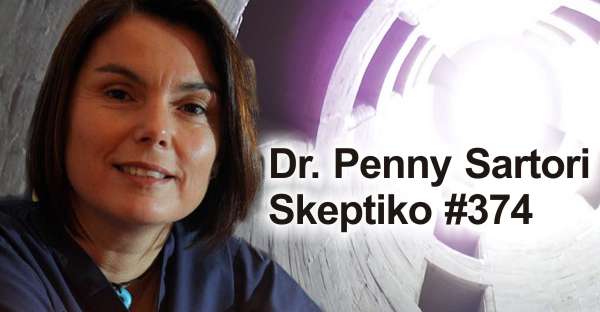
90. EEG Expert Can’t Explain Near Death Experience Data… and, Dr. Penny Sartori Finds More Than Hallucinations in NDE Accounts

January 4th, 2010 alex

Neurologist and University of Toledo Neuroscience Researcher, Dr. John Greenfield considers the EEG data from patients with near death experience (NDE).

eeg-book21For near death experience skeptics, medical evidence of a flat EEG during an out of body experience has always been a stumbling block.  After all, a brain dead patient can’t hallucinate.  But, does a flat EEG really mean no brain activity?  NDE  doubters have claimed activity deep inside the brain, beyond the reach of EEG instruments, must account for the complex “realer than real” experiences reported by those who briefly pass into the afterlife.  Now, University of Toledo Neuroscience researcher, and EEG expert, Dr. John Greenfield explains why this claim doesn’t hold up.

“It’s very unlikely that a hypoperfused brain [someone with no blood flow to the brain], with no evidence of electrical activity could generate NDEs.  Human studies as well as animal studies have typically shown very little brain perfusion [blood flow] or glucose utilization when the EEG is flat.  There are deep brain areas involved in generating memories that might still operate at some very reduced level during cardiac arrest, but of course any subcortically generated activity can’t be brought to consciousness without at least one functioning cerebral hemisphere.  So even if there were some way that NDEs were generated during the hypoxic state [while the brain is shut off from oxygen], you would not experience them until reperfusion [blood flow] allowed you to dream them or wake up and talk about them”, Greenfield stated.

NDE Researcher, Dr. Penny Sartori, examines memories of resuscitation by patients suffering cardiac arrest.

With near death experience cases making there way into the, New England Journal of Medicine, Journal of Psychiatry, and other major medical journals, NDE doubters have looked to the timing of patient memories as a way of explaining this unexplainable phenomena.  If memories of out of body travel, and all embracing love occur after ones brush with death, NDEs may still fit within our medical science worldview.

The timing of NDE memories is the research question Dr. Penny Sartori sought to answer, “I worked in the intensive care unit and because of the nature of my job, of course, I’d come across a lot of death. And of course makes you wonder what happens when we die.  For five years I gathered data, where I spoke to patients in the intensive care unit and particularly patients who’d had a cardiac arrest. When these patients revived, as soon as they were medically fit, I approached them and asked the simple question, ‘Did you have any memory of the time that you were unconscious?’”

“For the people who had a near-death experience and out of body experience [their recollection of resuscitation] was really quite accurate and I decided then to ask the control group, the people who’d had a cardiac arrest but had no recollection of anything at all. I asked them if they would reenact their resuscitation scenario and tell me what they thought that we had done to resuscitate them. And what I found is that many of the patients couldn’t even guess as to what we’d done. They had no idea at all. And then some of them did make guesses, but these were based on TV hospital dramas that they’d seen. I found that what they reported was widely inaccurate. So there was a stark contrast really in the very accurate out of body experiences reported and then the guesses that the control group had made.”, Dr. Sartori reported.

While research like this may never be enough to convince dogmatic skeptics, the medical evidence for near death experience continues to challenge us to reexamine our beliefs about what lies beyond death.

Play it:

Audio clip: Adobe Flash Player (version 9 or above) is required to play this audio clip. Download the latest version here. You also need to have JavaScript enabled in your browser.

Download MP3 (29:04 min.)


Read it:

Alex Tsakiris: Welcome to Skeptiko, where we explore controversial science with leading researchers, thinkers, and their critics. I’m your host, Alex Tsakiris, and I want to start by thanking those of you who’ve contacted me directly since the last episode of Skeptiko and have joined me on Facebook or joined me on Twitter. It’s been great to get to know you, to dialogue a little bit, and I hope we can keep that going.

Read the rest of this entry »

icon for podpress  skeptiko-nde-dr-penny-sartori [29:04m]: Download
  • Share/Bookmark

SAY SOMETHING! Comments


75. Marilynn Hughes, Out of Body Travel Experiment

June 2nd, 2009 alex

obe-book

Guest: Marilynn Hughes, performs an out-of-body travel experiment for a mother grieving the loss of her daughter.

Play it:

Audio clip: Adobe Flash Player (version 9 or above) is required to play this audio clip. Download the latest version here. You also need to have JavaScript enabled in your browser.

Download MP3 (49:45 min.)

Read it:

THIS IS A RUSH TRANSCRIPT. THIS COPY MAY BE UPDATED

Alex Tsakiris: Welcome to Skeptiko, where we explore controversial science with leading researchers, thinkers, and their critics. I’m your host, Alex Tsakiris, and on this episode we’re going to look at the psychic medium experiment that we’ve been doing. I haven’t spoken much about it in the last few episodes, but there’s been a lot going on, really for the last few months.

Let me take everyone back to the beginning, at least the Skeptiko beginning. Let’s start by maybe defining terms a little bit. I think everyone who’s listening to this show is probably familiar with psychic medium communication. If someone’s lost a loved one they go and talk to a psychic or a medium and they try and connect with that loved one through some anomalous means that we don’t fully understand.

Read the rest of this entry »

  • Share/Bookmark

SAY SOMETHING! Comments


64. Near-Death Experience Research, Dr. Peter Fenwick

February 15th, 2009 alex

Guest: Dr. Peter Fenwick, neuropsychiatrist, world renown expert on end of life phenomena, including near-death experiences and deathbed visions. His most recent book is, The Art of Dying.

View a complete transcript of this interview.

Download MP3 (60:21min, 28MB)

Audio clip: Adobe Flash Player (version 9 or above) is required to play this audio clip. Download the latest version here. You also need to have JavaScript enabled in your browser.

 
icon for podpress  Standard Podcast: Play Now | Play in Popup | Download
  • Share/Bookmark

SAY SOMETHING! Comments


  • You are currently browsing the archives for the near-death experience category.

  • Pages

    • Home
    • Past Shows
    • News Releases
    • About


    • Alex Tsakiris facebooktumblrtwitter


  • купить телевизоры, купить телевизор
  • телевизор Киев, купить телевизоры в Киеве
  • LCD, лсд, ЖК, жидкокристаллические, LED, лед, ЭЛТ, плазменные телевизоры Киев
  • телевизор Днепропетровск, купить телевизоры в Днепропетровске
  • LCD, лсд, ЖК, жидкокристаллические, LED, лед, ЭЛТ, плазменные телевизоры Днепропетровск
  • телевизор Донецк, купить телевизоры в Донецке
  • LCD, лсд, ЖК, жидкокристаллические, LED, лед, ЭЛТ, плазменные телевизоры Донецк
  • телевизоры Одесса, купить телевизор в Одессе
  • LCD, лсд, ЖК, жидкокристаллические, LED, лед, ЭЛТ, плазменные телевизоры Одесса
  • телевизор Харьков, купить телевизоры в Харькове
  • LCD, лсд, ЖК, жидкокристаллические, LED, лед, ЭЛТ, плазменные телевизоры Харьков
  • телевизоры Луганск, купить телевизор в Луганске
  • LCD, лсд, ЖК, жидкокристаллические, LED, лед, ЭЛТ, плазменные телевизоры Луганск
  • Телевизор Херсон. Купить телевизоры в Херсоне
  • LCD, лсд, ЖК, жидкокристаллические, LED, лед, ЭЛТ, плазменные телевизоры Херсон
  • телевизоры Samsung Киев, Днепропетровск, Донецк, Харьков, Херсон, Одесса, Луганск купить
  • Samsung LED, лед, ЭЛТ, LCD, лсд, ЖК, жидкокристаллический, плазменный
  • телевизоры Sony Киев, Донецк, Днепропетровск, Херсон, Одесса, Харьков, Луганск купить
  • телевизор Sony LED, лед, ЭЛТ, LCD, лсд, ЖК, жидкокристаллический
  • телевизоры Philips Днепропетровск, Донецк, Херсон, Киев, Харьков, Одесса, Луганск купить
  • телевизор Philips LED, лед, ЭЛТ, LCD, лсд, ЖК, жидкокристаллический
  • телевизоры Sharp Киев, Одесса, Харьков, Херсон, Донецк, Днепропетровск, Луганск купить
  • телевизор Sharp LED, лед, ЭЛТ, LCD, лсд, ЖК, жидкокристаллический
  • телевизоры LG Донецк, Днепропетровск, Одесса, Херсон, Харьков, Луганск, Киев купить
  • телевизор LG LED, лед, ЭЛТ, LCD, лсд, ЖК, жидкокристаллический, плазменный

powered by WordPress theme by Blog Oh Blog