



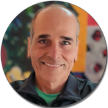
76. Yvonne Kason M.D., Transforming Kundalini and Near-Death Experiences.
June 11th, 2009 alex
Guest: Dr. Yvonne Kason, discusses her experience with, and research of, near-death experiences and other transformative experiences like Kundalini, death bed visions, and past life recall.
Play it:
Audio clip: Adobe Flash Player (version 9 or above) is required to play this audio clip. Download the latest version here. You also need to have JavaScript enabled in your browser.
Download MP3 (48:38 min.)
Read it:
Alex Tsakiris: Welcome to Skeptiko, where we explore controversial science with leading researchers, thinkers, and their critics. I’m your host, Alex Tsakiris, and on this episode of Skeptiko, I have a very interesting interview with Dr. Yvonne Kason. She’s a physician and a teacher with over 25 years of experience at the University of Toronto School of Medicine, but she also has had several near-death experiences.
She’s expanded that personal experience into an extensive amount of research on transformative spiritual experiences. Her book and her interview are not only important for validating the scientific legitimacy of these experiences, but also I think to help anyone who’s had such an experience normalize it and put it into some kind of context that we can understand from an everyday, Western perspective. Here then is my interview with Dr. Yvonne Kason.
I’m joined today by Dr. Yvonne Kason, author of Farther Shores. Thanks so much for joining me, Yvonne, it’s been a pleasure getting to know you over the last couple of weeks while you’ve been here in Southern California on retreat.
Dr. Yvonne Kason: Thank you, and thank you very much for interviewing me about my book.
Alex Tsakiris: Well, it’s an amazing book and we’re going to dive right into it. It’s quite brave, I mean, the first thing that strikes me is here you are a highly regarded medical doctor, and you taught as well…
Dr. Yvonne Kason: I taught at the University of Toronto for over 25 years.
Alex Tsakiris: Great. So when we were talking before one of the things that I think you said, tongue-in-cheek but really not kidding, you’re probably the only [medical doctor and researcher] in the world who is both a near-death experience researcher as well as a near-death experience experiencer. Do you want to tell us a little bit about the background of the book and your personal experiences with spiritually transformative events?
Dr. Yvonne Kason: Sure. I have been researching near-death experiences and other types of spiritual experiences, Kundalini, mystical experiences, for over 25 years and what got me interested in it as a medical doctor was actually my own personal experiences.
You know, when I was in medical school in the 70s I was focused on pretty well on what most doctors are when they’re training – diseases and heart attacks and medical technology, etc. So it really was not anywhere within what I was being taught in medical school, spiritual experiences, near-death experiences, Kundalini.
But when I was finishing my residency at the University of Toronto, I was sent up north to Northern Ontario to work with the Native Indian communities. One day when I was there in March of 1979 when we were doing a medievac, a medical evacuation in a small airplane of a critically ill Native Indian woman, the plane crashed. I was in a plane crash, and I was almost killed. In the process of that experience, of the plane crashing, I had a profound personal mystical experience, which I now know was a near-death experience.
At the time that it happened, I had no idea what had happened to me. I knew it was profound, I knew it had changed me, I knew it was positive, but I didn’t even have a word to explain what happened to me, the profound experience. So that’s what launched me initially, just as a human being with a profound spiritual experience to research, to try and figure out what on earth had happened to me. In addition, because I was a doctor, I also felt I wanted to medically understand what was happening to me. I wanted to understand – I knew it wasn’t a hallucination or something pathological. I wanted to…
Alex Tsakiris: How did you know that? How did you know that it was – what aspects of it connected with you spiritually, number one, and then how did you know this wasn’t some hallucination, some aspect of your brain playing a trick on you?
Dr. Yvonne Kason: Yeah, well I knew that by the effect it had on me. Let me go back and just describe very quickly what happened to me in that plane crash and then the aftereffects and that’ll, I think, help answer that question. The plane flew into a blizzard. It was a small twin-engine airplane and the air filters froze over, they figure is what happened. So the propeller stopped and the plane started going down. As the plane was going down, I immediately, I think like anyone would in a plane crash, went into intense fear and panic. In that moment of fear and panic as the plane was going down to the ground, my heart just sort of called out in a prayer to God, I guess, intense prayer, “God, help! I’m going to die!”
After that intense call for help went out of my heart, something extraordinary started happening, and this was actually before the plane crashed. What started happening was, this feeling of peace and calm started descending over me, and it was like it was coming from above and pushing down and pushing out the fear and all of a sudden I became peaceful. I became calm. I was no longer afraid, and somehow in this extraordinary peace and calm I felt there was no need to fear death. And that all would be fine, whether I lived or died. I heard in my inner mind, what I now call “the inner voice,” I heard an inner voice say things that I was not even thinking of. It was just like it poured through my consciousness.
What poured through in the inner voice was, “Be still and know that I am God. I am with you now and always.” And I felt calm, I felt protected, and in that calmness I turned and I was tending to the patient as the plane continued to crash. The plane finally did manage to do a crash landing onto the surface of a semi-frozen lake and then quickly sank into the water. So quickly we scrambled the nurse, the pilot, myself, we scrambled out of the plane as it sank.
We tried to pull the patient out, were unsuccessful, she unfortunately died when the plane sank into the water. Then I was stuck in heavy winter clothes in a semi-frozen lake and the voice in my mind said, ”Swim to shore.” I was maybe 200 yards away from the closest land and it was open water with a strong moving current, and the voice repeated, “Swim to shore.”
To keep the story short, I’ll leave out a few of the details I have in the book. I eventually followed the wisdom of that inner voice, started swimming to shore, and it was a long and very difficult swim. I went under several times, and lake water in my lungs and I was starting to drown, and as I was becoming colder and more hypothermic and near drowning, all of a sudden my experience shifted and I heard a “whooshing” noise, and suddenly it was like my point of perception was no longer in my body and I was maybe 20 or 30 feet above my body. This sense of peace and bliss and comfort expanded now and I was in a place that was filled with light.
It was like being at the top of the clouds as a plane is going from darkness and up to the top and is almost breaking through into the sun, that bright sparkly sort of cloud sprinkles right at the top of the clouds is what it was like. In that soft, sparkling light-filled place, the love expanded and it was like I was merging with this ocean of love and this ocean of intelligence. What I call God. And I absolutely knew…
Alex Tsakiris: Let me mention something there. A question. Because this comes up frequently with Skeptiko listeners. It’s an obvious question, but I’m going to ask it nonetheless. Why did you connect that experience with God?
Dr. Yvonne Kason: It’s not a why, it’s an experience. It’s like how do you know the ocean is wet? Well, when you’ve gone in the ocean you know it’s wet. You just do. It’s an experience and it’s just obvious. That’s what this was like. It was, nobody had to tell me. It was an experience. I just felt it and knew it to the core of my being that this, I was being held by the loving power behind the universe. You can call that “The Force,” you can call it Buddha Consciousness, you can call it Yahweh, you can call it “The Creator,” you can call it God, but the name isn’t really what matters. It’s what it is. It was the experience of the loving, loved beyond imagination, unconditional love. Bliss. Incredible intelligence. Power behind the universe. That’s what the experience felt like. So it’s an inner knowing, and the word that I put to it is “God.” And it wasn’t…
Alex Tsakiris: I don’t think that’s the word – I think that’s the word most people would put to it, so I don’t think there needs to be a lot of confusion. I think when we introduce – when we try and deconstruct the near-death experience phenomenon, and that’s an unbelievably awesome story that I will never even be able to come close to, really understanding it because it’s so experiential…
Dr. Yvonne Kason: It is.
Alex Tsakiris: But as us who are trying to learn from the experiences of others and approach it intellectually and study it as well as we can, I think that the accounts matter. I think the details matter. I think the stories matter. But I think the sum total of them all is what’s really significant from a research standpoint. The fact that your story does correlate on so many aspects with accounts that just innumerable people have had when they’ve come close to experiencing death, and as your book points out, well that really kind of picks up your story. So let me just kind of lead you into that.
You recover, thank goodness, from this horrible experience, and you become then somewhat of an expert on these kind of experiences. Just pick up the story from there.
Dr. Yvonne Kason: Okay. So for your listeners and people reading this, of course there are more details about the near-death experience and how I came back in my body, etc. in my book. But I’ll go on with your questions. After my near-death experience, when I started coming back to work as a doctor, I had to take some time off to heal some frostbite, etc. I started telling other doctors about what had happened to me, this profound experience, and asking if they’d ever heard of such a thing, if they’d read about such things. Back then, the early near-death experience researcher, Raymond Moody, had said that you had to be clinically dead for it to be a near-death experience.
Now as I told you, my experience started when the plane was going down, it continued while I was swimming to shore and throughout my rescue until I was resuscitated. I was never dead. So initially I thought this couldn’t possibly have been a near-death experience because I had never been dead. It must have been something else. So what was it? So as I asked around, and at this time I already was a student of yoga, and I had read a little bit about Kundalini and Eastern traditions. The best explanation I could find on what had happened to me was that I’d had some sort of mystical experience when I was close to death. So I started researching mystical experiences.
I noticed within myself that I was also having a lot of symptoms that sounded like Kundalini. As an aftereffect, after this near-death experience, I was noticing a lot of rushes of energy up my spine, particularly when I was meditating, when I was praying intently, when I was contemplating God, when I was having some sort of spiritual insight, I’d be getting these rushes of energy up my spine. As I was going into deep meditative states I would be having experiences of light, and the rushes of energy up the spine, the light and inner sounds. I was also having inner sounds.
These are all symptoms of Kundalini that I had learned about through reading the writings of Gopi Krishna. So I wondered, ha, this is interesting. I’ve had a mystical experience, I’m having symptoms of Kundalini, and I was close to death. So I was researching…
Alex Tsakiris: Let me stop you right there because I don’t want to leave too many people in the dust, or too many people are going to switch off their I-Pod and say, “Whoa, wait a minute.” We’re introducing these terms that I know for some people are brand new. Kundalini and Kundalini experience.
How did you approach that as a medical, Western-trained person. Did you have your foot kind of in two worlds? Or was this easily resolved for you? This idea that there is this kind of foreign experience called Kundalini and there’s this energy field and all these things. How did you then, and how do you still resolve these kind of two worlds that you’re really talking about and you’re kind of flowing back and forth very fluidly. For a lot of people that’s not a path that they can make.
Dr. Yvonne Kason: Yes, absolutely, it was a real struggle for many, many years. It was really like I was living a double life, that one stream was the traditional Western medical practice. I was a doctor, right, and the Western medical model. The other part of me was happening mainly in my personal, spiritual quest to try and understand what had happened to me. But what happened over the years is that more and more patients started coming to see me as a doctor because they heard about me through the grapevine somehow, how these things happen, or they heard me on a radio interview, or something. Since my book came out in Canada, they heard about my book and therefore would come to see me.
They, too, had had a spiritual experience of some kind and they had been struggling and unable to find an understanding that was not pathological, you know, that this is a hallucination. There was not a welcome interpretation for people who’d had powerful spiritual experiences, so they wanted to talk to a medical doctor who could help them even find a name for what had happened to them. This paralleled what I was personally going through, trying to understand how to name what had happened to me and what was continuing to happen to me, the aftereffects of this near-death experience.
Alex Tsakiris: I think that is such an important point. I want to stop and emphasize this. You are a medically-trained doctor. You’re working as such. People start coming to you as a physician because they’ve experienced these spiritually transformative experiences. Give us some idea of the kind of experiences that people reported when they came to you. Put on your best Western doctor hat, and tell us what it was like to encounter these people.
Dr. Yvonne Kason: Well, I felt for about 10 or 12 years after the near-death experience it was sort of unofficial that people who had heard of me by word of mouth would come and see me in my practice. They would have everything from a near-death experience to a spiritual experience when a loved one dies — that’s something I call a “death-watch experience,” to past life recall, to mystical experiences brought on by intense prayer or intense practices of yoga and meditation. Sometimes mystical experiences just as a gift of grace, walking out in a beautiful scene of nature, people overcome with the beauty and suddenly having a profound mystical experience. Kundalini, the spiritual energy experiences.
All of these types of experiences people were coming into my office with this broad spectrum. I realized, this is much bigger than just near-death experiences. Near-death experiences are just one of many types of spiritual experiences people are having today. So around 1990 I felt as a physician that I actually had a moral obligation to start becoming more public about this, to inform other medical doctors, because I’d heard so many terrible stories of people who’d had spiritual experiences who tried to tell their doctors about them but had been immediately labeled as, oh, this is a hallucination and you need some tranquilizers, or this is mental illness.
Or also, that they tried to speak to their church person, their clergyperson, and similarly were told, oh, no, this can’t be real, this only happens to the saints and to Jesus or the Buddha, depending on whatever your path was, or Moses, whatever. This must be your imagination or the work of the Devil. So they were not getting validation either from the medical community or from their spiritual community.
I felt since I personally experienced it and I had a certain amount of credibility as a teaching physician while established in the medical community, people knew I wasn’t crazy. I had to become public about the fact that yes, I had had this experience and I’ve had several spiritual experiences now, and also I needed to come public about the fact that there are many people out there right now having these experiences. They are not crazy.
And I felt the obligation to share the vocabulary that I came up with. That’s a lot of what I outline in my book. These are some of the common types of mystical experiences that people are having today. This is what a Kundalini or spiritual energy experience is like. These are some of the symptoms. And these are some of the psychic phenomenon that people are experiencing. This is what a near-death experience is, or a death-watch experience is. I outline the symptoms so that a medical person or a counselor that someone who’s had an experience might turn to, who reads my book will have some – I use a medical model – a diagnosis of something that’s not a disease, right? A diagnosis, the symptoms of a positive experience.
This is not a disease, this is not a hallucination. This is a peak human experience, as Abraham Mazlov talked about, that many people are having. It’s been written about in all of the great spiritual traditions, in Christianity, in Hinduism and Buddhism and Judaism, in Islam. There’s great mystical traditions in all the faiths and it’s time that science and religion sort of bridged a little bit here to realize that it’s not that all the mystics through all the ages were mentally ill, doc. [Laughs]
It’s that modern medicine until now did not have a vocabulary or diagnostic criteria for spiritual experiences. So my book is my humble first-step, based on my experience and my research, into offering a vocabulary, some definitions for spiritual experiences. And also I have a chapter in there on how to differentiate that from mental illness.
Alex Tsakiris: Great, which would be a necessary part of really diagnosing it, right? So from a medical perspective I think that’s a great contribution. Can you also tell us a little bit about the survey work that you did and some of the other findings that you had when you talked…so one, the survey work you did, and two, what happened when you spoke with other physicians when you tried to share what you were learning with other people in your profession? What was the reception like?
Dr. Yvonne Kason: Okay, let me start with that question. At first, immediately after the near-death experience, when I spoke with other doctors, I mean they knew me and they knew I wasn’t crazy, so that sort of got put aside. They all then thought it was a bio-chemically-induced hallucination. That oh, you know, you must have had an electrolyte imbalance from swimming to shore, or it must have been a hallucination brought on by the direct effect of cold. So there was all this biological hypothesis of some sort of biochemical or cold-induced hallucination.
Now I knew that wasn’t true. I absolutely knew to the core of my being that wasn’t true, because I’ve seen many patients with hallucinations. Hallucinations are not growth-promoting. This experience was growth-promoting for me. It helped me grow up psychologically. It helped me grow up spiritually. It incredibly deepened my spiritual yearning. It made me, I would say, grow up radically very quickly. So I knew this was not some transient hallucination. It was something positive and something powerful.
So as I kept researching and as more patients came to me and then as you mentioned, as I started doing surveys, various types of survey assessments of the patients coming to me, to try and begin to document a little bit what types of experiences people were having. I began to speak around 1989, 1990 at certain medical conventions. I would speak to doctors and I also got invited by certain lay groups to speak to lay communities. I would present some of this information, particularly to the medical community because you need data and research to talk to doctors and to have them believe what you’re talking about. You have to have some sort of evidence, right?
So what I found was that the doctors initially who came and who listened were quite receptive. Usually that was because either they had already had patients come to them who had told them about these types of experiences and that had made the doctors interested in trying to find out more so they could help their patients, and or sometimes the doctors who came to those early talks themselves had had an experience that they’d been not willing or frightened to tell anyone about because of their reputation as a doctor. Or sometimes a loved one, a family member, might have had a powerful spiritual experience.
So they already knew about spiritual experiences and were wanting to understand more about it. That was a very welcome receptive audience when I first started speaking to doctors about it, which helped give me the courage to start speaking to less-receptive audiences, and going to other venues where doctors maybe would have heard less about near-death and spiritual experiences.
What I found as I spoke at bigger and bigger medical conferences was that during the ‘90s there were several books that came out that became quite famous about people who’d had near-death experiences, Betty Edie, Dannion Brinkley, and so the near-death experience now was becoming known in the lay community. Not in the medical community but on television and these people being interviewed on “Oprah” and things like that.
So the doctors maybe had heard about it from the lay press but didn’t have any medical information about it. That then created a window of opportunity for me because I was like the first doctor in Canada researching near-death experiences and other spiritual experiences. That created a window of opportunity for me to educate doctors, look, this is a phenomenon, there’s books written about it, these people are being interviewed on “Oprah,” and doctors should know something about it. That created an opportunity for me to talk to doctors about both my personal experience and some of the experiences of patients that I’d counseled.
Alex Tsakiris: What’s been the result of that educational experience in the whole? How do you think that’s going? Is it changing the culture within the medical community?
Dr. Yvonne Kason: Well, I think slowly, slowly, slowly yes, by incremental, baby steps. One of the really big steps that happened was some colleagues and friends of mine, Dr. David Lukoff, Dr. Francis Lu and Dr. Robert Turner, submitted a submission to The American Psychiatric Association for our diagnostic bible we have for psychiatric disorders, the DSM, that there should be a category created for religious and spiritual experiences that is not a symptom of mental illness. They lobbied for this in the ‘90s and actually in 1994 in the DSM IV, and I mention this in my book, a new category was approved and created in the DSM IV for religious or spiritual problems which is not a symptom of mental illness.
This is a huge breakthrough because until that point, there was no where in the medical texts that a religious or spiritual experience was not either a symptom of a mental illness like schizophrenia or a symptom of a physical illness like a hallucination or a seizure disorder. So this was a huge breakthrough in 1994. Now although that appears in the DSM, I think the training that medical doctors and clergy receive today is still limited as far as being able to diagnose a spiritual experience, but at least I think a toe is in the door.
Alex Tsakiris: That’s interesting. One, it’s interesting that it took until 1994, but hey, that’s great that it happened in 1994. Do you have any sort of statistics on how often that diagnosis has been applied to folks?
Dr. Yvonne Kason: No, I don’t, and that would be a very interesting piece of research. You know, with medical documentation all being confidential, that would be very difficult to pull together.
Alex Tsakiris: Because of course, what I have to wonder is, is anyone using that diagnosis?
Dr. Yvonne Kason: I think some people are, but one of the other things that happens in medicine, and I’ve found myself doing that with the patients that were in my office, is that even though files are confidential, you know other people might somehow get access to them. So there’s a tendency to be cryptic or only put the minimum that’s absolutely necessary into the chart. Sometimes people’s experiences are much, much, much richer and more detailed than what is actually documented in the medical chart. For example, I’ve now had four near-death experiences, my most recent being in 2003. If you were to look at my medical records for three of them are in accidents where I was in hospital, probably none of my medical records even mention that I had a near-death experience even if I did mention it to the doctors.
Alex Tsakiris: So a physician would normally enter in something like that, or would it only be a psychiatrist or a psychologist?
Dr. Yvonne Kason: Well, it depends. It depends. Sometimes it’s the people themselves who’ve had the experiences who are reluctant to share it with their doctors because they’re afraid of being mis-labeled, as having a pathological experience. Sometimes they end up sharing it with the most unlikely people, like the cleaning staff, who are much less threatening. [Laughs]
Alex Tsakiris: Right. [Laughs] I would be remiss if I didn’t touch on that last point, because it’s going to freak people out that you’ve had four near-death experiences. You just kind of talk about it in a very casual way, but certainly your first near-death experience was a plane crash. I mean that’s hard to get too much around that. I know just briefly in our previous conversation you touched on that you had a very serious fall a few years ago that led to a near-death experience. Can you just mention a little bit about the circumstances surrounding the other two near-death experiences?
Dr. Yvonne Kason: Yeah, I now realize that the near-death experience I had in the plane crash in 1979 was actually my second near-death experience. I didn’t realize that until actually quite recently. I was in a serious motor vehicle accident when I was about 10 or 11 and I had a head injury and I lost consciousness. I was evidently unconscious for two or three days. I have always had very clear memory of floating above my body and watching them trying to resuscitate my body when I was a kid and had this head injury, and being sort of in this light. But I never realized or thought about it as a near-death experience.
Alex Tsakiris: Sure.
Dr. Yvonne Kason: But now as I look back, particularly since I’ve had two more near-death experiences since the plane crash, I realize, huh! My plane crash actually wasn’t my first. That as a child this floating above my body and this light-filled place was actually my first experience. The plane crash near-death experience was much deeper, much more profound, much more dramatic, and totally changed the course of my life. That’s the one that I’ve really focused on. Now a number of years later, 16 years later — in however many years later it was, 1995, I think that was 16 years later – I was in another near-miss plane accident, believe it or not.
Alex Tsakiris: Wow. [Laughs]
Dr. Yvonne Kason: And yeah, and again had – I’ve not yet written or spoken publicly about it – but I had another dramatic near-death experience which was actually more intense and more transformative than the one I had in 1979. It seemed to launch me the next step forward. It was the aftereffects of the 1995 near-death experience. I felt like a window to God had opened in my consciousness and that it never shut completely again. It was a most profound, a most beautiful on-going experience for about two months after that experience.
Then in 2003 is when I had the slip and fall accident where I hit my head on cement and had a serious brain hemorrhage, a brain injury, and died. This near-death experience is different than the other three because in this one, the most recent, I actually felt that I died and that I was completely gone. The body was dead or unconscious and I was completely gone and in the light. In my last experience which was the only one in which this occurred, I was actually given a choice of whether or not to return. And I’m back! [Laughs]
Alex Tsakiris: [Laughs]
Dr. Yvonne Kason: And it has been the most transformative of the four. I feel like it was a progression. Each near-death experience was deeper and more profound than the one before.
Alex Tsakiris: Okay, let’s dig into a couple of things there, because one, certainly that is an extraordinarily rare and uncommon occurrence, at least I’ve never heard of people other than Dannion Brinkley, I guess I’ve heard. It’s not like there’s a pattern for many people of having multiple near-death experiences, or this being some kind of progression of spiritual growth, right? I mean, that’s not as common.
Dr. Yvonne Kason: Well, as far as I know, it’s not as common and I’d be certainly interested in people who have had multiple near-death experiences if they want to contact me, because I’m clearly interested in that now. I have, I know of, I mean Dannion Brinkley is one and a couple of people have contacted me who have had multiple NDEs so I know there are a few other people out there who’ve had multiple NDEs, but from my many years of counseling people of near-death experiences I would agree with you that this is much more rare.
Alex Tsakiris: Right. That’s just really a side note because what I really want to dig into, and I think it’s important to get this information out there. In our prior conversation I think it’s one of the driving forces for you in terms of helping people and that’s to let people know that some of the other aspects of this transformative experiences that you have are common and do happen more frequently to folks who go through this.
In particular, what I’m thinking about, and you mentioned it earlier, is the increased psychic abilities. So that’s one aspect. Do you maybe want to just go through several of the other aspects of this experience that people might encounter, so if they do encounter them and they’re wondering, “Oh my God, am I going crazy?” maybe we can help them kind of normalize that experience a little bit.
Dr. Yvonne Kason: One of the things that I discovered both from my personal experience, my patients’ experiences, and also from my research of the literature, because I don’t think I’ve mentioned that yet. I did a lot of research into the Christian mystical traditions. Evelyn Underhill wrote an excellent book on mysticism. Richard Maurice Bucke, Gopi Krishna wrote about Kundalini and the Eastern tradition. There have been a number of writers from the Yogic and Buddhist traditions who have written about mysticism and Yoga. From all of them…
Alex Tsakiris: Written about it not just from a theoretical standpoint, but saying here is someone who had this experience. I know I’ve read one of those books. I told you about the Kundalini experience that someone had and they document very carefully exactly what happens.
Dr. Yvonne Kason: Exactly. So there’s a vast literature, both Eastern and Western, that I also researched to some extent. I mean, there’s so much that you can’t research at all. What I found from all of these is that when you have a powerful mystical experience, whether it be a near-death experience or if the mystical experience is brought on by prayer or meditation, or whatever the cause of the mystical experience, it’s not just an isolated thing and then you’re back to your old life afterwards. It’s that it seems to begin a long-term spiritual transformation process that I talk about in my book.
In the mystical traditions this is sometimes called the “mystical path.” In the East this is called, “Kundalini-driven transformation of consciousness.” So there’s a change that happens that people notice. It’s like it didn’t stop. The door was opened, they have this in their consciousness, they have this profound expansion of consciousness where they perceive mystical and paranormal realms. But then the door doesn’t shut all the way. That’s the metaphor I’m using. So there’s still something changed in your consciousness and you find yourself more open to further mystical experiences, particularly if you’re doing practices of meditation, prayer and Yoga.
You find yourself open to psychic experiences even if you perhaps were not having psychic experiences before this. But oh my goodness, you’re starting to have premonitions. You’re starting to have clairvoyant episodes. You’re starting to have clairsentience where you’re picking up on the thoughts and feelings of others. Other people spontaneously start unblocking past lives. If all of this is foreign to you and foreign to your cultural model, this can be very frightening and you can think that you’re going crazy. But it’s not that you’re going crazy.
I mean, in the Yoga Sutra of Patanjali this is a Yogic text, this was described very clearly that people undergoing the spiritual transformation will start unblocking past lives. They will start having intuitive and psychic experiences. It’s all written as part of the process. So I’ve definitely seen this happening to people today, that this is true.
Other changes that happen to people are not in the psychic realm, but are in the physical body. People wonder, why am I having these bodily sensations? People will notice, as I did, sensations of energy rushes in their body or energy rushes up their spine, or sometimes people will notice sensations where in the East is called the “chakra points.”
They might notice energy vortexes or they might notice colors. They may hear inner sounds. They may notice that suddenly they have the inner urge to change their diet – that maybe they were big meat eaters before and suddenly find after their spiritual experience that they’ve lost their taste for meat, particularly for red meat. They have an inner urge to have a lighter diet. To give up alcohol and drugs is another thing that happens. To stop smoking, that happens to people after they’ve had a spiritual experience.
It’s how is this possible, one wonders, if it’s only in the spiritual and psychological realms. But according to the Eastern model that Gobi Krishna put forward, there’s also a biological component to spiritual transformation of consciousness. Body, mind and spirit. So some of these things are due to a change in the physical body. Some of these things are due to changes in our subtle body or astral body. But we feel them physically in our body as changes in our body.
Alex Tsakiris: Now, Yvonne, let me interject something. When you’re saying this, are you saying this from your experience in counseling people as a physician, or from your experience in reading what others have said about it?
Dr. Yvonne Kason: Both.
Alex Tsakiris: Both. So this is real in the sense that you’ve seen folks who’ve come in and said, “I had this spiritually transformative experience and I’ve changed my diet. I’ve become a vegetarian.”
Dr. Yvonne Kason: Exactly. They’ll say, “You’re going to think this is weird, Doc, but…” and then they’ll tell me their story. “I couldn’t put a cigarette to my lips anymore,” or “I had to stop drinking,” or “I just could not eat that steak anymore. It started making me sick, and I used to love steak.” So my work was all led by both what I experienced and by what my patients experienced. Then I found it corroborated particularly by the Eastern mystical literature. The leading edge is what people today are experiencing.
Alex Tsakiris: Great. Well, it’s just an amazing story. It’s really an important book, and I hope a lot of folks get their hands on it, Farther Shores. Where do you take this from here?
Dr. Yvonne Kason: Well, you know, my last near-death experience as I mentioned happened in 2003 and I’ve had to retire from the practice of medicine as I am healing from the traumatic brain injury. So I’m hope…
Alex Tsakiris: Just to tell people, I mean, it’s easy to make light of someone who’s had – it’s really not, but I mean, it just sounds strange, someone who’s had four near-death experiences. You had a very, very close brush with death from a very severe injury on this last incident, right?
Dr. Yvonne Kason: That’s right.
Alex Tsakiris: You were in the hospital for a long time and it wasn’t clear that you would recover at all from this.
Dr. Yvonne Kason: I am disabled in terms of practicing medicine. I’m left with pretty severe chronic fatigue and some problems with my short-term memory, etc., related to my last near-death experience. So I can’t practice medicine anymore.
It’s been a very intense healing struggle over the last five and one-half years, but spiritually this has been a profoundly deep and rich time. It’s been like the opposite. [Laughs] I tell people, it’s like swimming through a dirty swamp on a bright, sunny day.
At the worldly level it was horrible and difficult and full of struggle, like leeches and weeds attacking my legs, but if I look up, it’s a bright and sunny day. So if I meditate and turn my eye to God, it’s spiritually profound and beautiful, deepened by the depths of my last near-death experience. I choose to look up. I choose to focus on the positive, and that has kept me going and optimistic as my body continues to heal.
I’m hoping in the future God willing, perhaps I’ll be able to write again, write another book. But for now, I’m delighted to be healed enough in body, mind and spirit to be able to promote Farther Shores, which is available in the U.S. for the first time. So I’m just really, really delighted that I’m able to do that at this time.
Alex Tsakiris: Well I’m so glad that you found us and that I connected with you and to have this chat. The book is a real gift and I hope a lot of people enjoy it and get as much out of it as I did. So thanks again, Dr. Kason, for joining us today.
Dr. Yvonne Kason: Thank you for having me.
Alex Tsakiris: Thanks again to Dr. Kasan for joining us today on Skeptiko. If you’d like more information about her book, please visit our Web site, skeptiko.com. You’ll also find links to all our previous shows, a link to our forums, and an e-mail link to me.
Much more Skeptiko coming up in the next few weeks. I’m actually switching to publishing every week here for a while, because I have so many really great interviews that I want to get out.
As always, if you enjoy the show please feel free to tell your friends about it. Blog about us, write about us, do whatever you think is appropriate to get the word out. That’s going to do it for today. Take care. Until next time, bye for now.


